Heat wave in northern, central regions to end on July 6

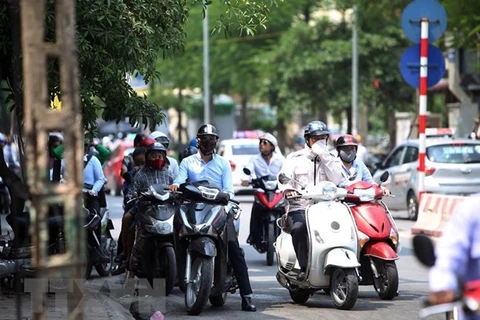
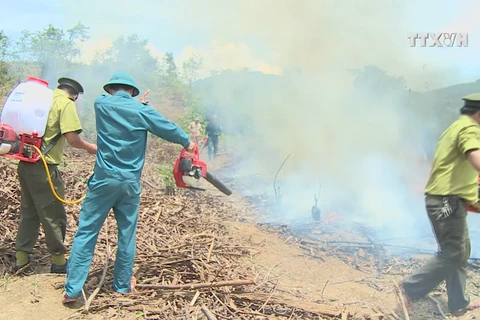
The severe heat wave that has scorched the northern and central region since last weekend is predicted to end on June 6, but until then the localities will continue suffering from high temperature of 38-40 degree Celsius, the National Centre for Hydrometeorological Forecasting (NCHMF) said on July 4.
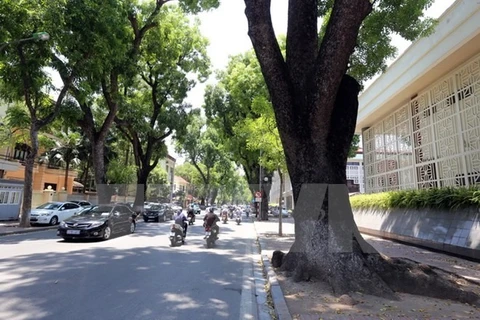
Heat wave in northern, central regions to end on July 6 ảnh 1Temperature will stay above 35 degree Celsius from 10am to 18 pm on July 4. Illustrative Image (Source: VNA)

Hanoi (VNA) – Thesevere heat wave that has scorched the northern and central region since lastweekend is predicted to end on June 6, but until then the localities willcontinue suffering from high temperature of 38-40 degree Celsius, the NationalCentre for Hydrometeorological Forecasting (NCHMF) said on July 4.

The centre added thattemperature will stay above 35 degree Celsius from 10am to 18 pm on July 4, onehour less than on July 3.

Some areas in thenorthwestern and northeastern regions will see shower rain and thunderstorm inthe afternoon and night.

Hanoi will have anextremely hot day without rain, with humidity from 42-82 percent. The lowesttemperature during the day is forecast at 30 degree Celsius, while the highestis 40 degree Celsius.

In order to meet high demandfor power amidst the hot days, which coincide with the ongoing World Cup 2018, theCentral Power Corporation (EVNCPC) has applied drastic measures to ensure powersupply.

Along with puttingsome power plants into operation before the dry season, the firm has directedits distribution units not to cut off power in the national grid except forurgent cases, and use the most advanced repair technology.

The EVNCPC alsoadvised customers to use power in an economical and efficient manner.-VNA
VNA
See more

Quang Tri recently received two endangered pangolins from local resident. (Photo published by VNA)

Two pangolins handed over to authorities in Quang Tri

At around 8:30 pm on April 12, Le Thanh Tung, a resident of Thuong Nghia hamlet in Cam Lo commune, and his friend spotted the two pangolins, weighing over 4 kg, while working near the Cam Lo–La Son Expressway.

A view of Phong Nha - Ke Bang National Park in Da Nang city (Photo: VNA)

Phong Nha – Ke Bang: untapped biological treasure in Truong Son mountains

Unlike ecosystems where species inventories are largely complete, Phong Nha–Ke Bang National Park remains scientifically “open,” with each survey revealing new findings. Recent studies - from local research projects to international collaborations - have recorded additional bird species and identified the rare parasitic plant Sapria himalayana, which only survives in intact primary forests.

The interface of Vietnam Weather KTTV mobile application (Photo: baochinhphu,vn)

Application of dangerous weather warning introduced

All unusual weather events, from widespread thunderstorms, lightning strikes, landslides, flash floods, tropical depressions to strong winds at sea, are continuously updated from official data sources of the NCMHF and meteorological stations and prominently displayed on the main interface.

An overview of the kick-off meeting for the “Sustainable Management of Substances Controlled by the Montreal Protocol” project (Photo: VNA)

Vietnam launches 13 mln USD project to phase out ozone-depleting substances

Funded by the Multilateral Fund for the Implementation of the Montreal Protocol and implemented through the World Bank (WB) and the United Nations Environment Programme (UNEP), the project aims to help Vietnam meet its international commitments in managing and phasing out controlled substances. It will run from 2026 to 2031 with a total budget of over 13 million USD.

Tram Chim National Park and the Mekong Conservancy Foundation (MCF) organise the workshop on sustainable restoration of wetland ecosystems in the Mekong Delta on March 24. (Photo: VNA)

Solutions sought to restore Mekong Delta wetland ecosystems

Experts at the workshop described wetlands as the “ecological heart” of the Mekong Delta, playing a vital role in water storage and regulation, climate moderation, carbon sequestration, biodiversity conservation, and livelihoods for millions of people through aquaculture, agriculture, and ecotourism. These ecosystems also help reduce disaster risks and enhance climate resilience.

Deputy Minister of Agriculture and Environment Le Cong Thanh speaks at the ceremony to launch major environmental campaign. (Photo: VNA)

Vietnam calls for collective action on water, air, climate and sustainable future

Deputy Minister of Agriculture and Environment Le Cong Thanh underscored that water, climate, and energy are fundamental pillars of sustainable development. In Vietnam, water resources and weather patterns influence every aspect of life, from food and water security to livelihoods, ecosystem stability, and economic growth.