Hung Yen rice cakes enchant with rural flavour

Anyone who has tried banh te or banh rang bua (rice cake filled with brown onion) will never forget its delicious taste.
Hung Yen rice cakes enchant with rural flavour ảnh 1Despite being busy with farming, many households in Phụng Công Commune still spare time to make the rice cake in huge quantities, up to hundreds to thousands of pieces, to sell to traders.(Source: VNA)

Hanoi (VNA) - Anyone who has tried banhte or banh rang bua (rice cake filled with brown onion) will never forget itsdelicious taste.

The dish is a specialty of PhungCong commune in the northern province of Hung Yen. Its taste is derived fromthe sweetness of meat and crispiness of cat’s ear mixed with the soft andflavourful rice powder.

Phung Cong rice cake is so well known innorthern Vietnam that it is not only sold in every small lane and alley of Hanoibut is also sold abundantly in many rural markets in nearby Hung Yen, Hai Duong,Bac Ninh and Hai Phong provinces.

With simple ingredients, the cake can befound in many places in Vietnam, but gourmets argue that those made in PhungCong commune are the best, both in shape and taste.

Despite being busy with farming, manyhouseholds in the commune still spare time to make the rice cake in hugequantities, from hundreds to thousands of pieces, to sell to traders.

“During leisure after harvesting, thehouseholds increase the number of banh te they make, which are not only sold totraders but also in rural markets or village fairs within the provinces,” said NguyenThi Hai, whose family has made banh te for three generations.

“The cake is cheap, so it is sold like hotcakes. Many people buy it to gift to the elderly or children. Sometimes I take500 pieces to the village fair and they are all sold in the middle of the day,”she added.

According to experienced local rice-cake makers,the ingredients must be delicious to make the cake delicious, which is why theprocess of choosing the rice, meat and spices is crucial.

The best rice to make banh te is thearomatic tam xoan or tam thom variety grown in Nam Dinh province that has beenrecently harvested. The rice that has been harvested for too long issubstandard as it will have an unpleasant smell.

“All households in the commune, includingmine, making the rice cake must keep their customers’ trust by never buyingcheap, low-quality rice,” Hai said.

Likewise, the ingredients for the stuffing- mixed lean and fat meat, cat’s ear, pepper and onion - must be of the bestquality.

The process of making banh te is quitesimple; it is the grinding of rice powder that is complex. The rice, afterbeing soaked in pure limewater for three to four hours, needs to be cleanedthoroughly with fresh water.

It is compulsory to grind the rice in astone mortar instead of using ready-to-use rice powder as it will make the cakehard and not as soft as that made with rice powder ground with water.

After the grinding phase, the mixture ispoured into a huge pot and heated with light fire to become condensed. The cookmust use a large flat chopstick to stir the liquid constantly to prevent thepowder at the bottom of the pot from overcooking. After the powder ishalf-cooked and has condensed, it is placed on a tray to cool off.

The stuffing is made with minced and boiledlean and fat meat mixed with sliced cat’s ear and slightly grilled onion. Allthe ingredients are minced to small pieces. Before frying, pepper andhigh-quality fish sauce are added. The amount of sauce added to the mixture isalso important as it will decide the taste of the cake.

According to Hai, the wrapping phasedemands meticulousness and patience, and an experienced cake maker can wraphundreds of cakes in a day. Phrynium leaf, some 40cm long and 15cm wide, isused to wrap the cake. After wrapping, a handful of rice powder is spread alongthe leaf. The stuffing is placed right in the middle and the cake is shapedlike harrow teeth, or rang bua in Vietnamese, after which the cake is named.The cake is then tied around with nylon or bamboo strings.

The final step is boiling or steaming thecake. Boiling is faster, taking some 10 minutes, but steaming helps to preservethe original taste of the cake.

“Though steaming is more time-consuming,nearly all the villagers opt for this method because it preserves the flavour,glutinosity and strong taste of banh te made in our village,” Hai said.

Peel off the steaming hot banh te and enjoy itinstantly with chilli sauce. The easy-to-make and reasonably priced ruralspecialty reflects the rural taste of Phung Cong commune, attracting visitorsto try the delicacy.-VNA
VNA
See more

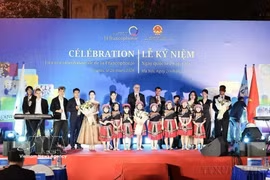
Leaders pose with artists and performers at the ceremony marking 950 years of Quoc Tu Giam (Imperial Academy) on November 13 (Photo: VNA)

Top leader attends ceremony marking Quoc Tu Giam’s 950th anniversary

General Secretary of the CPV Central Committee and President To Lam called for preserving the Van Mieu – Quoc Tu Giam heritage and putting its spirit into daily school life. He asked Hanoi to work closely with culture, education and research agencies to complete open digitised materials on the relic soon.

The opening ceremony for the 2026 Hanoi Creative Design Festival on November 13 (Photo: VNA)

Hanoi Creative Design Festival 2026 opens, targets creative economy

Running from November 13-28, the festival features 150 activities across five cultural, heritage and creative clusters and draws nearly 1,000 domestic and foreign artisans, artists, designers and experts, including nearly 100 foreign artists and overseas Vietnamese from 21 countries.

950 years on, Quoc Tu Giam continues to inspire Vietnam’s pursuit of knowledge ​

950 years on, Quoc Tu Giam continues to inspire Vietnam’s pursuit of knowledge ​

The 950th founding anniversary of Quoc Tu Giam (Imperial Academy), Vietnam’s first national university, is an occasion to reaffirm the enduring values of the country's tradition of learning, respect for teachers, and promotion of talent, which have shaped the nation’s intellectual foundations and continue to support its development in a new era.

Chair of the Canada-Vietnam Cultural & Educational Council (CVCEC) Phan Thi Quynh Trang (first from left) (Photo: VNA)

Vietnam’s learning tradition gets Canadian reboot

The Canada-Vietnam Cultural & Educational Council (CVCEC) is building culture lessons on Vietnamese landmarks, with the Temple of Literature as a core module. Kids will hear stories about teacher Chu Van An, and practice greetings, gratitude to teachers and respect for elders.

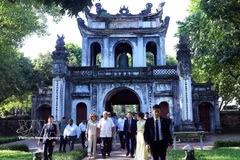
Panamanian President José Raúl Mulino and his spouse visit the Temple of Literature (Photo: VNA)

Quoc Tu Giam at 950: A meeting point for Vietnam’s cultural diplomacy

Van Mieu - Quoc Tu Giam is a symbol of Vietnam's culture and education and a regular pick for high-ranking leaders and politicians. That lifts it from national heritage to a valuable platform for promoting cultural diplomacy and showcasing Vietnam's cultural soft power, helping to convey the country's image and cultural identity to the international community.

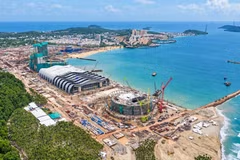
Construction on APEC Phu Quoc Multi-purpose Performance Hall (Photo published by VNA)

APEC 2027: Inside the making of Asia’s landmark theatre

One year in, Sun Group’s APEC Phu Quoc Multi-purpose Performance Hall is taking shape as one of Asia’s largest theatres. It boasts 54,680 sq.m of floor area, 17,250 sq.m of roof, six above-ground floors plus a basement, and 4,030 seats, larger than Hollywood’s Dolby Theatre, the Oscars venue.

Visitors will enjoy free admission to the Vietnam Museum of Ethnology on Vietnam Culture Day (November 24). (Photo: nhandan.vn)

Free admission to museums, historical sites, national parks on Vietnam Culture Day

Organisations and individuals will be entitled to free admission every year on November 24 to eight museums: the Museum of Oceanography, the Vietnam Museum of Ethnology, the Museum of the Cultures of Vietnam’s Ethnic Groups, the Vietnam National Museum of History, the Vietnam National Fine Arts Museum, the Yersin Museum, the Vietnamese Women's Museum and the Vietnam Military History Museum, as well as the Independence Palace historical site.

Vietnamese Consul General in Perth Pham Hai Anh (Photo published by VNA)

Vietnamese community in Australia seen as bridge for bilateral ties

Vietnamese identity and life in Australia are complementary rather than separate. The more successful overseas Vietnamese became in Australia, the greater their ability to contribute to their homeland and bilateral ties, said Vietnamese Consul General in Perth Pham Hai Anh.

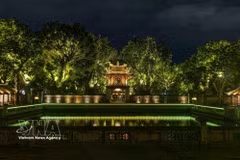
Van Lake within the Temple of Literature (Photo: VNA)

UNESCO Representative: Quoc Tu Giam offers inspiration for new approaches to education

UNESCO Representative to Vietnam Jonathan Wallace Baker said one of the things that stands out in Vietnam is the deep and enduring respect for education, learning and scholarship. Van Mieu –Quoc Tu Giam is a remarkable expression of that tradition, reminding that knowledge, talent and ethical responsibility have long been closely connected in Vietnamese society.

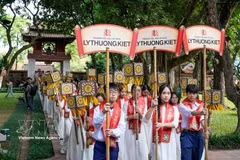
A highlight of the programme is the participation of 950 students in performances staged within the Temple of Literature complex (Photo: VNA)

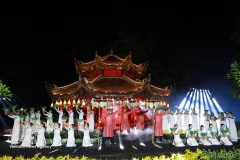
950 years of Quoc Tu Giam: Continuing Vietnam’s enduring tradition of learning

Through evocative images of students of the Quoc Tu Giam, alongside performances by students and artists, the programme vividly recreated the journey of Vietnam’s scholarly tradition, from the era of the imperial examinations to the spirit of learning in contemporary society. It also helped bring the cultural values of Thang Long-Hanoi to life today.

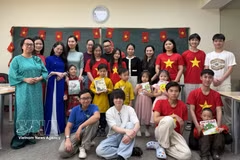
Students pose for a photo at the ceremony (Photo published by VNA)

Mother tongue connects Vietnamese community in Belarus

Vietnamese language education in Belarus not only helps younger generations take pride in their heritage and better understand and appreciate traditional culture, but also serves as a bridge for promoting Vietnamese culture among international friends.

General Secretary of the Communist Party of Vietnam Central Committee and President To Lam (fourth from left, first row) and his spouse, Ngo Phuong Ly, attend the Vietnam-Japan Friendship Concert in Kanagawa Prefecture on November 10 evening. (Photo: VNA)

Vietnam-Japan Friendship Concert fosters cultural cooperation

In his welcoming remarks, Vietnamese Ambassador to Japan Pham Quang Hieu said the concert brought together talented musicians from the Vietnam National Symphony Orchestra and artists who are current or former members of renowned Japanese orchestras, including the NHK Symphony Orchestra, Tokyo Metropolitan Symphony Orchestra, New Japan Philharmonic and Kanagawa Philharmonic.

Madame Ngo Phuong Ly offers the first bowl of tea to Akiko Santo, former President of the House of Councillors of Japan. (Photo published by VNA)

Top Vietnamese leader’s spouse experiences traditional Japanese culture

After learning about the history of the tea ceremony, Madame Ly was invited to enjoy traditional sweets and tea, and then to try preparing tea herself. She respectfully offered the first bowl of tea to Akiko Santo, former President of the House of Councillors of Japan and the oldest guest present.