Indonesia plans to cut coal use to 33% of energy mix

The Indonesian government plans to slash the share of coal-fired power generation in the country’s energy mix to just 33%, while increasing the contribution of renewables to 42% by the end of 2040.

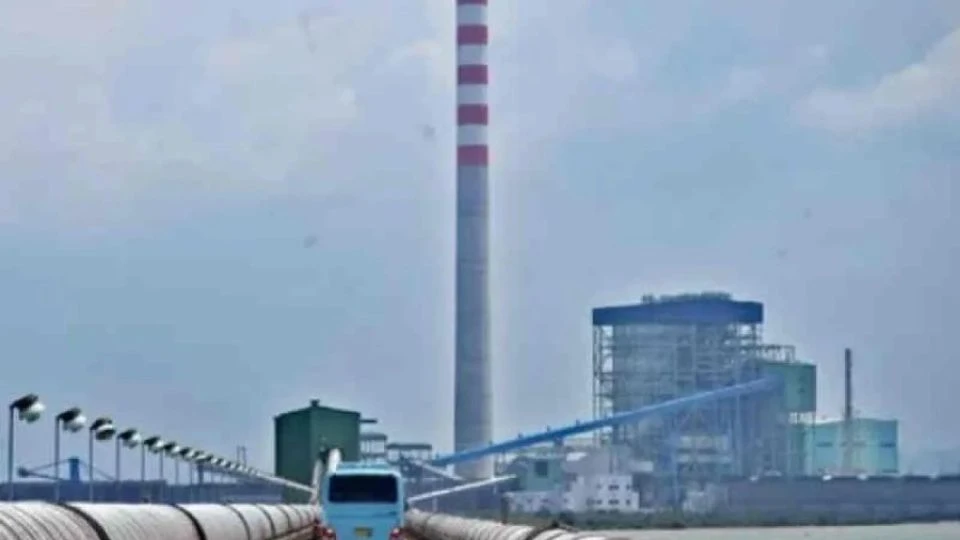
A bus travels near the Cirebon-1 coal-fired power plant on Oct. 18, 2020, in Cirebon, West Java. Indonesia, home to the world's fourth-biggest population, is one of world’s largest thermal coal exporters and carbon emitters. (Photo: Antara)

Jakarta (VNA) - The Indonesian government plans to slash the share of coal-fired power generation in the country’s energy mix to just 33%, while increasing the contribution of renewables to 42% by the end of 2040.

Coordinating Minister for Economic Affairs Airlangga Hartarto made the statement on the sidelines of the Group of 20 (G20) meeting in Rio de Janeiro, Brazil, and added that the country was prepared to add 75 gigawatts of renewables and 70,000 kilometers of new transmission lines to realise the vision. To achieve this vision, Indonesia will need 235 billion USD in investment.

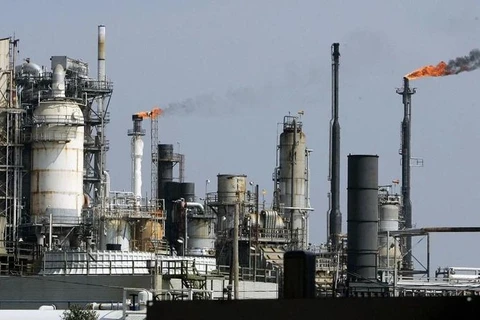
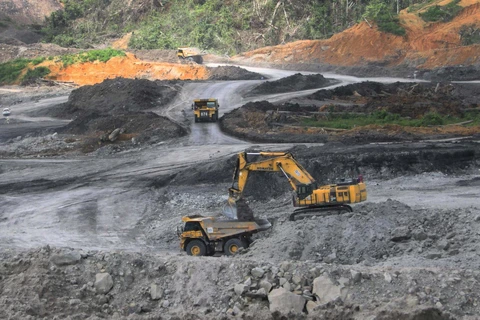
Indonesia, home to the country’s fourth-biggest population, is one of the world’s largest thermal coal exporters and carbon emitters. The Ministry of Energy and Mineral Resources' data showed that renewables accounted for less than 14% last year, while coal contributed more than 40%. The rest of last year’s energy mix came from oil and gas, which accounted for over 30% and 16%, respectively.

Speaking at the Asia-Pacific Economic Cooperation (APEC) High-level Meeting in Lima, Peru, Indonesian President Prabowo Subianto announced that the country was blessed with natural resources and thus can be completely self-sufficient in clean energy.

The commitment to accelerate clean energy use comes as the country has fallen behind its own timeline in its efforts to reduce the carbon footprint of power production.

Last year, Indonesia missed its renewables target for the energy mix, as the share failed to reach the 17.87% deemed necessary to keep the country on track for the 2025 target.

The National Energy Council (DEN) proposed cutting the target for the country’s renewables share in the energy mix to just between 17-19% by the end of 2025 down from the previously envisioned 23%.

Earlier, the ministry and state-owned electricity firm PLN agreed to focus more on controlling emissions from coal-fired power plants, while keeping them up and running until the end of their lifespans, rather than retiring them early to expedite the shift to cleaner energy./.
VNA

See more

Tourists visit the Plain of Jars in Xiengkhouang, Laos.(Photo: VNA)

Laos named among world’s top travel destinations for 2026: TravelPulse

Known for being one of Southeast Asia’s best kept secrets, experts said 2026 will be the year for Laos to start attracting discerning travelers. Traversed by the Mekong River, Laos features mountainous terrain, French colonial architecture and an abundance of Buddhist monasteries.

A commemorative publication titled “50 Years of Germany – Vietnam Relations: Partners in the Past, Present and Future”, published in 2025, offers a timely and comprehensive reflection not only on the 50th anniversary but also on the two countries' strategic path ahead. (Illustrative photo: the Vietnamese – German University)

German economic cooperation ministry praises Vietnam’s development

Commenting on the German Government’s prominent reference to Vietnam’s achievements in a key policy document shaping the future direction of its development policy, Dr Kambiz Ghawami, President of Germany’s World University Service (WUS), described this as highly significant.

Indonesia’s meat industry faces widespread job loss risks (Photo:en.infosawit.com)

Indonesia’s meat industry faces risk of mass layoffs

The Indonesian Meat Entrepreneurs and Processors Association (APPDI) said the total beef import quota for private companies this year has been cut to 30,000 tonnes, down sharply from 180,000 tonnes in 2025. The figure accounts for only a small fraction of Indonesia’s overall import plan of 297,000 tonnes of beef and buffalo meat for 2026.

Vietnamese Minister of National Defence General Phan Van Giang (left) and Lao Minister of National Defence Senior Lieutenant General Khamlieng Outhakaysone (Photo: VNA)

Laos focuses on building comprehensive all-people national defence posture

Reporting on defence and security work over the past five years, he noted that despite numerous challenges, Laos has recorded significant achievements under the direct, comprehensive and resolute leadership of the LPRP, the guidance of the Central Commission for Defence–Security, the solidarity and efforts of administrations at all levels, sectors, local authorities and the Lao people, along with cooperation from strategic partners.

Governor of National Resilience Institute (Lemhannas RI) of Indonesia Dr. Ace Hasan Syadzily (Photo: VNA)

Indonesia's programme to develop visionary leaders unveiled

This programme is designed to equip prospective senior leaders with strategic leadership mindset, geopolitical and geostrategic vision, and the capacity to formulate policies and govern the country amid a dynamic domestic and international environment.

Indonesia moves to build clean energy ecosystem for new capital (Photo: indonesiabusinesspost.com)

Indonesia develops clean energy ecosystem for new capital

The involvement of Indonesia's strategic state-owned companies such as Pertamina will strengthen the vision of developing Nusantara into a “forest city” with low carbon emissions, through close collaboration between the government and the business community.