Indonesia to reallocate 44 billion USD from budget savings

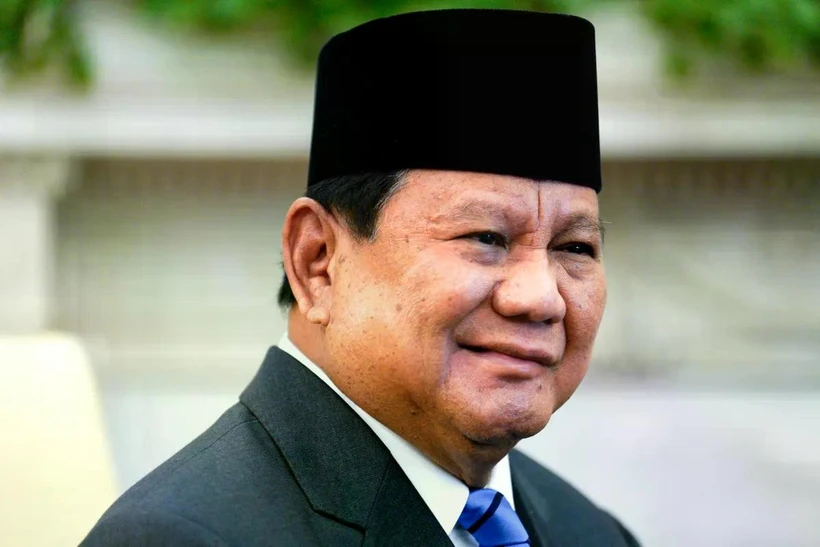
Indonesian President Prabowo Subianto announced that the country’s budget efficiency measures will continue in three phases, targeting total savings of 750 trillion IDR (44 billion USD).

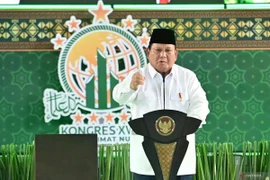
Indonesian President Prabowo Subianto (Photo: bloomberg.com)

Jakarta (VNA) – Indonesian President Prabowo Subianto announced that the country’s budget efficiency measures will continue in three phases, targeting total savings of 750 trillion IDR (44 billion USD).

Speaking at the 17th anniversary celebration of the Gerindra Party at Sentul International Convention Centre (SICC), Prabowo outlined the government’s fiscal strategy. In the first phase, the Ministry of Finance successfully saved government spending by 300 trillion IDR. The second phase aims for another 308 trillion IDR in savings.

However, 58 trillion IDR from the second phase will be reallocated to ministries and government agencies, effectively reducing the net savings to 250 trillion IDR.

He said that by 2025, state-owned enterprises (SOEs) are expected to generate 300 trillion IDR in dividends, with the government utilising 200 trillion IDR. In total, the country will have 750 trillion IDR.

A portion of the savings will fund the Free Nutritious Meals (MBG) programme, which has an estimated budget of 375 trillion IDR (around 24 billion USD) through 2029.

Additionally, the government plans to channel the remaining 375 trillion IDR, or approximately 20 billion USD, into Danantara, the state-owned investment superholding set to launch on February 24.

Reports showed that Danantara would manage assets of SOEs, including banks Mandiri and BNI, state utility PLN, oil and gas company Pertamina, mining giant MIND ID, and telecommunications company Telkom.

Minister of Finance Sri Mulyani Indrawati recently reaffirmed that Indonesia’s 2026 state budget will continue the cost-cutting measures implemented in 2025. The current budget has already been trimmed by 306.69 trillion IDR, affecting ministry allocations and regional transfers.

While maintaining fiscal discipline, Sri Mulyani assured that public services and social spending, including social assistance programmes, will remain protected. The Finance Ministry will conduct a comprehensive review of all government agencies to ensure compliance with efficiency measures while upholding constitutional obligations./.

VNA
See more

Thailand faces rising risk of heatwaves: expert

Thailand faces rising risk of heatwaves: expert

Higher temperatures could increase health risks, energy costs, and water demand while dry spells could affect agricultural output, farm incomes, and long-term food security, an expert warned.

Malaysian digital ministry launches govt innovation drive to fast-track AI nation 2030

Malaysian digital ministry launches govt innovation drive to fast-track AI nation 2030

The initiative, conceived under the leadership of Digital Minister Gobind Singh Deo, is designed to move government innovation beyond policy and pilots into measurable delivery, with a strong focus on using Made by Malaysia technologies, strengthening the domestic AI ecosystem and helping local digital and AI producers scale both nationally and internationally.

Tension between Myanmar and Timor Leste escalates

Tension between Myanmar and Timor Leste escalates

Myanmar has requested the Charge d'Affaires of the Embassy of Timor-Leste in Myanmar, Elisio do Rosario de Sousa, leave the country, said the Ministry of Foreign Affairs of Myanmar on February 15.

Illustrative image (Photo: freemalaysiatoday.com)

Malaysia cracks down on e-cigarette

A total of 33 people were arrested while over 1.72 million MYR (400,000 USD) worth of electronic cigarette devices and merchandise were seized in a joint operation carried out simultaneously across seven districts in Malaysia’s Sabah state.

Malaysia seizes over three tonnes of synthetic drugs. (Photo: Malay Mail)

Malaysia seizes over three tonnes of synthetic drugs

Preliminary investigations indicate the syndicate had been operating for several years, using sea routes across the East Sea as its main transport channel. The drugs were allegedly stored in containers at logistics facilities before being distributed to international markets.