Hanoi (VNA) – Vietnam’s industry and trade sector closed 2025 with a strong performance despite persistent global volatility, reaffirming its role as a pillar of the national economy and opening up new development space.
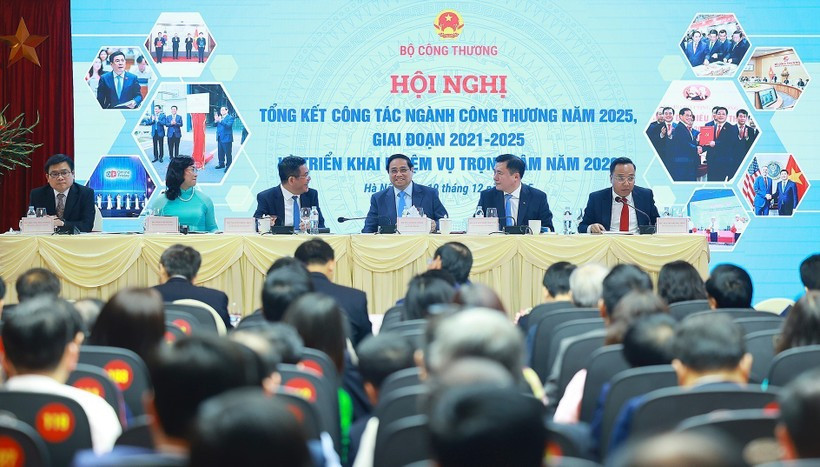
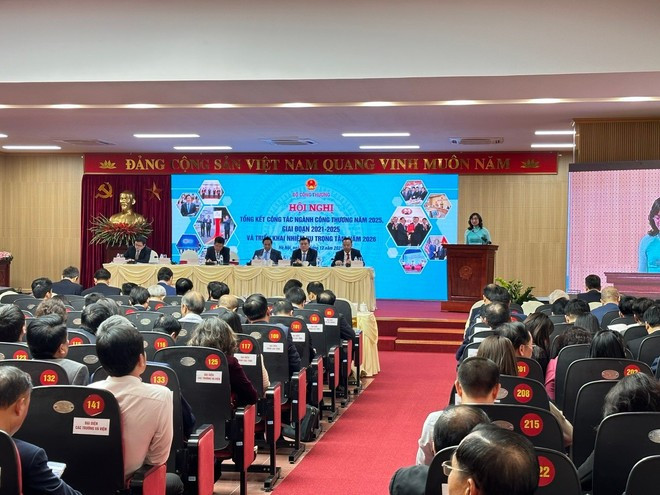
The assessment was made at a national conference held by the Ministry of Industrial and Trade (MoIT) in Hanoi on December 19 to review its performance in 2025 and the 2021–2025 period, and outline key tasks for 2026.
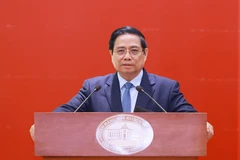
Presenting the review report, Deputy Minister of Industry and Trade Phan Thi Thang noted that global economic growth in 2025 remained modest compared to pre-COVID-19 levels as trade tensions, rising protectionism, geopolitical conflicts disrupting supply chains, and impacts of climate change continued to heap pressure on global trade and investment flows. Several of Vietnam’s key export markets recovered slowly, while the US – its largest export partner – applied reciprocal tariffs, posing challenges to a highly open economy like Vietnam’s.
Domestically, 2025 marked the final year for implementing the 2021–2025 socio-economic development plan. This is a period heavily affected by the pandemic in its early years and by severe natural disasters in later years, including unprecedented consecutive storms and floods that caused heavy human and material losses. At the same time, the year served as a springboard for the 2026–2030 development phase as Party congresses at all levels took place in the run-up to the 14th National Party Congress.
Against that backdrop, the entire political system pushed ahead with apparatus streamlining, institutional perfection, administrative reform, power decentralisation, and improvements to the business and investment environment. The Party and Government set an economic growth target of at least 8% for 2025, laying a cornerstone for double-digit growth from 2026 onward.
Thanks to decisive leadership and coordinated efforts across ministries, localities, businesses, and the public, Vietnam’s economy continued to bounce back strongly. Within this broader picture, the industry and trade sector largely fulfilled – and in many cases exceeded – its targets for both 2025 and the full 2021–2025 period.
A major highlight was a breakthrough in institutional building. Over the five-year period, the MoIT spearheaded the drafting and submission of six major laws, including the Law on Oil and Gas, the Law on Protection of Consumers’ Rights, the Law on Electricity, the revised Law on Chemicals, the Law on Economical and Efficient Use of Energy, and the Law on E-commerce. These were complemented by 65 decrees, 216 circulars, and more than 20 strategies, master plans and key programmes, creating a solid legal foundation for industrial and trade development in the medium and long terms.
In 2025 alone, institutional reform gathered further momentum, with the National Assembly’s passage of several important laws and the Government’s issuance of major policies on industrial development, energy security and flagship energy project. These results have helped mobilise social resources, ease bottlenecks for production and business, and generate a new impetus for development.
Most macroeconomic balances, particularly energy security and the supply and demand of essential goods, were maintained throughout 2021–2025. By the end of 2025, Vietnam’s power system reached a capacity of around 90,000 MW – the largest in Southeast Asia and among the world’s top 20. The record-time completion of the Lao Cai – Vinh Yen 500 kV transmission line stood out as a symbol of innovation and determination across the sector.
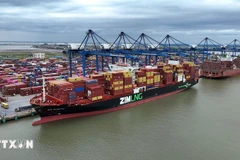
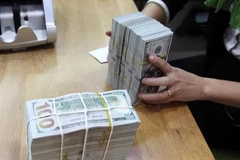
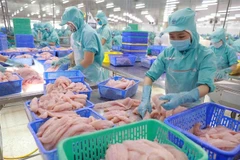
Trade continued to be a key growth engine. During 2021–2025, exports grew by an average of 10.8% per year, well above plan, while the trade balance continuously recorded surpluses. In 2025, total import-export turnover was estimated at 920 billion USD, placing Vietnam among the world’s 15 largest trading nations.
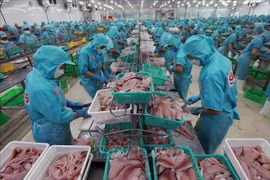
Industrial production rebounded strongly, with the industrial production index estimated to rise 9.5% in 2025 – the fastest pace since the pandemic – led by a 10.6% increase in processing and manufacturing.
Economic integration into the world also advanced, with Vietnam signing four new free trade agreements (FTAs), bringing the total to 17 FTAs with 65 countries and territories. In 2025, improving the quality of FTA implementation was prioritised, notably through the launch of a local-level FTA implementation index. Facing increased global trade risks, the sector has also taken proactive and flexible steps to handle trade ties with major partners while promoting the negotiation and upgrade of deals within ASEAN and those between ASEAN and external partners.
The domestic market remained a crucial buffer, growing by around 9–10% this year. E-commerce surpassed 30 billion USD for the first time, making up a large share in the digital economy. Meanwhile, the adoption of the Law on E-commerce marked an important step in perfecting the legal corridor to modern trade.
Looking ahead to 2026 – the first year of implementing the 14th National Party Congress’s resolution and the 2026–2030 socio-economic development plan, Deputy Minister Thang said the sector will press on with institutional reform, strive for industrial production growth of over 10%, boost exports through better FTA utilisation and market diversification, and further develop the domestic market in tandem with digital transformation and e-commerce./.