Hanoi (VNA) – To help businesses diversify export markets, Ho Chi Minh City has been actively promoting trade with the Halal market, which serves an estimated 2.2 billion Muslim consumers worldwide, particularly in the Middle East.
The global economy is facing mounting uncertainties, as rising tariff tensions and growing trade protectionism put pressure on highly open economies such as Vietnam. At the same time, exports to traditional markets including the US, Europe and Japan are becoming increasingly challenging due to stricter standards and regulations. In this context, diversifying export destinations has become an urgent task for Vietnamese enterprises.
In contrast, the Middle East has emerged as a dynamic import market, with total annual merchandise imports estimated at over 1.2 trillion USD. Many countries in the region record average GDP growth rates of 5–6% per year, far exceeding the 1–2% seen in developed economies.
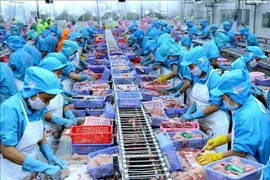
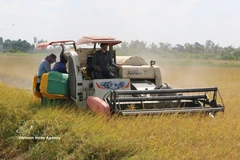
Statistics for the first 11 months of 2025 show that Vietnam’s exports to the United Arab Emirates reached 5.4 billion USD and Saudi Arabia 1.9 billion USD. Major export items included high-tech products such as mobile phones and components, accounting for nearly 35% of total export value, alongside electronics, footwear, textiles and garments, cashew nuts, seafood, vehicles and agricultural products. However, experts note that export potential between Ho Chi Minh City and Middle Eastern markets remains underexploited.
Many major retail and distribution groups in the region, including Lulu Hypermarket in the UAE and Al Othaim Markets in Saudi Arabia, have expressed strong interest in sourcing high-quality products from Vietnam. This presents favourable opportunities for HCM City businesses to directly access large distribution networks, secure long-term export contracts and expand into a market with strong purchasing power and high growth potential.
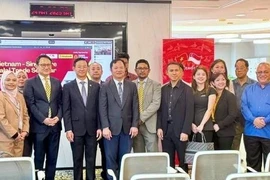
Tran Phu Lu, Director of the HCM City Investment and Trade Promotion Centre of HCM City (ITPC), said that as the country’s economic hub, the city has proactively pursued international economic integration while implementing comprehensive measures to support enterprises and investors. These efforts aim to address operational challenges, promote production and business activities, and help local firms participate more deeply in global supply chains.
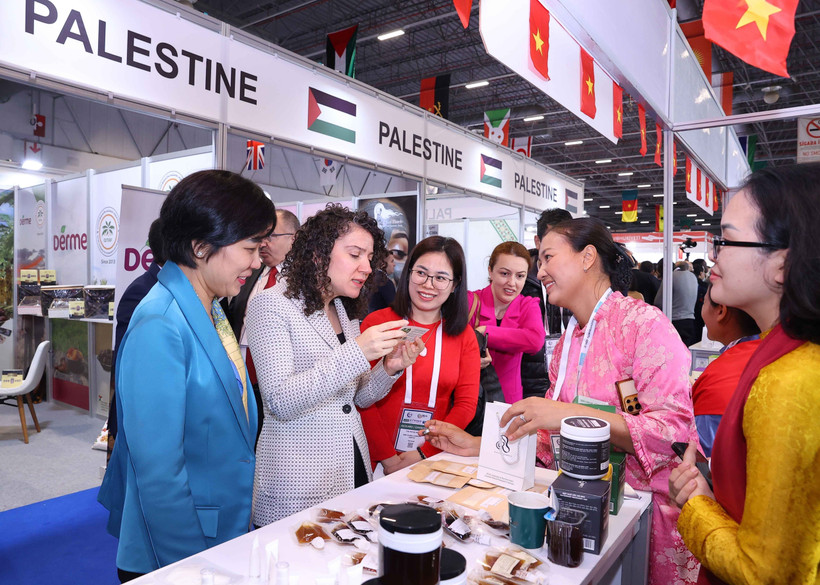
Amid rapidly growing global demand for Halal products, HCM City has identified the development of a Halal ecosystem as a strategic direction. According to Lu, this approach not only opens up new export opportunities but also helps enhance Vietnam’s position in international value chains. In 2025, ITPC organised more than 160 trade and investment promotion activities, including domestic and overseas fairs and exhibitions. For high-potential Halal markets, particularly in the Middle East, ITPC has launched programmes to support enterprises through supply-demand matching and international supply chain connectivity.
The Halal market accounts for around 25% of the world’s population and is forecast to reach an economic scale of 10 trillion USD before 2028. The Halal food sector alone is expected to grow from more than 2.71 trillion USD in 2024 to over 5.91 trillion USD by 2033, with an average annual growth rate of about 9%. The Middle East, with a population of roughly 500 million and total GDP of 3.6 trillion USD, relies heavily on food imports, which reached 132 billion USD in 2023, while Gulf Cooperation Council countries import about 85% of their food needs.
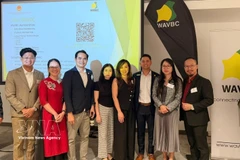
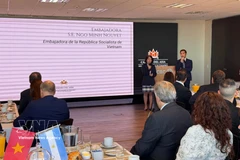
Nguyen Phuong Tra, Director-General of the Middle East–Africa Department under the Ministry of Foreign Affairs, said HCM City should strengthen cooperation with Middle Eastern partners and develop preferential policies on taxation and interest rates.
She also encouraged businesses to participate in major trade events such as the Saudi Food Expo, Halal Trade Expo Dubai and MIHAS in Malaysia to connect directly with international distribution networks.
HCM City’s push to expand exports to the Halal market aims not only to diversify export destinations but also to tap into a vast new growth space, turning access to 2.2 billion Muslim consumers into a sustainable driver for future growth./.