UNFPA Representative in Vietnam Matt Jackson. (Photo: UNFPA)
 Following is the full text of the interview.
Reporter: You have been in Vietnam for four months as the UNFPA Representative. Will you share with us your feelings about Vietnam – its culture, land and people?
Matt Jackson: Vietnam is rich in culture, history and beautiful landscapes. Vietnam’s ambition for a brighter future has helped endure difficult times, providing comfort to many, and ensuring that Vietnam is a crucial member of the international community, including at the United Nations.
I began my role as UNFPA Representative in Vietnam just a few months ago, yet I have been fortunate to experience several different parts of Vietnam already and to meet many wonderful people. I am grateful for the opportunity to drive forward UNFPA’s partnership with the government and people of Vietnam and to be part of the transformations that are taking place across the country, from addressing the challenges of climate change to reaping the opportunities of economic growth and population dynamics. UNFPA has enjoyed cooperation with Vietnam for 46 years with many successes. On my recent travels, I have learnt a lot about this partnership as well as seeing Vietnam’s rich culture, including visiting the homeland of President Ho Chi Minh in Nghe An and the complex in Ha Tinh in memory of Nguyen Du, the great poet of Vietnam.
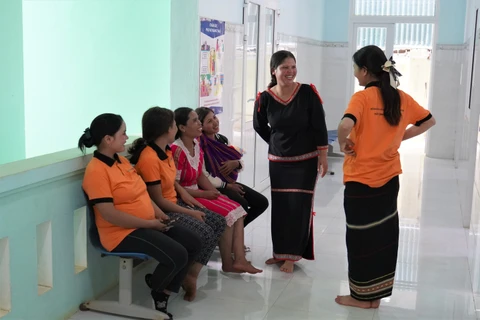
There has been much change since my first visit to Vietnam thirteen years ago but what I have enjoyed most so far is meeting the people of Vietnam. Whether it be conversations with government Ministers, social workers at the One Stop Service Centres (Ngoi nha Anh Duong) established by UNFPA in collaboration with MOLISA, the young people I met at FPT University in Hanoi or community groups supporting older people in southern provinces, it is the warmth of the people of Vietnam that strikes me the most and is a privilege to experience. In addition, I can’t finish a comment without mentioning the wonderful food and fresh ingredients from across the country. It’s no wonder that Vietnam has a strong reputation as a country of friendly people and good food.
On the threshold of the Lunar New Year, I would like to congratulate Vietnam for its strong commitments to the UN’s 2030 Sustainable Development Agenda that was institutionalised in the National Action Plan. Vietnam is making good progress towards the UN Sustainable Development Goals (SDGs) and to ensure that no one is left behind. It is my hope that Vietnam will continue to strive to achieve the remaining challenges.
As we look to the year ahead, I would like to extend my best wishes to the Government of Vietnam and all Vietnamese people for a prosperous and happy new year – the Year of the Dragon (Giap Thin).
Reporter: You have mentioned that one of the major population challenges facing Vietnam is that the country is experiencing rapid population ageing. Would you elaborate your point? What would be your recommendations to the Government of Vietnam in order to ensure that population ageing doesn’t affect sustainable development in Vietnam?
Matt Jackson: First of all, this is a good news story. The fact that people in Vietnam are living longer is a positive outcome of development and prosperity. However, as with any demographic change, it’s important to understand and prepare for the changes ahead to ensure that everyone has access to quality services such as health, education and financial, to enable everyone including older people to live with dignity.
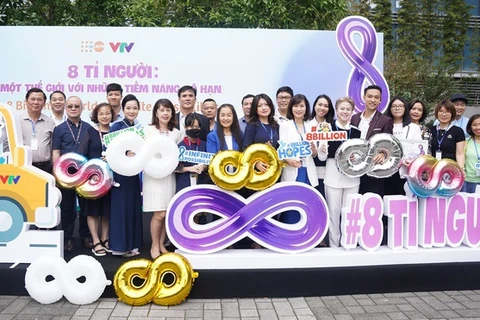
By 2050, the proportion of older persons aged 60 and above in the Asia-Pacific region is projected to increase from about 14% in 2022 to nearly 26%. The proportion of children under 14 will move in the opposite direction decreasing from 23% to 17%. Yet there will be differences between countries and regions. In Vietnam, the 2019 population pyramid shows that the country is currently in the demographic window of opportunity. In other words, Vietnam has the advantage of tapping the “demographic dividend”. This is projected to end by 2039 as Vietnam is also one of the most rapidly ageing countries worldwide with the transition from “population ageing” to “aged population” expected to be much shorter than for many other countries.
Findings of the recent National Transfer Accounts for Vietnam conducted by the General Statistics Office in collaboration with UNFPA provided a comprehensive understanding of the impact of demographic changes for policy making by placing population at the centre of economic growth and development and assessing the impact of demographic changes on national income, consumption, saving and investment.
Experience from many countries shows that population policies are often underrated in terms of their importance, resulting in numerous demographic consequences that can negatively impact the socio-economic development of nations. Prioritising investment in these areas not only benefits societies and communities but also avoids the additional costs of addressing related challenges at a later stage.
Vietnam is currently implementing socio-economic development strategies for 2021-2030 to achieve the UN Sustainable Development Goals (SDGs). Adopting a life-cycle approach to aging, following the principles set out in the International Conference on Population and Development (ICPD) which celebrates its 30th anniversary next year, will help to ensure that Vietnam takes full account of the opportunities of a demographic dividend in preparing for the population ageing process. This includes investing in human resources such as increasing participation in the labour force and supporting women in the workforce.
Reporter: Would you highlight some of the programmes and projects to be implemented by UNFPA in Vietnam in 2024?
Matt Jackson: 2024 is a moment to remind the world of the groundbreaking outcome of the International Conference on Population and Development (ICPD), held in Cairo in 1994, which champions people-centred development, rights and choices for all, and the pursuit of common objectives such as peace and prosperity.
As the United Nations sexual and reproductive health agency, UNFPA is making every effort around the world to end preventable maternal deaths, end the unmet need for family planning, and end gender-based violence (GBV) and harmful practices by 2030. Ensuring rights and choices for all such as bodily autonomy is a major principle of population-centred development because people who can make choices about their bodies often have more and better options throughout their lives. These three goals are part of UNFPA’s corporate strategic plan worldwide, including in Vietnam where they also included in the 10th UNFPA Country Programme for Vietnam 2022-2026.
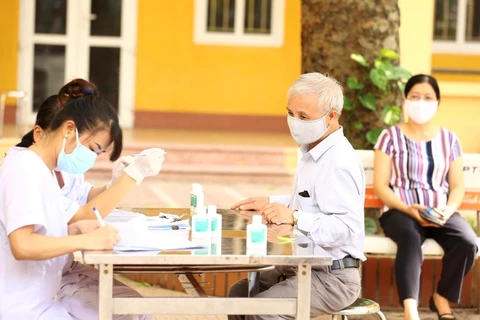
In 2024, UNFPA will continue to support the government of Vietnam’s work in strategic areas including sexual and reproductive health and rights (SRHR); youth development; population ageing; evidence-based policy making and ending gender-based violence and harmful practices against women and girls. Some of the areas that I am most excited about are working with government Ministries, Departments and other partners to develop plans to roll-out HPV vaccinations, scale up the One Stop Service Centres (Ngoi nha Anh Duong) and National Hotline to support survivors of GBV, support life skills and comprehensive sexuality education for young people, and enable robust population data for effective policy making.
UNFPA will continue to support Vietnam’s population ageing process by supporting an integrated and coherent social protection system and applying a life-cycle and gender-transformative approach for ageing to meet the needs of the most vulnerable groups. We will also continue to increase equitable access to comprehensive and gender-transformative SRHR information and services and to create and support comprehensive youth development and participation with a focus on vulnerable and marginalised groups including ethnic minorities, adolescents and youth, people with disabilities LGBTQI and migrant workers.
UNFPA continues to enhance our partnerships with the Vietnamese Government’s Ministries and agencies to ensure evidence-based and rights-based policy and programme making, budgeting and monitoring through our ongoing interventions on data production and analysis. And we will continue to support Vietnam’s aims to promote gender equality, prevent and respond to GBV and address gender-biased sex selection and other harmful practices including early marriage. One concrete area of work we are committed to is supporting the Government’s ambition to develop a multi-sectoral GBV coordination mechanism at national and provincial levels, ensuring alignment with global standards and to leave no one behind. This will ensure that all survivors of GBV can access timely and quality support services regardless of their location or situation.
These are just some examples of UNFPA’s work to deliver a world where every pregnancy is wanted, every childbirth is safe and every young person's potential is fulfilled.
Reporter: Thank you for your interview!