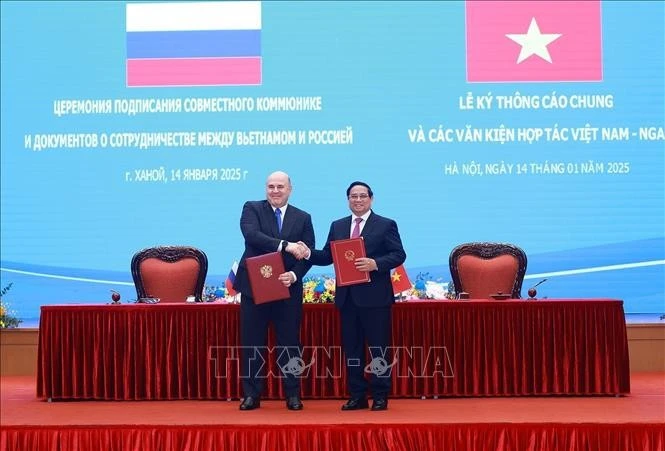
Hanoi (VNA) – Vietnam and Russia have issued a joint communiqué on Russian Prime Minister Mikhail Vladimirovich Mishustin’s official visit to the Southeast Asian nation from January 14 to 15.
The following is the full text of the joint communiqué:
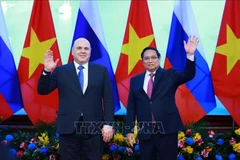
At the invitation of the Prime Minister of the Socialist Republic of Vietnam, Prime Minister of the Russian Federation M.V. Mishustin paid an official visit to the Socialist Republic of Vietnam from January 14 to 15, 2025. The visit took place in the context of the two countries preparing for the celebration the 75th anniversary of their diplomatic relations (January 30, 1950).
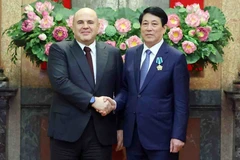
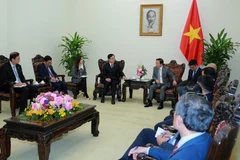
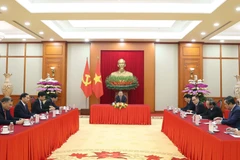
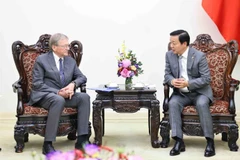
In Hanoi, PM Mishustin paid a courtesy call to General Secretary of the Central Committee of the Communist Party of Vietnam To Lam and State President Luong Cuong, held talks with PM Pham Minh Chinh, and met with Chairman of the National Assembly Tran Thanh Man. PM Mishustin laid a wreath at the Monument for Heroic Martyrs and paid tribute to President Ho Chi Minh at his mausoleum.
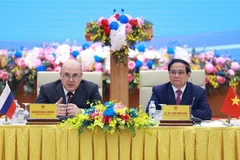
PM Chinh and his Russian counterpart chaired a meeting with outstanding businesses of the two countries.
In a warm and friendly atmosphere, the two sides had in-depth discussions on many contents and orientations to promote the Vietnam-Russia relations in the fields of politics, economy-trade, science-technology and humanities, defence, security, education-training, transportation, tourism, and other fields. They also touched upon international and regional issues of shared concern. The leaders noted their support for enhanced exchanges through Party and parliament channels, as well as between ministries, agencies, and localities.
The Russian side acknowledged Vietnam's remarkable socio-economic achievements, and its elevated position in the region and the world at large.
The Vietnamese side spoke of Russia's positive achievements in socio-economic stabilisation and development.
They shared the view that the Vietnam-Russia Comprehensive Strategic Partnership is constantly developing on the basis of mutual benefits thanks to regular political exchanges and contacts, especially at the highest level. Results of the State visit to Vietnam by Russian President Vladimir Vladimirovich Putin from June 19 to 20, 2024, his talks with PM Chinh on the sidelines of the expanded BRICS Summit (October 24, 2024), as well as the official visit to Russia by NA Chairman Tran Thanh Man (from September 8 to 10, 2024) have created strong momentum for the multifaceted cooperation between the two countries.
The two sides emphasised the importance of jointly celebrating major anniversaries of the two countries and in the Vietnam-Russia relationship, including the 75th anniversary of the diplomatic relations (January 30, 1950), the 50th anniversary of the liberation of the South and national reunification of Vietnam (April 30, 1975), the 80th anniversary of the Victory in the Great Patriotic War (May 9, 1945), and the 80th anniversary of the National Day of Vietnam (September 2, 1945).
They also discussed and agreed on measures to enhance bilateral trade, including further utilising the Free Trade Agreement between Vietnam and the Eurasian Economic Union and its member states, with the 10th anniversary of its signing to be celebrated this year (May 29, 2015), and on the need to increase the supply of goods to respective markets.
Vietnam and Russia agreed on the need to develop railway and maritime trade systems, and multimodal freight transport. The two sides acknowledged the significance of studying payment methods to serve trade activities and other bilateral transactions.
They consented to further improve the bilateral legal basis to promote cooperation in various fields. They noted the efforts of the Vietnam-Russia Intergovernmental Commission on Economic, Trade, and Scientific and Technical Cooperation and the ministries and agencies of the two countries that agreed and signed cooperation documents during the visit. They also welcomed the continued exchanges and negotiations for new cooperation documents in the coming time.
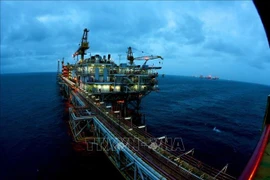
The two sides consented to continue to create favourable conditions for the implementation of joint oil and gas projects on the continental shelf of Vietnam and on the territory of Russia, in accordance with the laws of the two countries and international law, including the 1982 United Nations Convention on the Law of the Sea.
They acknowledged Russia's provision of oil and liquefied natural gas to Vietnam, along with processed products, and the development of new power projects, including renewable energy projects, as promising cooperation directions.
The two countries will continue their cooperation in implementing the Nuclear Science and Technology Research Centre project in Vietnam. Russia is ready to participate in building Vietnam's national nuclear power industry.
The two sides noted the stable operation of the Russian automotive manufacturer Gorkovsky Avtomobilny Zavod, with a portion of its products exported to neighbouring countries.
They agreed to continue supporting all the activities of the Joint Vietnam-Russia Tropical Science and Technology Research Centre that plays an important role in developing bilateral scientific and technological cooperation.
The two sides acknowledged the importance of continuing cooperation in the field of education and training, including training Vietnamese citizens at Russian universities within the quotas granted by the Russian Government and the activities of the Russian-Vietnamese Consortium of Technical Universities. They decided to speed up the implementation of the project to establish a general education institution teaching in Russian in Hanoi. The two sides agreed to continue supporting the learning and teaching of the Russian language in Vietnam, including utilising the Pushkin State Russian Language Institute’s branch in Hanoi, while also enhancing and expanding the study and teaching of the Vietnamese language in Russia.
The two sides attached importance to boosting healthcare cooperation including the provision of medical equipment, pharmaceuticals, training personnel, nuclear medicine, and other areas of mutual interest.
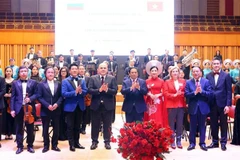
The two sides recognised the role of people-to-people exchanges in developing the traditional friendship between Vietnam and Russia. They welcomed the enhancement of humanistic exchanges, regularly organising national cultural days, artistic performances, film screenings, and activities to enhance mutual understanding between the people of the two countries through friendship organisations, media, and social organisations. The two sides supported ongoing efforts to simplify travel procedures for citizens of both countries.
The two sides expressed satisfaction with the resumption of regular and chartered direct flights, which has contributed to increasing tourist flows between the two countries. The two sides believed that cooperating to add destinations and increase the number of flights is in line with the travel needs of the people of both countries. The two sides welcomed relevant authorities of both countries to enhance exchanges to promote transport connectivity between Vietnam and Russia, as well as to develop Vietnam's transport system.
The two sides recognised that relations between their localities have significant potential and always play an important role in Vietnam- Russia cooperation; and enhancing locality-to-locality cooperation will meet the desires and interests of the people of both countries and should be translated into specific bilateral cooperation projects.
The two sides opposed the use of unilateral restrictive measures, interference in internal affairs of sovereign nations, protectionism, and the application of extraterritorial jurisdiction, violations against the principles and regulations of international law, including the United Nations Charter.
The two sides emphasised the universality and comprehensiveness of the United Nations Convention on the Law of the Sea 1982 (UNCLOS), which serves as the legal foundation for all activities at sea and in the oceans, affirming the need to maintain the integrity of the convention. The two sides will coordinate to ensure security, safety, and freedom of navigation and aviation, as well as unimpeded commercial activities.
The two sides expressed their support for showing restraint and refraining from the use of force or threats to use force, as well as resolving differences through peaceful means, in line with principles of international law, including those formulated in the UN Charter and the UNCLOS 1982. The two sides committed to implementing the 2022 Declaration on the Conduct of Parties in the East Sea (DOC), and welcomed efforts toward developing a substantial and effective Code of Conduct in the East Sea (COC).
The two sides supported the formation of a comprehensive and sustainable structure in relations among countries in Asia, based on the principles of equality, sovereignty, independence, non-alignment, and international law. They emphasised the importance of and supported the central role of the Association of Southeast Asian Nations (ASEAN) in regional issues and reaffirm their commitment to the 1976 Treaty on Amity and Cooperation in Southeast Asia (TAC).
The two sides welcomed the enhancement of exchanges, cooperation, and mutual support at multilateral forums, including the United Nations, the Asia-Pacific Economic Cooperation (APEC) forum, and ASEAN mechanisms such as the East Asia Summit, the ASEAN Regional Forum, and the ASEAN Defence Ministers' Meeting Plus, and welcomed initiatives within these frameworks aimed at promoting a multipolar, fair, and sustainable world order, based on fundamental principles of international law and the UN Charter, expanding the space and opportunities for the free and successful development of nations and associations.
The two sides expressed their willingness to cooperate mutually beneficially and effectively within the framework of APEC, a leading regional economic cooperation mechanism, focusing on implementing APEC's visions and priorities, addressing practical issues, with particular emphasis on promoting and supporting each other's initiatives, including when Vietnam assumes the role of Chair of this forum in 2027.
The two sides emphasised the importance of the first ASEAN-Russia Summit held in 2005 in Kuala Lumpur, Malaysia, and welcomed its 20th anniversary this year. They agreed to strengthen and deepen the ASEAN-Russia Strategic Partnership, continue implementing the 2021-2025 comprehensive plan of action to implement this partnership, and prepare for a new cooperation document for the next five years, as well as a strategic programme for trade and investment cooperation between ASEAN and Russia, with focus on energy, high-tech industries, digital transformation, and smart cities. They agreed to continue close cooperation at major economic forums in Asia, such as the ASEAN Investment and Business Summit and the Eastern Economic Forum.
Both sides welcomed the strengthening of ASEAN's partnership with the Eurasian Economic Union (EAEU) and the Shanghai Cooperation Organisation (SCO), based on the 2018 Memorandum of Understanding (MoU) between ASEAN and the Eurasian Economic Commission and the 2005 MoU between the ASEAN Secretariat and the SCO Secretariat, aiming to promote peace, stability, security, trust, development, and prosperity across the Eurasian continent.
Russia welcomed Vietnam's active participation in BRICS events in 2024 and expressed its willingness to create favourable conditions for Vietnam if the country joins BRICS as a partner nation./.