Lao Cai, China’s Dali prefecture step up economic, trade cooperation

In recent years, economic and trade ties between Dali and Vietnam have expanded robustly. In 2024, the prefecture’s total import-export turnover with Vietnam exceeded 1 billion CNY (about 140 million USD), accounting for 36% of Dali’s total goods trade.

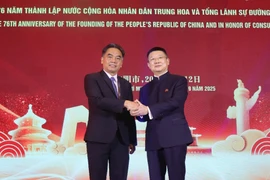
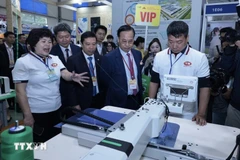
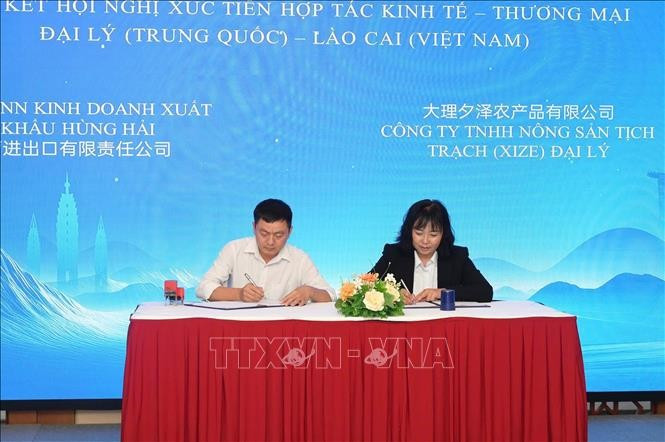
Lao Cai and Dali businesses sign cooperation agreement (Photo: VNA)

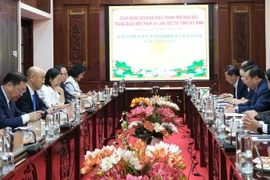
Lao Cai (VNA) — An economic and trade promotion conference between Vietnam’s Lao Cai province and Dali prefecture of China’s Yunnan province took place in Lao Cai ward on October 21, marking an important step toward strengthening friendship and practical cooperation between the two localities.

The event aimed to open new opportunities for effective collaboration in trade, logistics, tourism, high-tech agriculture, clean energy, and people-to-people exchange.

In recent years, economic and trade ties between Dali and Vietnam have expanded robustly. In 2024, the prefecture’s total import-export turnover with Vietnam exceeded 1 billion CNY (about 140 million USD), accounting for 36% of Dali’s total goods trade. Major exports included grapes, citrus fruit, leafy vegetables, fresh durian, and processed agricultural products.

Lao Cai has become a key trade hub in this partnership, hosting several Dali enterprises that operate warehouses and logistics centres. Goods are cleared through the Hekou–Lao Cai border gate before being distributed across Vietnam. Notably, 2024 marked the first time Dali’s farm produce was shipped by rail from Dali Xiangyun railway station to Lao Cai, creating a more efficient logistics link between the two sides.

Vice Chairman of the Lao Cai People’s Committee Nguyen Thanh Sinh highlighted the similarities between Dali - a scenic region with a rich cultural heritage, strong tourism and agriculture sectors, and strategic importance in southwestern China - and Lao Cai, as both are mountainous, multi-ethnic, and resource-rich localities pursuing green growth, high-tech farming, and clean energy development.

While Lao Cai benefits from its border location, international border gate, and trans-Asian logistics corridor, Dali holds strengths in tourism technology, clean energy, and modern urban planning. Their complementary advantages, Sinh said, offer significant potential for mutually beneficial cooperation that supports local businesses and communities.

According to Yang Guozong, Secretary of the Dali Party Committee, Vietnam remains one of Dali’s top trade partners, with growing economic, cultural, and tourism exchanges. Dali’s agricultural products such as grapes, citrus, pomegranates, and garlic are popular in Vietnam. Vietnamese goods, including dragon fruit, longan, pangasius fish, chilli, coffee, and industrial products like cement and rubber, are widely exported to China.

Yang expressed his hope that the visit to Lao Cai and the trade promotion conference would serve as a new starting point for deeper, broader, and higher-quality cooperation with Vietnamese localities, driving shared growth and prosperity. He proposed enhancing trade facilitation, industrial connectivity, and people-to-people exchanges in the coming period.

During the event, enterprises from both sides presented their cooperation proposals to boost bilateral trade and increase import-export value. Several agreements were signed between agricultural export-import and digital technology firms. Lao Cai pledged to work closely with Dali authorities to strengthen trade and investment links and provide the best possible conditions in procedures, infrastructure, and logistics to support businesses in Dali and other Yunnan localities operating in the province./.

VNA

See more

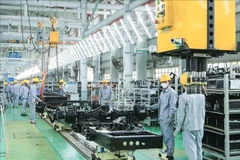
An automobile assembly line of the THACO Truong Hai Group in Da Nang. (Photo: VNA)

Da Nang promotes investment attraction to achieve over 11% growth

Da Nang's foreign direct investment (FDI) attraction showed strong growth, reaching 237.7 million USD, double the level recorded a year earlier. The city granted licences for 47 new FDI projects, approved capital adjustments for 16 projects and recorded 10 transactions involving capital contributions and share acquisitions in economic organisations.

Deputy Prime Minister Nguyen Van Thang speaks at the forum. (Photo: vneconomy.vn)

Vietnam pivots to selective, high-quality FDI attraction for sustainable growth: Deputy PM

The FDI sector remains a key pillar of Vietnam’s economy, with more than 46,500 valid projects and total registered capital exceeding 543 billion USD so far. Disbursed capital has reached around 357.6 billion USD. The FDI sector contributes over 20% of GDP, accounts for around 70% of total export turnover, and creates jobs for millions of workers. Vietnam continues to rank among ASEAN’s leading FDI destinations despite global investment slowdowns.

Customs officers inspect vehicles and imported goods at the Huu Nghi International Border Gate in Lang Son province. (Photo: VNA)

Customs intensify crackdown on counterfeit goods, trade fraud

The customs sector has identified the fight against smuggling, trade fraud, counterfeit goods and intellectual property violations as a key task. Customs units nationwide have stepped up inspections and supervision of import-export activities along major routes and at key checkpoints.

Workers process clams for export at the factory of Thanh Hoa Fishery Import-Export JSC in Thanh Hoa province. (Illustrative photo: VNA)

Vietnam notifies WTO committee of goods origin management reforms

The information presented by Vietnam attracted attention from others WTO members amid global efforts to accelerate the digital transformation of import – export procedures and improve the implementation of rules of origin to enhance supply chain adaptability.

A Petrolimex worker refuels a motorbike. (Photo: VNA)

Energy imports surge in first quarter of 2026

Data from Vietnam Customs shows that the country spent approximately 2.93 billion USD importing nearly 3.37 million tonnes of petroleum products in the first quarter of 2026, an increase of 77.8% in value and over 44% in volume compared to the same period last year.

A perspective of the Quang Ninh 1 Wind Power Plant project (Photo: Quang Ninh provincial Department of Construction)

Quang Ninh gives nod to first offshore wind power plant

The project is expected to have a designed capacity of 50 MW and will be implemented in nearshore waters of the Co To special zone. It will be the first offshore wind power project in the province, playing a pioneering role in tapping Quang Ninh’s abundant renewable energy potential.