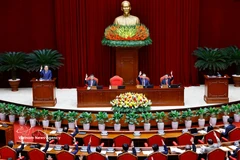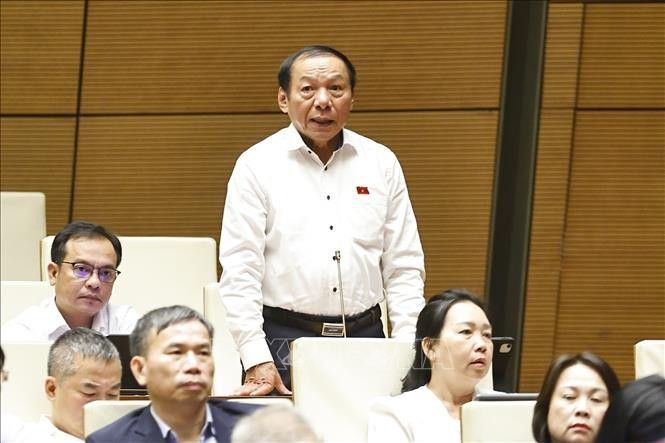
Hanoi (VNA) – Lawmakers emphasised the interconnected roles of tourism and culture, along with the initiative to develop Vietnam’s cultural industries, during their ongoing 10th session in Hanoi on October 29.
They praised progress cited by local authorities, providing deeper scrutiny and on-the-ground insights to refine the Government’s official report. They also proposed a suite of policy proposals to bolster the culture, tourism and communications sectors.
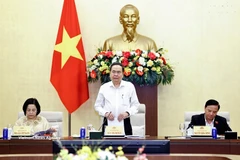
Tran Thi Hong Thanh, a deputy from Ninh Bình province, stressed that the Government should prioritise cultural-industry development. She advocated for more investment in the sector as an economic linchpin that preserves national identity, drives growth, creates jobs, expands creative spaces, and affirms Vietnam’s global stature.
Thanh proposed the introduction of a law on cultural industry development to create a clear and consistent legal framework. The law, she said, should foster a healthy cultural market with defined intellectual property rights, protect creators’ interests, and comprise incentives for investment, taxation, land, and digital transformation.
Vietnam suggested a UN Decade of Culture for Sustainable Development at the recent World Conference on Cultural Policies and Sustainable Development. This proposal received UNESCO endorsement and has been submitted to the UN General Assembly.
Regarding tourism, Minister of Culture, Sports, and Tourism Nguyen Van Hung stated that his ministry has launched key flagship products that show early success, including eco-tourism, marine and island tourism, community-based tourism, cultural tourism, and wellness tourism.
Beyond the 8% GDP contribution stated in the Government’s report, tourism is on track to become a “spearhead economic sector” under the Politburo’s resolution to elevate the industry, Hung said.
For cultural industries, he noted that his ministry has submitted an updated national strategy to the Prime Minister. The plan spotlights competitive niches where Vietnam can achieve rapid gains, including performing arts, film, cultural tourism and fashion design.
Vietnam's cultural sector will be built on three pillars: creators, comprising artists and the public as engines of creativity; enterprises that commercialise ideas; and the state, which is responsible for designing policies and providing regulatory support.
He added that the Government has proposed that the legislature conduct a review and consider enacting a Law on the Cultural Industry to ensure long-term viability.
The Politburo has tasked the Government with presenting a resolution that outlines innovative measures to revitalise and develop Vietnamese culture for the new era. The goal is to establish culture as both a fundamental strength and a key driver of sustainable national development./.
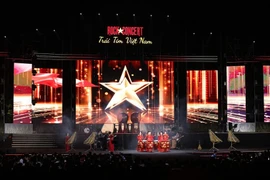
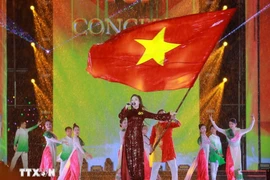
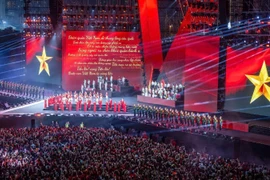
Music concerts show power of national spirit and development of cultural industry
Vietnamese audiences have witnessed the rise of large-scale music concerts, which are not only moments of artistic ecstasy but also serve as cultural bridges gathering national spirit, creative aspirations, and the power of community.