Logistics firms face global pressure to go green

Green logistics can help reduce transportation costs and increase efficiency in the supply chain by optimising delivery routes and reducing the number of empty or half-loaded trucks on the road.

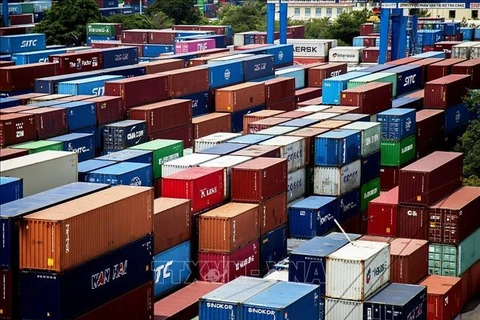
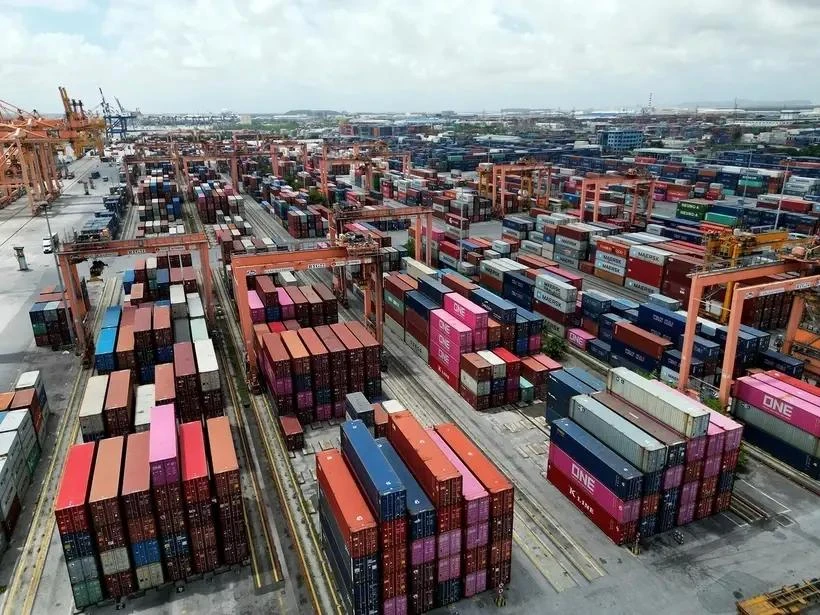
Containers at Tan Vu Port in the northern port city of Hai Phong (Photo: VNA)

Hanoi (VNA) - As consumers prefer environmentally friendly products and the transition to a greener economy is taking place globally, businesses are more interested in investing in green logistics, experts have said.

Green logistics can help decrease transportation costs and increase efficiency in the supply chain by optimising delivery routes and limiting the number of empty or half-loaded trucks on the road.

Tran Thanh Hai, Deputy Director General of the Agency of Foreign Trade under the Ministry of Industry and Trade (MoIT), said that the logistics industry has seen positive growth thanks to the continuous expansion of Vietnam's exports and its position as a leading exporter of rice, coffee, textiles, footwear, phones, and components. This has led to increased demand for international transport services, domestic transport, and distribution services.

However, due to an imbalance of transport infrastructure when road transport predominates over air, rail, and water transport. Greenhouse gas emissions from road transport are 21.95 times higher than those of air transport, 19.94 times higher than maritime transport, and 245.49 times higher than rail transport.

According to the World Bank, transportation activities in Vietnam emit more than 50 million tonnes of CO2 each year, with road transportation accounting for 85% of the total emissions. The figure is expected to increase by an average of 6-7% per year, hitting up to 90 million tonnes of CO2 per year by 2030.

Hai also pointed out that green logistics is not just a trend but a mandatory requirement in the future, meaning businesses could face barriers in terms of awareness and motivation to transition. Some businesses are well aware but are too small in scale or have limited finances to make reasonable investments. While there is a high demand for environmental friendliness, customers are not willing to spend much on sustainable logistics services.

According to Luong Hoang Thai, Director of the Multilateral Trade Policy Department under the MoIT, green logistics is a relatively new concept that is not understood fully and accurately in many developing economies, including Vietnam. Thus, understanding the essence and application of this activity will help businesses enhance their competitiveness and improve their brand name, aiming for comprehensive and sustainable development.

If businesses do not get involved in green logistics, they risk alienation and could gradually be phased out of business, trade, and import-export activities both domestically and globally, said Ngo Khac Le, Deputy Secretary General of the Vietnam Logistics Business Association. He also underlined the necessity to maintain communication campaigns and the involvement of the government and management agencies.

Le also suggested enterprises to effectively exploit inland waterways and maritime transportation to increase the volume of cargo and reduce emissions from vehicles. Domestic enterprises must speed up innovation, creativity, and digital transformation efforts, and vigorously implement green and smart logistics for import and export activities, he added.

Regarding Vietnam's green action plan by 2030, Hai recommended businesses complete relevant standards to reduce emissions from transportation and develop green logistics. They were also urged to shift to clean energy, environmentally friendly vehicles, and warehouses.

It is necessary for them to complete and synchronously roll out fuel quality management solutions, emission standard systems, and transport infrastructure to enhance connectivity and multi-modal transport, he said, adding that businesses should optimise transport and warehousing operations, promote digital governance in transportation, and build a logistics database, along with the development of a non-stop electronic toll collection system and the installation of smart traffic management systems for sustainable logistics development./.
VNA

See more

Professor Tao Yitao, Director of the China Centre for Special Economic Zone Research (Photo: VNA)

Stable beginnings, powerful breakthroughs for Vietnam’s private economic sector

Vietnam is now at a critical juncture in pursuing what its leadership has described as a new era of national rise. In the long term, the development of the private economic sector will depend not only on supportive policies but also on a stable, transparent institutional environment that guarantees fair competition, said Professor Tao Yitao, Director of the China Centre for Special Economic Zone Research.

The trade policy review of Uruguay at the WTO headquarters. (Photo: VNA)

Vietnam participates in WTO review of Uruguay's trade policy

Vietnam also welcomed Uruguay's active engagement in the multilateral trading system as a founding member of the WTO. Uruguay has ratified the Agreement on Fisheries Subsidies, joined the Multi-Party Interim Appeal Arbitration Arrangement (MPIA), and contributed to Joint Statement Initiatives (JSIs) on e-commerce and micro, small and medium-sized enterprises (MSMEs).

Experts discuss cooperation opportunities in Vietnam-Germany manufacturing value chains at the forum. (Photo: VNA)

Vietnam-Germany cooperation creates new opportunities for sustainable manufacturing

Germany is an important partner of Vietnam and a global leader in green technology, smart manufacturing, automation and circular economy solutions. The combination of German technological expertise and Vietnam's manufacturing capabilities and strong commitment to transformation would create significant opportunities in green production, supporting industries, digital transformation, supply chain management and eco-industrial park development.

Businesses introduce Halal market products at the workshop. (Photo: VNA)

Da Nang businesses eye growth in booming global Halal market

Huynh Xuan Son, Deputy Director of the Da Nang Department of Industry and Trade, said the Halal market has emerged as a strategic destination for Vietnamese exporters amid persistent global economic uncertainties. Serving more than two billion consumers across over 110 countries and territories, the market offers significant opportunities for business expansion.

Vietnamese bananas are sold at an AEON supermarket in Japan. (Photo: VNA)

Vietnamese products promoted at AEON stores across Japan

Speaking at the opening ceremony, Deputy Minister of Industry and Trade Phan Thi Thang highlighted the significance of 2026, which marks a decade of cooperation between the ministry and AEON in organising Vietnam Week in Japan.

Growing demand for financing for infrastructure and green transition projects is driving Vietnam’s search for new sources of capital. In the photo: A section of Noi Bai – Lao Cai Expressway. (Photo: VNA)

Vietnam seeks to unlock capital for infrastructure, green transition

As Vietnam advances its sustainable growth agenda and commitment to achieving net-zero emissions by 2050, the need for long-term capital is rising rapidly. Experts say meeting these financing requirements will depend not only on expanding available resources but also on broadening funding sources and improving project financing models.

Private technology enterprises are increasingly viewed as a driving force at the heart of the innovation ecosystem. (Photo: VNA)

Vietnam pushes to develop world-class technology startups

Vietnam’s startup ecosystem now comprises roughly 4,000 startups, 208 investment funds, 84 incubators and more than 20 startup support centres. With an estimated valuation of 75 billion USD, the ecosystem has established most of the key foundations needed for long-term growth.