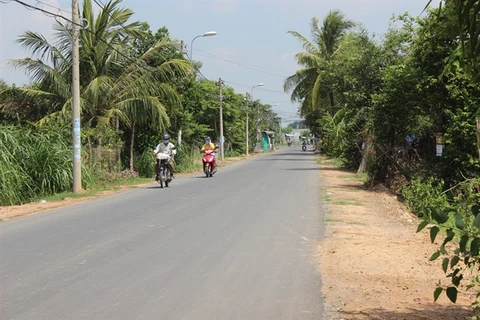
An asphalted and concretised road in Chau Thanh district of Long An province (Photo: VNA)
 Hanoi (VNA) – Chau Thanh district in the Mekong Delta province of Long An has been named as a new-style rural area following a recent decision signed by Prime Minister Nguyen Xuan Phuc.
After eight years of the implementation of the National Target Programme on New-Style Rural Area Building, the district fulfilled all criteria set by the programme and all of its 12 communes had received the title.
More than 1.7 trillion VND (73.19 million USD) were mobilised to carry out the programme. Of which, local residents and businesses contributed 23.8 percent and 10.6 percent, respectively, while the rest came from the State budget.
Notably, all local households have access to electricity and clean water and streetlights were installed in the locality.
The National Target Programme on New-style Rural Area Building, initiated by the Government in 2010, sets 19 criteria on socio-economic development, politics, and defence, aiming to boost rural regions of Vietnam.
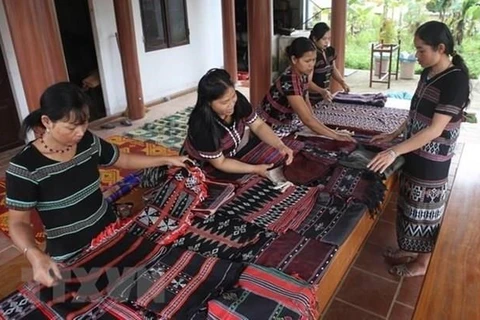
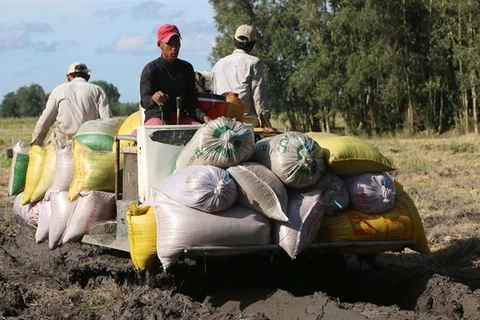
The list of criteria includes the development of infrastructure, the improvement of production capacity, environmental protection, and the promotion of cultural values.
After 10 years of implementing the programme, positive results have been recorded, with half of communes nationwide being recognised as new-style rural areas./.
After eight years of the implementation of the National Target Programme on New-Style Rural Area Building, the district fulfilled all criteria set by the programme and all of its 12 communes had received the title.
More than 1.7 trillion VND (73.19 million USD) were mobilised to carry out the programme. Of which, local residents and businesses contributed 23.8 percent and 10.6 percent, respectively, while the rest came from the State budget.
Notably, all local households have access to electricity and clean water and streetlights were installed in the locality.
The National Target Programme on New-style Rural Area Building, initiated by the Government in 2010, sets 19 criteria on socio-economic development, politics, and defence, aiming to boost rural regions of Vietnam.
The list of criteria includes the development of infrastructure, the improvement of production capacity, environmental protection, and the promotion of cultural values.
After 10 years of implementing the programme, positive results have been recorded, with half of communes nationwide being recognised as new-style rural areas./.
VNA