Measles vaccination campaign expanded amid outbreak risk

Given the highly contagious nature of measles and its dependency on vaccination coverage, timely immunisation efforts are essential.

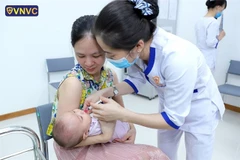
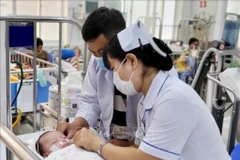
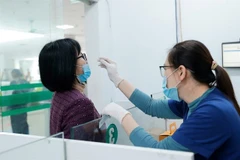
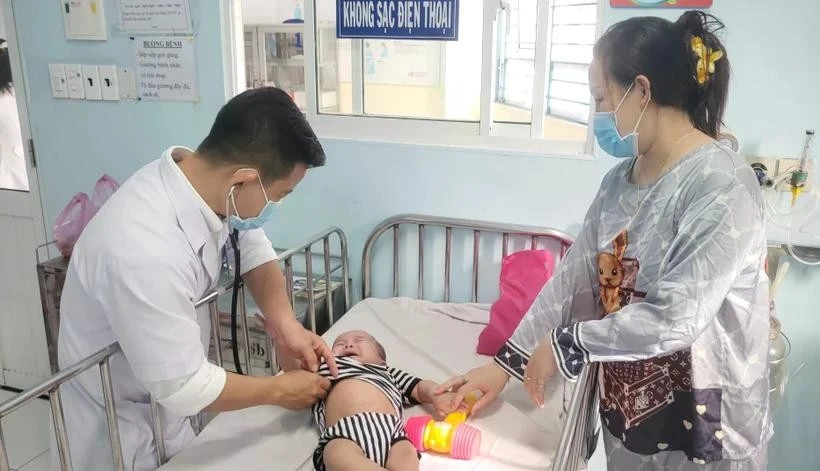
A doctor at Ho Chi Minh City Children's Hospital 1 examines a child with measles. (Photo: VNA)

Hanoi (VNA) – The World Health Organisation (WHO) has assessed the risk of a measles outbreak in Vietnam as very high. It also recommends vaccination campaigns in provinces and cities with high to very high risk, as well as areas where clusters of cases have already emerged.

A representative from the Ministry of Health (MoH) stated that measles cases are on the rise globally, particularly in the Asia-Pacific region. In Vietnam, 45,554 cases of suspected measles-related fever and rash were recorded in 2024, including 7,583 confirmed cases and 16 measles-related deaths. Notably, there was an increase among infants under nine months old, accounting for approximately 25% of positive cases.

Most measles cases involve individuals who have not been vaccinated, have not received the full vaccination doses, or have not yet reached the eligible age for measles vaccination under the expanded national immunisation programme.

The urgent rollout of both campaign-based and catch-up vaccinations is crucial to prevent a widespread outbreak, particularly in areas with ongoing clusters. Given the highly contagious nature of measles and its dependency on vaccination coverage, immunisation should be conducted as soon as possible.

According to WHO guidelines, countries with endemic measles should administer the first dose of vaccine at one–nine months of age and the second dose at 15–18 months. In countries where measles has been eliminated, the first dose is recommended at 12 months, followed by a second dose at 15–18 months.

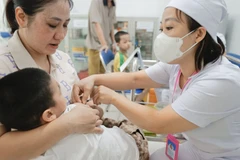
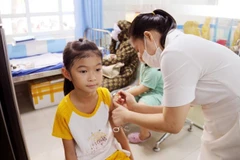
Following the MoH’s directives, Vietnam has been intensifying its immunisation efforts. Since September 2024, a measles vaccination campaign targeting children aged 1–10 years has been implemented in 31 provinces and cities. To date, seven of the 31 targeted provinces and cities have completed the first phase of the campaign, while the 24 others are continuing efforts to ensure full coverage.

Looking ahead to 2025, the MoH has developed a plan for the next phase of the measles vaccination campaign. This plan is based on risk assessments and recommendations from the regional Institutes of Hygiene and Epidemiology and Pasteur Institutes. It aims to expand immunisation efforts for children aged 1–10 years and introduce supplementary vaccination for infants aged 6–9 months. The initiative seeks to increase community immunity, proactively prevent outbreaks, and reduce measles-related morbidity and mortality, particularly in high-risk areas.

Under this campaign, vaccination will be administered to children aged 6–under 9 months in high-risk areas and regions experiencing measles outbreaks, children aged 1–10 years in high-risk regions or areas with reported measles cases, and healthcare workers at medical facilities treating measles patients who have not fully received the recommended vaccine doses.

The MoH has emphasised that local authorities will determine specific target groups based on the epidemiological situation, vaccine supply from donors, and available resources. These decisions will be made in consultation with the regional Institutes of Hygiene and Epidemiology and Pasteur Institutes.

In terms of geographical coverage, infants aged 6–under 9 months in 24 provinces and cities will be vaccinated, with further expansion depending on local epidemiological developments and resource availability.

Children aged 1–10 years will be vaccinated in two phases. The first phase focuses on provinces and cities that have yet to complete the campaign, ensuring timely, safe, and effective immunisation. The second phase will target 17 provinces and cities, including Thai Binh, Ha Nam, Bac Giang, Dien Bien, Lao Cai, Lai Chau, Ha Giang, Ninh Binh, Bac Ninh, Thai Nguyen, Cao Bang, Hai Duong, Ha Tinh, Quang Nam, Khanh Hoa, Ninh Thuan, and Binh Thuan.

In August 2024, the MoH issued a plan to implement the nationwide measles vaccination campaign across 31 provinces and cities./.
See more

An ambulance from the pre-hospital emergency care service in Phu Quoc special zone in An Giang province. (Photo: VNA)

Pre-hospital emergency care system to be launched nationwide

From 2027, the national pre-hospital emergency management platform will be put into operation, connecting data with the 113, 114 and 115 emergency call systems to facilitate rapid emergency dispatch and improve public access to emergency services.

Foreign patients travel to Vietnam for robotic cancer surgery at one-tenth of US costs

Foreign patients travel to Vietnam for robotic cancer surgery at one-tenth of US costs

With robot-assisted surgery costing tens of thousands of dollars in the US and Singapore, a growing number of international patients are traveling to Vietnam for robotic cancer surgery, including procedures for prostate, gynecological and gastrointestinal cancers, using the US made da Vinci Xi system at costs starting from just 3,000 USD.

Under a phased rollout beginning in 2026, every resident in Ho Chi Minh City will receive at least one annual health check-up or health screening. (Photo: VNA)

Ho Chi Minh City develops integrated multi-tier healthcare system

Under the new model, healthcare is organised into interconnected levels based on people's needs rather than administrative boundaries. Patients can move seamlessly between levels while their electronic health records and treatment information remain connected through digital platforms, referral systems, telemedicine, electronic medical records, and integrated health databases.

Doctors conduct heart and lung examinations for workers. (Photo: VNA)

Draft policy encourages people to prepare for old age from middle age

A draft circular guiding the implementation of the National Target Programme on Health Care, Population and Development (2026-2035) marks a shift from focusing solely on elderly care to encouraging healthy and independent ageing through early preparation. It covers healthy lifestyles, regular health check-ups, financial planning, suitable employment and home-based elderly care skills.

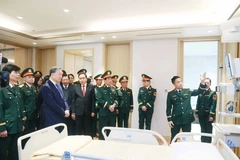
The meeting between the Vietnam Military Medical University delegation and leaders of the Lao Ministry of National Defence in Vientiane (Photo: VNA)

Vietnam, Laos deepen military medical cooperation

Since 1954, Vietnam Military Medical University has trained 687 Lao military medical personnel, including 322 doctors, 67 master's degree holders, 10 doctorate holders, and dozens of specialist physicians, alongside hundreds of pharmacists and medical technicians.

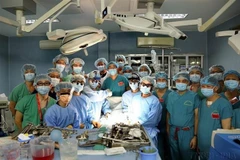
Vietnam's first penis transplant from a brain-dead donor is successfully performed at Viet Duc University Hospital. (Photo published by VNA)

Vietnam reaches new milestone in reconstructive transplant surgery

As the first operation of its kind in Vietnam, the hospital spent months developing treatment protocols, studying international experience and assembling a multidisciplinary team that included experts in transplantation, andrology, microsurgery, anaesthesia, immunology and pathology.

Dr. Nguyen Thanh Xuan is performing brain surgery on a patient (Photo published by VNA)

National strategy aims to build advanced medical ecosystem

Vietnam's adjusted healthcare network master plan for 2021–2030, with a vision to 2050, also outlines a regional structure covering the country's six socio-economic regions. It envisages 17 provincial general hospitals serving regional functions, at least one highly specialised hospital in each region, and at least one advanced medical facility in every province and city.

Vietnamese Ambassador to Bulgaria Nguyen Thi Minh Nguyet and Prof. Dr. Nguyen Huu Tu, President of Hanoi Medical University, meet with Prof. Boycho Landjov, President of Sofia Medical University. (Photo: VNA)

Vietnam, Bulgaria forge closer medical ties

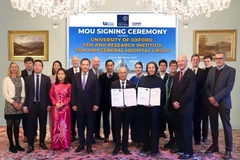
The visit's highlight was the signing of a memorandum of understanding (MoU) between Hanoi Medical University and Sofia Medical University, creating a long-term framework for academic exchanges, scientific research and institutional cooperation between the two countries' leading medical schools.