Measures to develop sustainable value chain of lotus silk products discussed

A workshop to kick off a project on developing a sustainable value chain of products from lotus silk in Vietnam to support the flood storage strategy for the Mekong Delta region was held by the International Union for Conservation of Nature (IUCN) in An Giang province on May 26.
Measures to develop sustainable value chain of lotus silk products discussed ảnh 1A artisan weaves lotus silk (Photo: VNA)
An Giang (VNA) – A workshop to kick off a project on developinga sustainable value chain of products from lotus silk in Vietnam to support theflood storage strategy for the Mekong Delta region was held by the International Union forConservation of Nature (IUCN) in An Giang province on May 26.

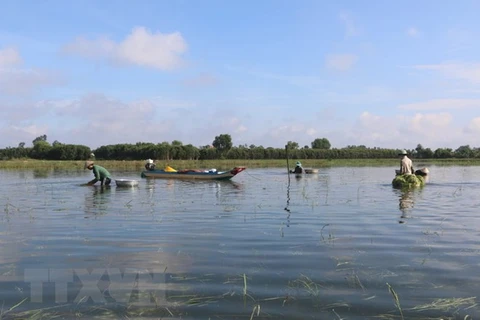
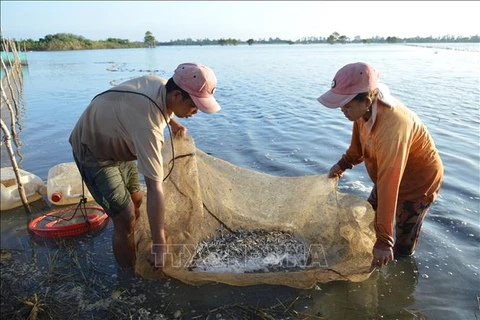
In the 2018-2021 period, the IUCN piloted a project in support of a waterretention strategy for the Mekong Delta in An Giang, Dong Thap and Long An provinces, helpingover 1,000 farmers develop flood-based agricultural economic models.

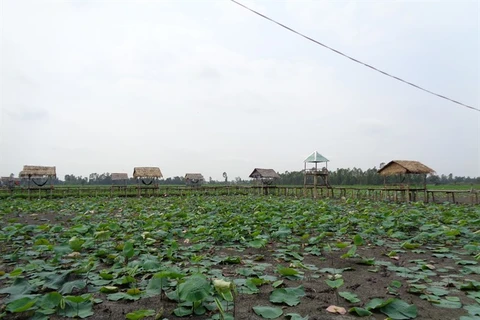
Tang Phuong Gian, field coordinator of the IUCN, said the new projectwill also benefit farmers in these localities in the 2023 – 2025 period,focusing on providing farmers with technical support and training toimplement lotus cultivation to increase flood retention areas; and building asustainable supply chain for lotus silk products by supporting the livelihoods andimproving economic conditions for lotus farmers and craftsmen in traditional villages.

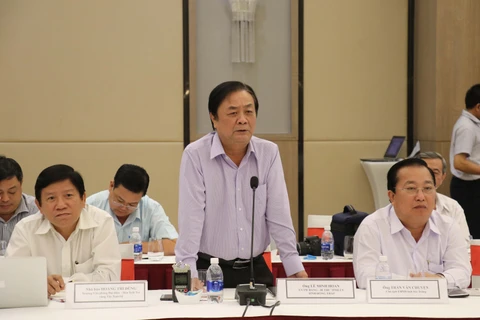
Measures to develop sustainable value chain of lotus silk products discussed ảnh 2Participants at the workshop (Photo: VNA)

According to Truong Kien Tho, Vice Director of the Department of Agriculture andRural Development of An Giang province, the floodwater-based lotus cultivation modelhas contributed to helping local farmers shift to an "agriculturaleconomy" mindset by integrating multiple values from lotus plants anddiversifying products, thus improving incomes for locals.

The model also contributes to preserving and restoring the waterstorage capacity, increasing sediment deposition on farmland, reducing the useof fertilisers and pesticides, promoting natural aquatic species, and improvingbiodiversity and agricultural cultivation ecosystem, he went on.

According to Vice Director of the Department of Agriculture and Rural Developmentof Dong Thap province Le Quoc Dien, the locality boasts great potential andadvantages to produce and develop products from lotus, and lotus silk.

Lotus cultivation becomes one of the key industries of the locality and is expected to develop stronger in the coming years, he said.

Delegates also shared experiences and opportunities, as well as challenges relatedto market access, planning, and policy support for these models.

In 2017, the Government approved a resolution on sustainable development of the Mekong Delta inresponse to climate change, producing marked changes in the region’s development.

Agriculture based on the flood season in upstream provinces such as An Giang,Dong Thap and Long An is considered as a method of cultivation in harmony withnature./.
VNA

See more

Work starts on Hanoi’s Red River Landscape Boulevard Axis project on December 19, 2025. (Photo: VNA)

Hanoi approves nearly 28-bln-USD Red River landscape boulevard project

Covering more than 11,400 hectares and requiring an estimated 736.96 trillion VND (nearly 28 billion USD), the project is expected to reshape urban development along both banks of the Red River over the coming decades while improving transport connectivity and public spaces in the capital.

Deputy Prime Minister Nguyen Van Thang and delegates perform the ground-breaking ceremony for the Northwest Dien Bien Phu New Urban Area, Resort and Sports Complex project. (Photo: VNA)

Vingroup launches largest-ever urban development project in Dien Bien

Under the master plan, the project will span more than 228.5ha and accommodate around 12,000 residents. It is designed under a “city within a city” model integrating residential areas, commercial and service facilities, resorts, schools, healthcare services, public spaces and sports infrastructure.

Deputy Prime Minister Nguyen Van Thang and delegates press the button to launch construction of the Dien Bien Phu cultural-historical tourism and cable car complex project in Dien Bien province on May 10, 2026. (Photo: VNA)

Dien Bien Phu cultural-historical tourism, cable car complex project launched

The project aims to effectively tap the area’s natural landscapes, geographical advantages and distinctive historical value, while creating a high-quality tourism product with strong competitiveness. It is also intended to preserve, honour and promote the value of the Dien Bien Phu Victory special national historical relic site.

Politburo member Nguyen Duy Ngoc (third, right), who is Standing Deputy Head of the Central Steering Committee for Science-Technology Development, Innovation and Digital Transformation, holds a working session with the Colombo Port City Management Board. (Photo: VNA)

Vietnam studies Colombo smart port city model

Ngoc praised Sri Lanka’s orientations in developing seaport infrastructure, digital infrastructure, digital economy and international service centres, describing them as valuable references for Vietnam in developing strategic infrastructure, innovation centres, smart urban areas and digital economy ecosystems.

Tan Cang – Cat Lai Port in Ho Chi Minh City (Photo: VNA)

MoIT issues decision recognising Vietnam Logistics Day

The move is aimed at raising awareness across government agencies, businesses and the wider public of the vital role logistics services play in socio-economic development, international integration and strengthening national competitiveness.