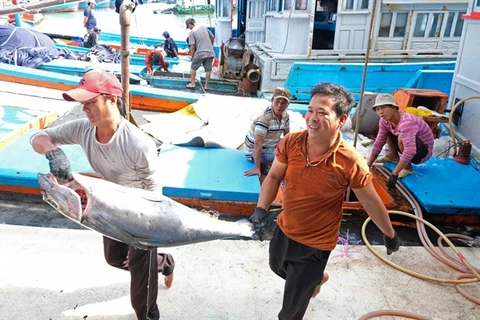
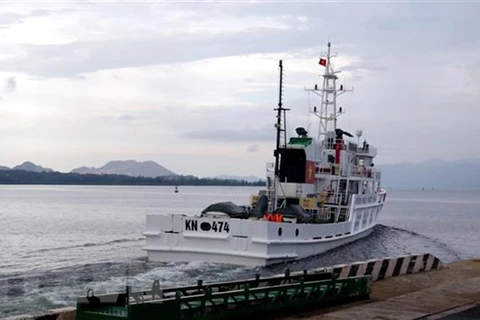
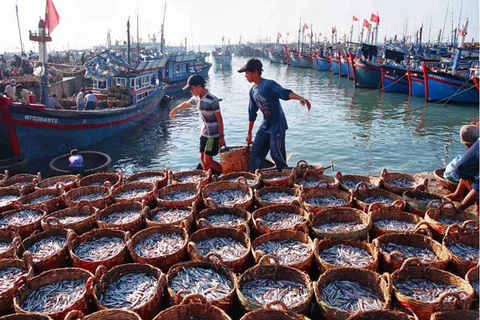
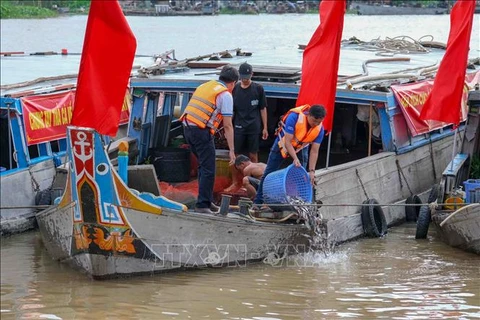
Illustrative image (Photo: baodautu.vn)
 The programme requires that 100% of natural lakes, large reservoirs, and main river systems are investigated and assessed for resources and habitat of aquatic species.
Aquatic resource reserves are expected to increase by over 5% compared to the results of the investigation and assessment of aquatic resources in the 2016-2020 period.
Aquatic resource reserves are expected to increase by over 5% compared to the results of the investigation and assessment of aquatic resources in the 2016-2020 period.
Meanwhile, 100% of marine protected areas and artificial habitat areas for marine aquatic species will be managed and operated in line with provisions of the Law on Fisheries; and 60% of localities nationwide will implement co-management in protecting aquatic resources in association with building new-style rural areas and developing eco-tourism.
In recent years, Vietnam’s aquaculture area and output have increased rapidly, creating good products serving domestic consumption and export as well. The aquaculture industry has contributed to increasing income and creating many jobs for farmers.
Statistics show that Vietnam produced nearly 9.27 million tonnes of aquatic products in 2023, and the country’s aquatic export earnings hit an estimated 9.2 billion USD in the year.
Aquaculture, including about 1.3 million ha of inland ponds and 9.5 million cubic metres of offshore cage farming, has a total output of more than 5.4 million tonnes.
However, aquaculture remains scattered, making it difficult to control the environment and diseases. Additionally, farming infrastructure in some places is still not inconsistent, failing to meet development demand.
With practical solutions, the programme aims to conserve, protect, use and regenerate aquatic resources and ecosystems reasonably and effectively.
Attention will be paid to enhancing legal regulations on management, protection and development of aquatic resources; completing and applying policies on changing and diversifying livelihoods for communities living in and around marine protected areas, and fishing communities in coastal areas.
Mechanisms and policies to mobilise and effectively use domestic and foreign resources in conserving, protecting, regenerating, and developing aquatic resources, and restoring aquatic ecosystems will be developed and issued.
The programme also underlines the necessity to support the implementation of co-management in protecting aquatic resources; enhance coordination mechanisms among authorised agencies to effectively inspect, control, detect and handle violations of the Law on Fisheries at sea and inshore areas; and attract international resources and cooperation in sharing experiences and training and developing high-quality human resources to serve the work./.
In recent years, Vietnam’s aquaculture area and output have increased rapidly, creating good products serving domestic consumption and export as well. The aquaculture industry has contributed to increasing income and creating many jobs for farmers.
Statistics show that Vietnam produced nearly 9.27 million tonnes of aquatic products in 2023, and the country’s aquatic export earnings hit an estimated 9.2 billion USD in the year.
Aquaculture, including about 1.3 million ha of inland ponds and 9.5 million cubic metres of offshore cage farming, has a total output of more than 5.4 million tonnes.
However, aquaculture remains scattered, making it difficult to control the environment and diseases. Additionally, farming infrastructure in some places is still not inconsistent, failing to meet development demand.
With practical solutions, the programme aims to conserve, protect, use and regenerate aquatic resources and ecosystems reasonably and effectively.
Attention will be paid to enhancing legal regulations on management, protection and development of aquatic resources; completing and applying policies on changing and diversifying livelihoods for communities living in and around marine protected areas, and fishing communities in coastal areas.
Mechanisms and policies to mobilise and effectively use domestic and foreign resources in conserving, protecting, regenerating, and developing aquatic resources, and restoring aquatic ecosystems will be developed and issued.
The programme also underlines the necessity to support the implementation of co-management in protecting aquatic resources; enhance coordination mechanisms among authorised agencies to effectively inspect, control, detect and handle violations of the Law on Fisheries at sea and inshore areas; and attract international resources and cooperation in sharing experiences and training and developing high-quality human resources to serve the work./.
VNA