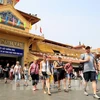
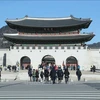
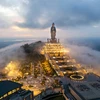
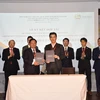
Tourism exchanges between the two countries have expanded steadily in recent years, with a growing number of Vietnamese travellers to Chinese destinations such as Guilin, Lijiang, Zhangjiajie and Tianchi Lake, and Chinese tourists continuing to favour Vietnamese destinations including Hanoi, Ho Chi Minh City, Ha Long Bay, Da Nang and Nha Trang.
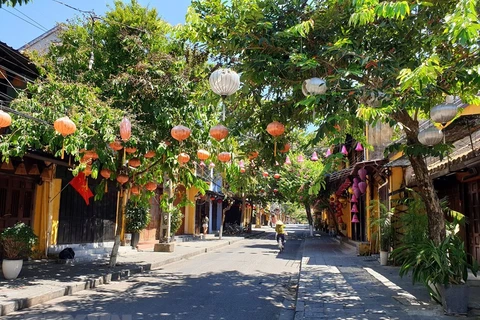
Vietnam displays large photographs of renowned destinations such as Hoan Kiem Lake, Trang An Landscape Complex, Phong Nha-Ke Bang National Park, Hoi An Ancient Town, Ban Gioc Waterfall and the terraced rice fields of Mu Cang Chai at the International Tourism and Travel Fair (SITEV 2026) in Algeria.
According to TTW, Phu Quoc is emerging as "one of the most desired destinations in Southeast Asia" due to a rare convergence of pristine natural beauty and a heavily invested, modern tourism ecosystem. From sweeping white sands and turquoise waters to global-class resort and entertainment complexes, the island is drawing an increasing number of international travelers seeking an experience that seamlessly balances luxury with a rich local identity.
The People’s Committee of Khanh Hoa province has issued a plan for the 2026 Sea Festival, which will take place at the April 2 Square in Nha Trang ward from July 17-19.
Industry officials said advances in sci-tech, innovation and digital transformation are already wrenching tourism away from a bulk-volume model toward one built on data, customised experiences and smart governance. Deeper global integration is further widening market access, tightening value chain links and sharpening Vietnam’s destination brand.
A special event entitled 7 Wonders Day with a series of attractions and experiences for both residents and visitors will be held in Ha Long city, Quang Ninh province, on July 7 to honour the elected New 7 Wonders of the World and Nature.
Tourism operators said summer demand has arrived earlier than usual this year, as bookings for late May and early June surged, mainly from families and short-break travellers.
The Phu Quy special zone, an island district off the south-central coast of Vietnam, is capitalising on its strong marine economy potential, particularly in tourism and fisheries, to transform the island’s economy, improve local livelihoods and position itself as a key sea-based economic hub.
Rather than relying solely on natural advantages, Khanh Hoa province is shifting towards a more integrated development model linking tourism, trade and investment to create new growth momentum.
Entering the 2026–2030 period, Vietnam’s tourism industry is undergoing a strong transformation, with focus shifting from extensive growth to quality-oriented development, and the green economy and cultural experiences placed at the centre of tourism strategies.
Unlike well-established destinations, this small island quietly preserves its layered heritage: tens-of-thousands-year-old basalt formations, pristine tropical forests and enduring wartime memories. Together, they create a distinctive “green gem” in the open sea, subtle yet captivating enough to hold any visitor.
Tourism experts noted that Vietnam’s affordable travel costs, attractive tourism services, scenic beaches, rich cultural heritage and diverse cuisine continue to make the country a popular destination for Chinese visitors.
The heritage train offers passengers not only a means of transport, but also a sense of connection linking destinations across central Vietnam, tourism with transport, and nostalgic memories with contemporary experiences. While older travellers are reminded of journeys from decades ago, younger passengers and international visitors are discovering a greener, culture-rich way to explore the region.
The Booking.com’s Travel Trends 2026 data revealed that a growing number of Vietnamese travellers, about 74% of respondents, are channelling “Main Character Planning Energy”, where planning and booking is just as enjoyable as the trip itself.
As night falls, the dining experience transcends to the extraordinary as the Phu Quoc sky ignites with spectacular fireworks from the Symphony of the Sea and Kiss of the Sea shows.
Rather than rushing to “check in” at as many attractions as possible, slow travel allows visitors to immerse themselves in local life. Travellers may spend time wandering through a highland market, learning to cook a traditional dish, cycling around a coastal fishing village, or simply enjoying the tranquil rhythm of life in the countryside.
A surge in visitor numbers during the Hung Kings Commemoration Day and the April 30–May 1 holidays underscored Vietnam’s rising tourism appeal, fueled by refreshed travel products and improved visitor experiences.
A special documentary on Son Doong Cave, the world’s largest cave, was aired on March 29 in the renowned “60 Minutes” programme of CBS News. The report retraced the discovery of Son Doong Cave and years of expeditions conducted by the British Cave Research Association, offering global audiences a comprehensive look at the cave through scientific, historical and human perspectives.
To maintain growth and move towards becoming a premier Asian tourism destination, Da Nang has outlined a comprehensive development strategy focused on both infrastructure and product diversification.
The plan sets out concrete steps to promote eco-tourism and community-based tourism, aligned with a green, sustainable approach closely linked to local communities.