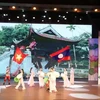
Neu pole lowering, seal opening ceremony celebrates new year

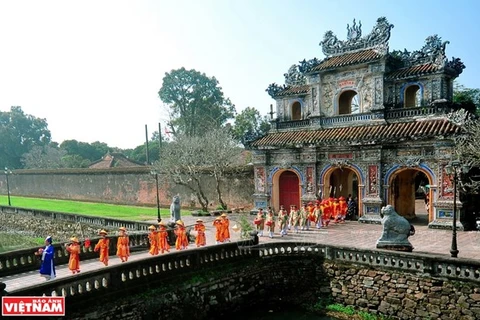
A ceremony was held at the Hue Imperial Relic Site in the central province of Thua Thien-Hue’s Hue City on January 28 (the seventh day of the first lunar month) to take down the Neu pole (a tall bamboo pole with red garment strips used to ward off evil spirits during the lunar New Year) and open the New Year seal.
Neu pole lowering, seal opening ceremony celebrates new year ảnh 1Neu pole lowering ceremony (Photo: VNA)
Thua Thien-Hue (VNA) - A ceremony was held at the Hue Imperial Relic Site in the central province of Thua Thien-Hue’s Hue City on January 28 (the seventh day of the first lunar month) to take down the Neu pole (a tall bamboo pole with red garment strips used to ward off evil spirits during the lunar New Year) and open the New Year seal.

According to Director of the Hue Relics Preservation Centre Hoang Viet Trung, under the Nguyen Dynasty, the rituals marked the end of the Lunar New Year holiday and the start of work and normal activities.

The Neu pole was erected on the 23rd day of the 12th lunar month, marking the beginning of Tet. It coincides with the day when the Kitchen Gods are believed to ride a carp to Heaven to report on events from the past year.

During 143 years of its reign (1802 – 1945), the Nguyen Dynasty held an annual ceremony to plant the Neu at the Imperial Citadel. The pole carried ritual items on its top, like a royal seal, a paper scroll and pen, which implied that the royal court stopped working during Tet. After the royal ceremony, ordinary people would erect their own Neu and start celebrating Tet.

The Neu was intended to ward off ghosts and demons from entering the community during Tet, and guide the spirits of ancestors on the way home for the Lunar New Year festival. The custom is also practiced in some Asian countries besides Vietnam.

It was taken down on the seventh day of the first lunar month to mark the end of the Tet celebration.

Meanwhile, the seal opening marked the start of a new working year of the ancient central administrative system with the hope that the whole year will be smooth and successful and the country will be peaceful and prosperous.

The traditional rituals of the Nguyen Dynasty have been revived for many years at the Hue imperial relic site. 

During the seven-day Tet holiday from January 20-26, the Hue imperial relic site welcomed over 66,000 visitors, including 12,848 foreigners, earning nearly 5 billion VND (23,060 USD)./.

VNA
See more

In Hue city, Tet (Lunar New Year) holiday begins with the ritual of erecting neu (bamboo) pole, which follows the traditional ceremonies of the Nguyen Dynasty. (Photo: VietnamPlus)

Exploring hidden Tet experiences across Vietnam

While fireworks and countdown celebrations light up much of the country, New Year’s Eve on Con Dao is markedly subdued. At midnight, the island becomes an “island of candles” as locals gather at Hang Duong Cemetery to pay tribute to national heroes.

Yen Stream is bustling with boats carrying visitors to celebrate the Huong Pagoda Festival. (Photo: VNA)

Northern Vietnam’s top 10 spring festivals to explore after Tet

Starting from the third day of Tet, locals and travellers from all over the country heading to the North can check out a variety of unique festivals in different areas to enjoy spring trips, go on pilgrimages, and experience the vibrant cultural traditions that are part of Vietnam’s rich heritage.

Flavours of three regional Tet feasts in contemporary life. (Photo: VNA)

Flavours of three regional Tet feasts in contemporary life

Each dish embodies not only taste but also memories and cultural values nurtured over generations. Sustaining this heritage ensures that Vietnamese cuisine is not eroded by time, but continues to be cherished, renewed and shared with care and respect.

As Lunar New Year approaches, videos guiding viewers on how to prepare a traditional Tet feast attract increasing numbers of likes and comments. (Photo: tienphong.vn)

Gen Z reconnects with their roots, spreads rural Tet spirit

In recent years, Vietnamese social media has witnessed the rise of a content stream that feels old-fashioned yet resonates strongly with young audiences in the digital age: documenting rural life, especially kitchen scenes, Tet preparations, and everyday family routines.

Phan Thi Hong Lien wins the last gold for of Vietnam to help the team place No 1 in the sixth World Kun Khmer Championships' tally. (Photo: VNA)

Vietnam tops medal table at World Kun Khmer Championships

The Vietnamese team claimed 18 gold medals on their debut at the sixth World Kun Khmer Championships in Cambodia, edging hosts Cambodia to finish first overall and strengthening their push for Olympic recognition of the sport.

An exhibition on "do" paper and recycled materials at Dien Hong flower garden. (Photo: nhandan.vn)

Art reawakens Hanoi's public spaces

Last year, Hanoi saw a surge in both quantity and quality of public art endeavours, a leap forward in the art of breathing new life into urban landscapes

The horse image symbolises resilience, endurance, and spirit of “success upon arrival.” (Photo: VNA)

Horse mascot leaves strong impression at spring fair

A major attraction is a unique “Eight galloping horses” (Bat Ma) sculpture displayed at the To Trinh gemstone booth. Carved from a rare monolithic jade block, the artwork features eight spirited horses racing across golden rice fields. The harmonious blend of pure jade veins and natural golden tones enhances both its aesthetic depth and symbolic meaning, evoking prosperity and abundance associated with Vietnam’s rice civilisation.

Delegates cut the ribbon to launch the 46th Spring Flower Festival at Tao Dan Park. (Photo: VNA)

Festive activities herald Lunar New Year of the Horse

A vibrant array of cultural and media events has been launched across Vietnam to welcome the Lunar New Year of the Horse 2026, highlighting both the country’s enduring traditions and its dynamic socio-economic progress.