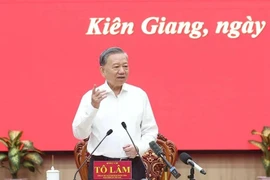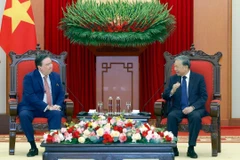
Lam Dong (VNA) – The mergence of the three south-central and Central Highlands provinces of Lam Dong, Binh Thuan and Dak Nong creates a unique opportunity to comprehensively restructure the regional development model and redistribute population, infrastructure, and investment in line with a forward-looking strategy for rapid and sustainable growth in the new era, Party General Secretary To Lam has stressed.
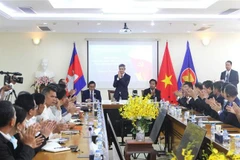
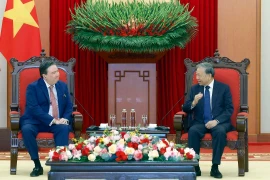
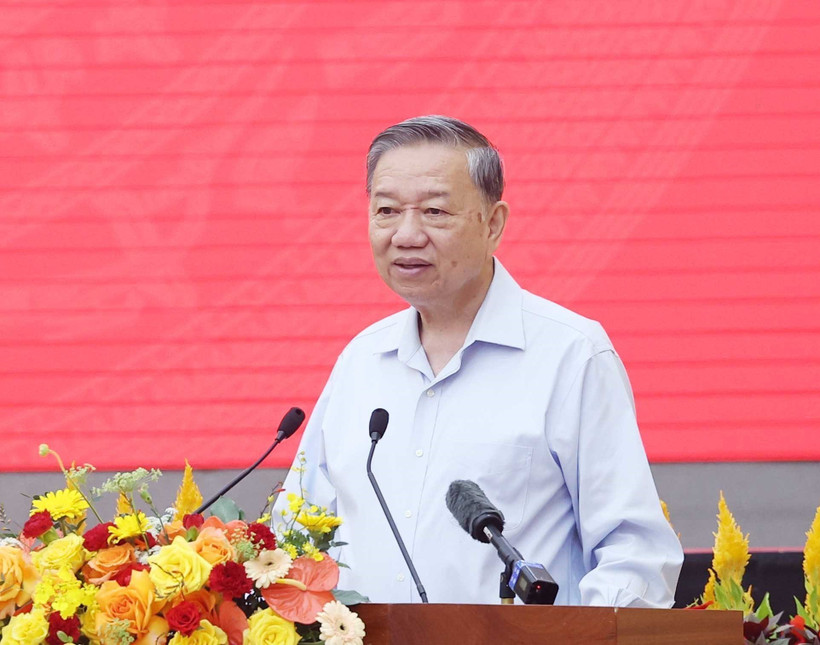
At a working session with the Standing Board of the Lam Dong provincial Party Committee and permanent members of the Party Committees of Binh Thuan and Dak Nong provinces on June 9, the Party chief affirmed the strategic significance of merging the three provinces to form a new, larger Lam Dong province. The move is aimed at enhancing governance efficiency, restructuring the development space for greater cohesion and sustainability, and optimising resources, he said.
The new province, with the largest land area in the country, will possess stronger administrative and economic capacity, significantly expanded public investment potential, and the institutional strength to propose special mechanisms, attract strategic resources, and lead regional development, he stated.
The mergence of Lam Dong - a hub for high-tech agriculture, Dak Nong with its mineral wealth and industrial land reserves, and Binh Thuan, a coastal gateway boasting renewable energy and logistics capabilities, is the convergence of highland, midland, and coastal ecosystems, enabling the creation of interlinked urban, industrial, and tourism zones, fostering an interconnected and sustainable development landscape.
The three provinces are historically resilient and culturally rich, with strong innovation capacities. Economically and socially, the provinces have made notable progress. Binh Thuan saw 7.25% GRDP growth in 2024, Lam Dong enjoyed average growth of 7.01% from 2021–2025, and Dak Nong witnessed improved growth, revenue, and investment. Advances in human development, cultural preservation, and living standards have reinforced political stability and social order.
To ensure successful implementation of this restructuring, General Secretary Lam urged the immediate consolidation of organisational structures with an emphasis on streamlining, accountability, and uninterrupted administrative functioning. The mergence must be conducted scientifically and transparently, with merit-based personnel appointments, and without allowing parochialism, factionalism or group interests to undermine internal unity and integrity, the Party chief emphasised.
He stressed the importance of appropriate policies for affected officials, including retirement and reassignment arrangements, all handled with responsibility, empathy, and in accordance with regulations. Those taking on new important roles must be supported with adequate housing, education for their children, and essential living conditions to enable long-term dedication, he said.

The leader underscored that the newly established Lam Dong province must urgently rebuild its socio-economic development master plan. This blueprint should be based on an open spatial structure that seamlessly links the highlands, midlands, and coastal zones — forming a unified and integrated growth area with broad spill-over potential.
It must integrate urban centres, industry, agriculture, services, transport, digital infrastructure, and ecological corridors into a unified, smart system, with a key East–West growth axis linking the Central Highlands to the coast.
General Secretary Lam highlighted the region’s strengths - diverse economy, rich resources, leading agriculture, and unique tourism - as foundations for building green, circular, digital, and knowledge-based economy. He stressed that growth must be sustainable and ensure environmental protection, particularly of forests, river basins, and coastal areas.
A visionary strategy is needed to guide local and regional transformation, driven by coordinated breakthroughs in policy, infrastructure, enterprise, and human capital. People must be placed at the centre of this effort, with investments poured into education, healthcare, and workforce development, especially in high-tech and green sectors. Cultural preservation, creativity, and inclusive learning, especially among ethnic minorities, are also key priorities, he said.
The General Secretary emphasised that national defence, security, and deep societal consensus are the bedrock of the successful mergence, urging the local authorities to prevent any administrative gaps or social hotspots during the transition. Law enforcement agencies should remain vigilant, proactively addressing misinformation or attempts to distort the Party’s unification policy, he said.
The Party chief also outlined tasks for the three provinces to prepare for Party congresses at all levels in the context of transition, with a special emphasis on personnel work./.