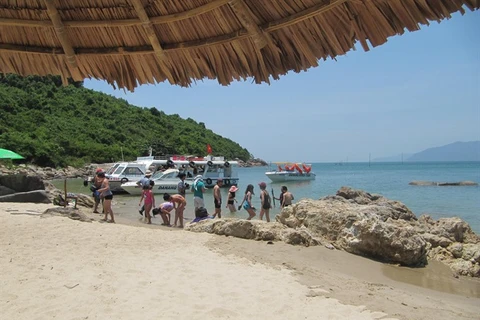
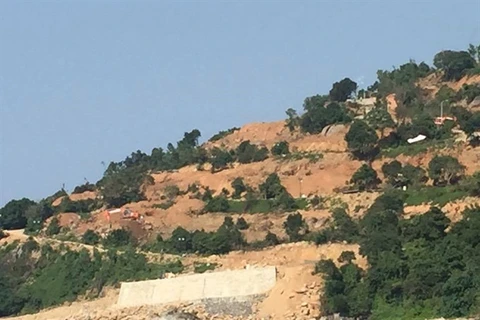
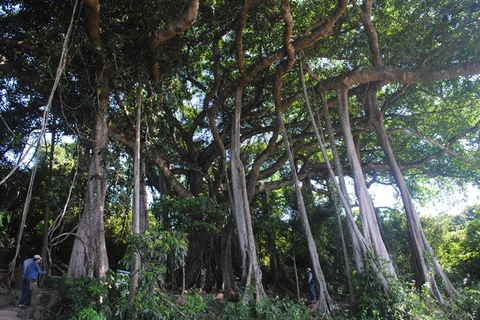
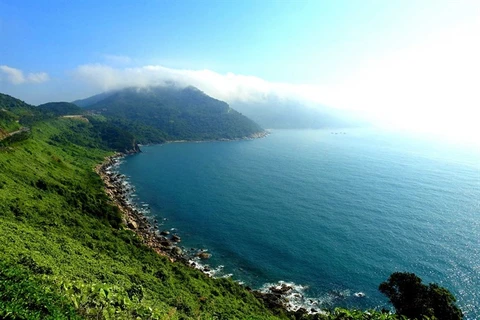
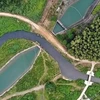
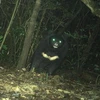
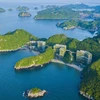
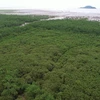
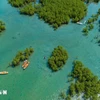
Son Tra Nature Reserve in Da Nang city (Photo: VNA)
“These may be the newest plants found in the world as we have yet to hear any reports of these plants, and they (plants) have not been given an official name,” Truong told Viet Nam News.
“We found these plants in 2016. We plan to send our scientific research on these plants to the Global Science Journals as an official report and recognition of the world newest-found plant species,” Truong said.
He said the research project had updated the rich biodiversity of the Son Tra Reserve, listing 370 animal species and 1,010 plant species, compared to 287 animal species and 985 plant species previously recorded.
Truong said the reserve, 600 metres above sea level, is rare given its rich population of fauna and flora spreading from jungle to ocean over a relatively small area. He said the 4,439ha reserve will be a draw for biologists, conservationists and scientists worldwide.
According to the latest report about the reserve, the reserve, 10km away from Da Nang city’s downtown, has 43 plant species listed as endangered in Vietnam’s Red Book and the International Union for Conservation of Nature (IUCN).
The report said five wild species, including the endangered red-shanked douc langurs (Pygathrix nemaeus); Pygmy slow loris (Nycticebus pygmaeus); pangolin (Manis Javanica); lesser short-nosed fruit bat (Cynopterus brachyotis); the Indian muntjac or red muntjac (Muntiacus vaginalis) were found living in the reserve.
Two species – the red-shanked douc langurs and pangolin - are listed as endangered species by the IUCN. In 2016, IUCN agreed to promote the red-shanked douc langur as a Critically Endangered (CR) species, granting it termless protection status in the world.
The endangered species living in the Son Tra Nature Reserve were also declared as deserving special protection by Vietnamese law, including Government Decree No 32 issued in 2006 and Government Decree No 160 of 2013 on management of endangered, precious and rare forest plants and animals.
According to the latest report from GreenViet - the centre for biodiversity research and conservation, more than 237 herds of red-shanked douc langurs, comprising over 1,300 individuals, are living in the Son Tra Nature Reserve.
Biologists and scientists warn that the development of concrete buildings around the reserve, mostly holiday beach resorts, would soon push the endangered primates into extinction.
Last year, Huynh Duc Tho, chairman of the Da Nang People’s Committee, dismissed rumours that a cable car system will be built in the reserve and a vast area of the reserve, including sea areas and forest, will be developed into an entertainment park. He said that was just an idea proposed by a property developer.-VNA
VNA