New Zealand PM’s visit to benefit relations with Vietnam, ASEAN: Former Ambassador

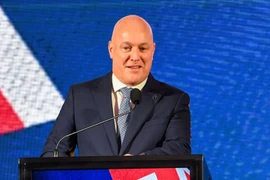
New Zealand’s former Ambassador to Vietnam James Kember expressed his eagerness for PM Christopher Luxon’s visit to Vietnam, explaining that high-level bilateral visits are a direct and meaningful way to recognise and strengthen the value each side places on the relationship.

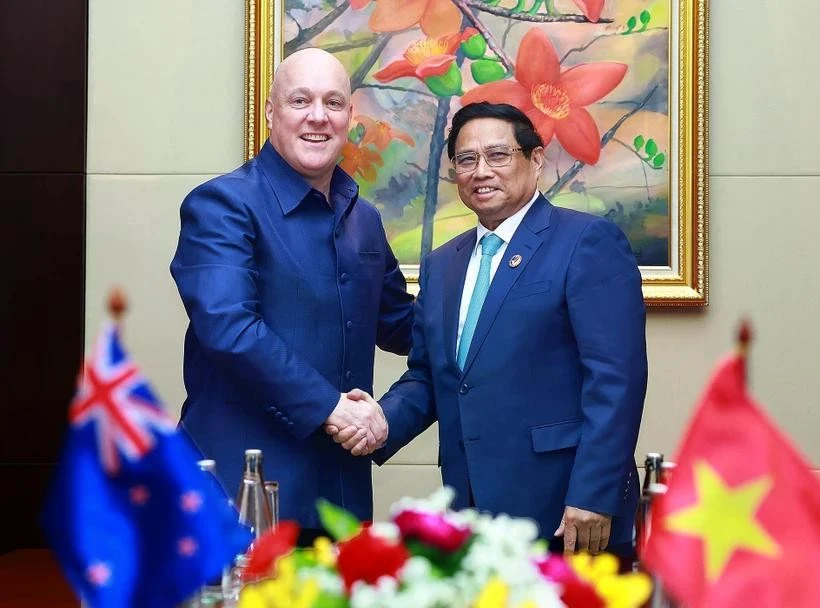
Prime Minister Pham Minh Chinh (R) and New Zealand Prime Minister Christopher Luxon. (Photo: VNA)

Sydney (VNA) – New Zealand Prime Minister Christopher Luxon’s upcoming official visit to Vietnam is expected to help reinforce ties between New Zealand and Vietnam in particular and ASEAN in general, New Zealand’s former Ambassador to Vietnam James Kember told the Vietnam News Agency (VNA)'s reporter on the thresholds of the trip.

Kember expressed his eagerness for PM Luxon’s visit, explaining that high-level bilateral visits are a direct and meaningful way to recognise and strengthen the value each side places on the relationship. These visits not only celebrate mutual understanding but also serve to further solidify ties. When such visits are linked to regional meetings, they provide an even more fruitful context for advancing bilateral relations, he said.

Reflecting on the Vietnam-New Zealand partnership, Kember said that the five-year old Strategic Partnership places emphasis on engagement through the Asia-Pacific Economic Cooperation (APEC), the Association of Southeast Asian Nations (ASEAN) and other such fora, defence visits and training, societal and people-to-people ties, development cooperation and strong trade and economic links. Having served as New Zealand's ambassador to Vietnam from 2006 to 2009, Kember said he witnessed the growth of these ties firsthand.

The difference though, he said, is that Vietnam has changed so much since then, with its regular achievement of around 5% GDP growth each year and a growing population. Add to that the political and economic uncertainties both countries face today. Much work has been done to give meaning and strength to the relationship, and for good reason, but potential under current settings has yet to be fully achieved, he asserted.

Kember emphasised that in these uncertain international times, it remains vitally important for countries like New Zealand and Vietnam to understand each other’s positions and to find common ground. Both should find ways to increase the value of their trading and economic links, not least with a worrying return to tariffs and trade barriers, and the interruption of trade flows at the cost to consumers, he added.
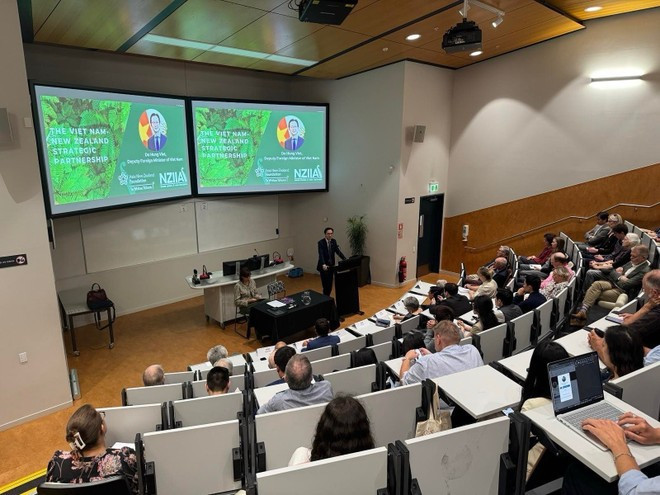
thu-truong-ngoai-giao-do-hung-viet-co-bai-phat-bieu-tai-vien-quan-he-quoc-te-new-zealand-o-thu-do-wellington-nguon-phat.jpg
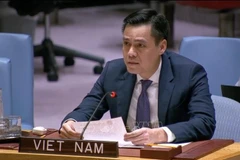
Vietnamese Deputy Minister of Foreign Affairs Do Hung Viet delivers a speech at the New Zealand Institute of International Affairs in Wellington. (Photo: VNA)

The former ambassador noted that New Zealand and Vietnam have established a good dialogue of government and institutional dialogue about international issues affecting both nations back in 2008. A number of the participants from those initial discussions were included in the so-called Track 1.5 talks that took place in New Zealand late last year. This regular dialogue is valued by all as a way of cross-checking the shared points of concern, as well as the points of common view. Overall, it is not so much about finding new areas of cooperation but adding depth – and resource – to the ones the two countries have previously agreed are of high value, he stated.

Kember underlined that in his recent visit to New Zealand, Vietnamese Deputy Minister of Foreign Affairs Do Hung Viet outlined some of the reasons for seeking to upgrade the bilateral relationship and ways in which it might be done. In his speech to the New Zealand Institute of International Affairs in Wellington in early February, Viet placed emphasis on the Asia-Pacific region as the principal engine of growth, as well as underscoring the shared interests and understandings and the warmth of the underpinning personal engagement. Viet made a number of suggestions about ways of collaborating on technical advancement, training programmes for young scholars and strengthening institutional linkages between New Zealand research centres focusing on ASEAN and Vietnamese organisations like the Diplomatic Academy of Vietnam. These are all to be welcomed, Kember said.

Indeed, while there is some value in setting higher and higher bars for cooperation, it is even more important that action speaks louder than the words – and that the two sides do indeed see more, and deeper, exchanges that benefit both countries. Both New Zealand and Vietnam are part of the same Asia-Pacific region, he said, explaining that finding common ground is essential, as is being honest about the reasons for any points of difference.

Commenting on the New Zealand-ASEAN relations and bilateral efforts to promote peace and prosperity, the former ambassador said that New Zealand has long recognised the pivotal role of ASEAN in promoting peace and security in the region. Cooperation in defence, fighting transnational crime, and military education is all rightly situated in an ASEAN-plus context.

At the same time, New Zealand needs to continue working on its relationships with individual members of ASEAN, such as Vietnam. According to Kember, it remains essential to keep up the dialogue of officials and research institutions, the exchange and education of young people, the two countries’ future leaders, to ensure that decisions made unilaterally are based on a sound understanding of the views of other key partners./.
VNA

See more

Bru–Van Kieu ethnic minority villagers in Quang Tri province's remote commune of Truong Son are eagerly preparing for early voting. (Photo: VNA)

Bru–Van Kieu community in Quang Tri gear up for early voting

According to the provincial Election Committee, three polling stations in Truong Son commune – located in Hoi Ray, Nuoc Dang and Doc May villages – will organise voting on March 8, seven days before the nationwide election of deputies to the 16th National Assembly and People’s Councils at all levels for the 2026–2031 tenure, to make it easier for residents in remote areas where travel remains difficult to cast their ballots.

Politburo member, Secretary of the Party Central Committee, Secretary of the Party Committee of the Vietnam Fatherland Front (VFF) and central mass organisations, and President of the VFF Central Committee Bui Thi Minh Hoai speaks at the event in Phu Tho province on March 6. (Photo: chinhphu.vn)

Front leader meets voters in Phu Tho

Voters in Phu Tho province's Hoa Binh and Luong Son expressed their hope that if elected, the candidates would continue to uphold their roles and responsibilities as people’s representatives, remain close to the grassroots level, and understand the legitimate aspirations of the people.

Party General Secretary To Lam speaks at the event in Hanoi on March 6. (Photo: VNA)

2026 inspection-supervision decision for NA Party Committee's Standing Board announced

The NA Party Committee is ready to cooperate closely, promptly provide relevant documents and materials, and work in accordance with the delegation’s requests. During the inspection and supervision process, its Standing Board hopes members of the inspection delegation will offer frank comments and clearly point out both its achievements and shortcomings.

Prime Minister Pham Minh Chinh presents the 2025 Kovalevskaia Award to Prof. Dr. Tran Thi Viet Nga, Director of the Vietnam–Japan Institute of Advanced Technology and senior lecturer at Hanoi University of Civil Engineering (Photo: VNA)

PM proposes “Talented, creative and dedicated women” award

This year’s award went to a group of female scientists from Hanoi University of Science and Technology for their research cluster on applying biocatalysis to enhance the value of Vietnamese agricultural products. The individual award was presented to Prof. Dr. Tran Thi Viet Nga, Director of the Vietnam–Japan Institute of Advanced Technology and senior lecturer at Hanoi University of Civil Engineering, for research linked to environmental protection, energy security and climate change adaptation.

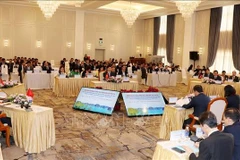
Delegates attend the 5th meeting of the ASEAN–UK Joint Cooperation Committee. (Photo: VNA)

Vietnam co-chairs 5th ASEAN–UK joint cooperation committee meeting

Ambassador Ton Thi Ngoc Huong, Head of Vietnam’s Mission to ASEAN, affirmed that Vietnam will work closely with ASEAN member states to achieve the objectives set for the fifth anniversary year. These include developing a substantive new ASEAN–UK Plan of Action for 2027–2031 and finalising the ASEAN–UK Joint Declaration on cooperation within the framework of the ASEAN Outlook on the Indo-Pacific.

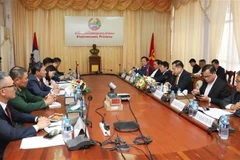
Prime Minister Pham Minh Chinh meets with 20 Ambassadors and Chargé d'affaires of the European Union (EU) and EU member states in Hanoi on March 5. (Photo: VNA)

PM receives EU Ambassadors, Chargé d'affaires in Vietnam

PM Chinh affirmed that the EU and its member states are top priority partners in Vietnam's foreign policy, and the establishment of a new framework reflects the increasingly high level of political trust and creates momentum for expanding cooperation in all fields.

Prime Minister Pham Minh Chinh (right) and Russian Minister of Civil Defence, Emergencies and Disaster Relief Aleksandr Kurenkov at their meeting on March 5. (Photo: VNA)

Prime Minister calls for stronger Vietnam–Russia cooperation in emergency response

At a reception in Hanoi on March 5 for Russian Minister of Civil Defence, Emergencies and Disaster Relief Aleksandr Kurenkov, Prime Minister Pham Minh Chinh suggested that Russia step up technology transfer and production cooperation for specialised vehicles and technical equipment, organise joint exercises, and continue supporting Vietnam in personnel training in the field.

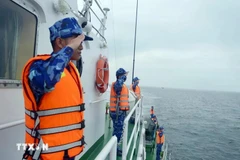
Crew members aboard a vessel on duty in Con Dao special zone cast their ballots (Photo: VNA)

Early voting completed in Con Dao special zone

After more than a week carrying out its assignment, Fisheries Surveillance Vessel 260 successfully organised early voting for voters aboard 13 vessels operating offshore under the arrangement of the Ho Chi Minh City Election Committee.

Chief of the General Staff of the Vietnam People’s Army and Deputy Minister of National Defence General Nguyen Tan Cuong receives Russian Minister of Civil Defence, Emergencies and Disaster Relief Aleksandr Kurenkov. (Photo: People's Army Newspaper)

Vietnam, Russia step up cooperation in civil defence, emergency response

Looking ahead, the Vietnamese side expressed its wish that the two sides would continue to promote cooperation, focusing on the exchange of delegations at all levels, training programmes, sharing of experience in civil defence, disaster prevention and emergency management, and exploring search and rescue equipment.