Nguyen dynasty’s woodblocks on Hoang Sa, Truong Sa sovereignty

Nguyen dynasty’s woodblocks on Hoang Sa, Truong Sa sovereignty displayed

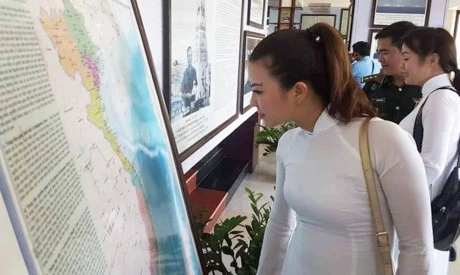
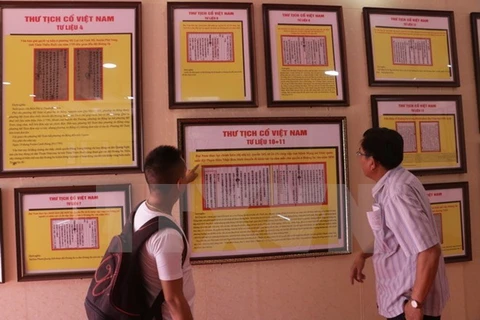
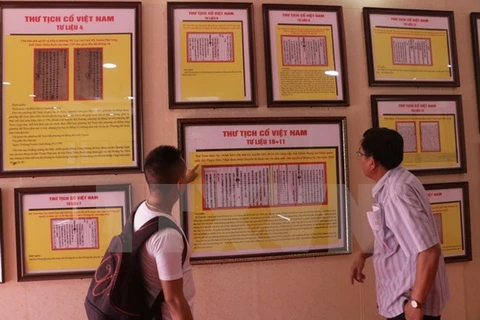
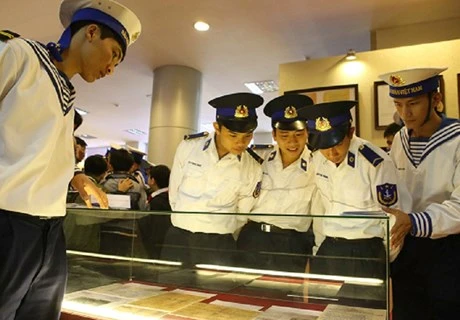
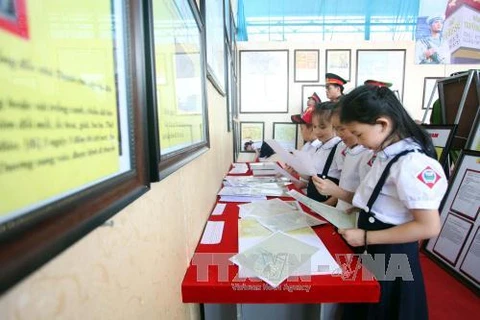
More than 100 woodblocks and official documents under the Nguyen dynasty (1802-1945) demonstrating Vietnam’s sovereignty over Hoang Sa (Paracel) and Truong Sa (Spratly) archipelagos are being exhibited in the Central Highlands province of Lam Dong.
Nguyen dynasty’s woodblocks on Hoang Sa, Truong Sa sovereignty displayed ảnh 1Nguyen dynasty’s woodblocks on Hoang Sa, Truong Sa sovereignty displayed (Photo: VNA)
Lam Dong (VNA) – More than 100woodblocks and official documents under the Nguyen dynasty (1802-1945)demonstrating Vietnam’s sovereignty over Hoang Sa (Paracel) and Truong Sa(Spratly) archipelagos are being exhibited in the Central Highlands province ofLam Dong.

The woodblocks and official documents were showcasedin four sections, including documents and maps published in Vietnam and westerncountries from the 16th to 19th centuries proving Vietnam’s sovereignty overthese archipelagos.

On display at the exhibition, which was openedon July 3, are also Chinese maps indicating that the southernmost part of Chinais Hainan island, as well as documents and objects relating to the exercise ofVietnam’s sovereignty over Hoang Sa and Truong Sa archipelagos.

Some valuable documents include “The easternpart of Quang Ngai province has Hoanh Sa (Truong Sa) island)” and “Hoang Saisland is in the east of Re island”, which are extracted from the book “Dai Namnhat thong chi” (Record of the Unity of Dai Nam), and “King Minh Mang requestsPham Huu Nhat marine corps to measure, draw map of Hoang Sa island in 1836extracted from the book “Dai Nam thuc luc chinh bien” (Veritable Records of DaiNam).

According to Nguyen Xuan Hung, Director of theNational Archives Centre No. 4 in Da Lat city, said this is the first time ninewoodblocks under the Nguyen dynasty proving Vietnam’s sovereignty over Hoang Saand Truong Sa archipelagos have been displayed to serve the public.

Jointly organised by the centre and the StateRecords Management and Archives Department under the Ministry of Home Affairs, theexhibition aims to help domestic and international visitors to gain a betterinsight into Vietnam’s sovereignty over the two archipelagos.

As many as 34,619 woodblocks are being preservedat the National Archives Centre No. 4.-VNA

VNA

See more

Gildas Tréguier, Secretary-General of the France-Vietnam Health Federation (Photo published by VNA)

‘Small bricks’ help strengthen Vietnam-France ties

Dr. Gildas Tréguier, Secretary-General of the France-Vietnam Health Federation (FSFV), said the visit comes as Vietnam is opening further to the world and entering a new stage of development, creating greater demand for experience sharing and closer cooperation with international partners, including France. After nearly 40 years of involvement in medical cooperation programmes with Vietnam, he said bilateral ties have been built not only through major events and government-level agreements, but also through the contributions of generations of people.

Cultural activities are held at the 2026 Vietnamese Language Summer Camp in Klinok village on the outskirts of Minsk, Belarus. (Photo: VNA)

Vietnamese language preserved across globe

In the new context, Politburo Resolution No. 23-NQ/TW, dated August 2, 2026, continues to place the preservation of the Vietnamese language within the strategic vision of mobilising resources from the Vietnamese community abroad and promoting Vietnamese cultural values around the world.

Overseas Vietnamese teachers participating in the 2026 training course on Vietnamese language teaching methods (Photo published VNA)

Leveraging overseas Vietnamese resources for Vietnam-France ties

As Vietnam enters a new era of prosperous and harmonious development, top leader To Lam's official visit to France will significantly contribute to the special dynamics of bilateral relations while fostering shared commitments to international peace, security, and stability.

Ambassador Nguyen Huong Tra briefs representatives of the Vietnamese communities in Belgium and Luxembourg on the country's situation. (Photo: VNA)

Overseas Vietnamese ready to contribute to national transformation

Affirming that overseas Vietnamese are an integral part of the nation and partners in its development and creation, Vietnamese Ambassador to Belgium and Head of the Vietnamese Mission to the European Union (EU) Nguyen Huong Tra pledged to listen to them openly and responsibly, and convey their recommendations to authorities at home.

The operation to remove the bomb is carried out cautiously and meticulously by military forces. (Photo: VNA)

Phu Tho: 200kg bomb safely relocated, detonated

According to a report by the Phu Tho Military Command, local residents spotted the bomb on August 31 in the Da River after the river water receded, exposing it beneath mud and soil on the riverbed. The bomb remained intact, including its fuse, and was located about 300m from a residential area.

Quang Ninh's seaport infrastructure, including the Ha Long International Cruise Port, is capable of serving large cruise ships. (Photo: VNA)

Quang Ninh 2030: Ambitious targets for a breakthrough

These objectives reflect the principle that economic development must not become detached from living standards; rather, the benefits of growth should create opportunities for all residents to share in its achievements.

A police officer guides a citizen on how to use VNeID app. (Photo: VNA)

Shift to data-driven administrative procedures needs acceleration

Under a draft decree replacing Decree 63, authorities will have to proactively pull information from databases and records for informational or technical procedures. Applicants would no longer be required to resubmit documents, and certification or information requests could not be turned into discretionary licensing through an “ask – give” mechanism.

Cuban journalist Luis Manuel Arce Isaac, author of the article published in Mexico’s Voces del Periodista magazine. (Photo: Screenshot/VNA)

Mexican journalist praises Vietnam’s profound transformation

According to the article, Vietnam’s progress over the past decades has turned President Ho Chi Minh’s aspiration for a country that would be more dignified and more beautiful into reality in ways that have far exceeded what was initially envisioned.

The Liaison Board of the Vietnamese Community in Singapore organises the annual Mid-Autumn Festival to strengthen community bonds and spread Vietnamese language and culture. (Photo: VNA)

Continued efforts made to nurture love for homeland through mother tongue

From language classrooms and community activities to digital platforms, Vietnamese is being preserved through increasingly diverse approaches. More than a means of communication, the mother tongue carries memories, culture and affection for the homeland. Ensuring that Vietnamese remains naturally present in the daily lives of overseas Vietnamese is therefore an important way to nurture their lasting bond with the Fatherland.