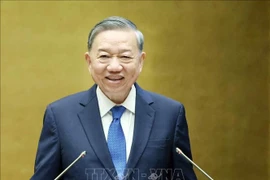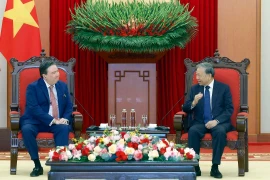
Hanoi (VNA) – Along with the Politburo’s “four key resolutions” which are already underway, Party General Secretary To Lam has emphasised the need to continue designing more resolutions following the guiding principles of “all benefits must come to the people and "all power must belong to the people” as taught by President Ho Chi Minh.
Outlining the “Resolution Quartet” issued by the Politburo to usher Vietnam into a new era, the Party chief ordered the decisive, well-structured implementation, with practical outcomes as the measure of competence and success.
The resolutions, including Resolution No. 57-NQ/TW on breakthroughs in science, technology, innovation, and national digital transformation; Resolution No. 59-NQ/TW on international integration in the new context; Resolution No. 66-NQ/TW on reforming law building and enforcement; and Resolution No. 68-NQ/TW on private sector development, are geared toward achieving this overarching goal.
Known as the “four pillars for Vietnam’s ascent”, they focus on cultivating a robust national entrepreneurial spirit, unlocking resources for innovation across society, and accelerating the development of digital economy, knowledge-based economy, green economy, and circular economy, propelling Vietnam forward rapidly and firmly on the path of modernisation and international integration.
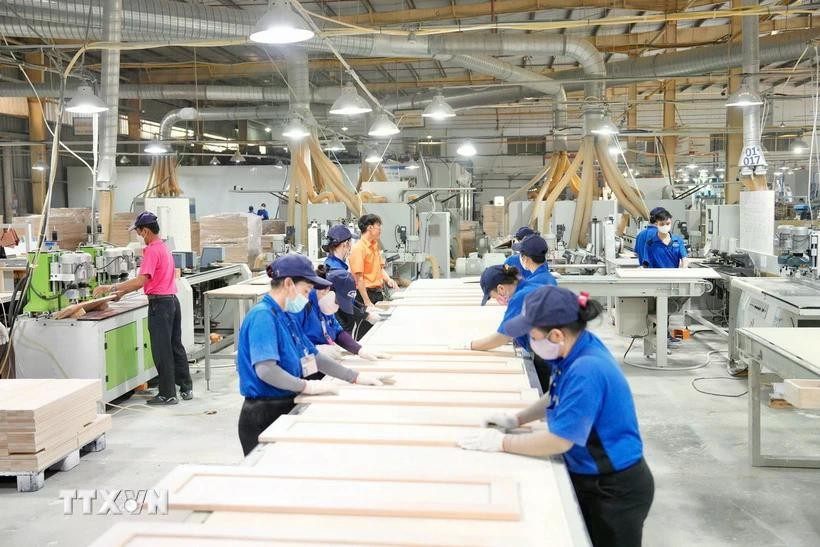
Resolution 68 presents a striking picture of progress. After nearly 40 years of economic reform, the private sector now houses over 940,000 registered enterprises and more than 5 million business households. This sector contributes roughly 50% of GDP and more than 30% of state budget revenue, and provides jobs for 82% of the workforce. It is a critical engine for innovation, productivity, competitiveness, poverty reduction, and social stability.
The resolution sets an ambitious target. By 2030, Vietnam aims to have 2 million operating enterprises—equating to 20 businesses per 1,000 people. But achieving this in such a short timeframe will require transitioning more than 1 million business households into registered businesses.
Business households are defined as small-scale producers or service providers set up by individuals or families who are personally liable for all business-related costs. Despite functioning as professional entities, they are not recognised as companies since they have no official seals, cannot open branches or representative offices, and do not enjoy corporate rights such as the rights to imports and exports or the ability to declare bankruptcy under the law.
Under current regulations, household businesses with more than ten employees must convert to corporate status. Yet many small business owners, particularly shopkeepers and online sellers, are hesitant. They fear the burden of accounting systems, financial reporting, and administrative red tape, which they may lack the resources to handle.
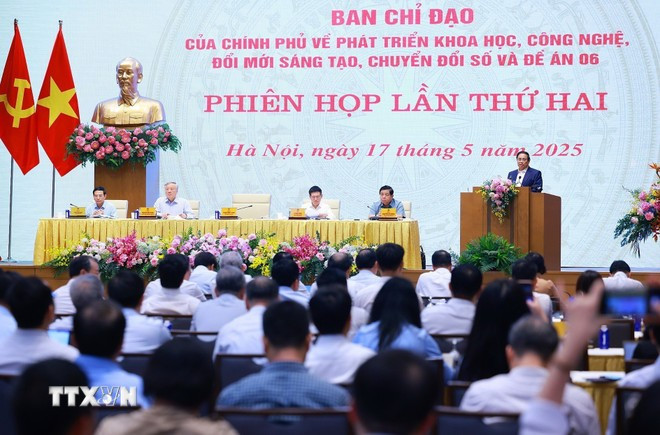
Resolution 68 marks a turning point by offering direct support to the informal sector for the first time, especially business households. Notably, it introduces a three-year corporate income tax incentive to encourage formalisation. Additionally, under revised tax rules, they will no longer pay lump-sum taxes negotiated with local authorities, a system that often understates actual earnings.
Alongside Resolution 57, Resolution 68 also supports the development of free digital accounting platforms to help small enterprises comply with tax requirements at no additional cost.
At the Vietnam–Asia DX Summit 2025, held in Hanoi on May 27–28, several speakers remarked that a successful national policy must ensure that the whole society, businesses, and all Vietnamese families feel its benefits. The plan to support millions of business households in becoming formal enterprises may well fulfil that promise.
Putting citizens and businesses at the heart of development is not just a slogan, but a task and a requirement embedded in all the four Politburo resolutions.
Resolution 68 states that people and businesses are free to operate in any sector not prohibited by law. It sets out that by 2025, the government should complete a thorough review to eliminate unnecessary and overlapping business conditions that obstruct private sector growth. The resolution calls for a shift from a state-managed administrative public service to one focused on service and development facilitation, putting citizens and businesses at the centre; modernise public governance with data-driven management.”
Resolution 66 underlines the need to safeguard democracy, human rights and civil liberties, balancing restrictions on rights and the legitimate benefits achieved. It calls for laws to be stable, simple and feasible, with people and businesses at the centre. It also emphasises the value of social ethics, professional conducts, and community-based self-management rules to help manage social relationships effectively.
Meanwhile, Resolution 57 highlights the importance of active participation of citizens, entrepreneurs and businesses in advancing science, technology, innovation, and national digital transformation. These are described as part of a deep and comprehensive revolution that must be pursued with determination, persistence and consistency over the long term, using bold and transformative solutions. In this vision, people and enterprises are not merely beneficiaries - they are the main actors, drivers and resources. Scientists are key contributors. The State, meanwhile, must act as an enabler and catalyst, providing optimal conditions for innovation-led growth.
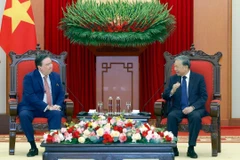
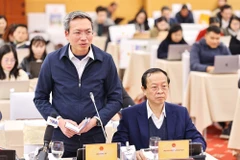
Speaking at a national conference to disseminate and implement Resolutions 66 and 68 on June 18, General Secretary Lam called on the entire political system, the entire Party, Vietnamese people and armed forces to stay united to overcome all challenges, turning aspirations into actions and potential into real strength, in an effort to propel Vietnam into a new era—that of national development, prosperity and strength.
The ultimate goal of development is to ensure happiness and well-being for the people. This reflects the core message of the 13th National Party Congress - “the people know, the people discuss, the people act, the people inspect, the people supervise, and the people benefit.”
That last principle - “the people benefit” - has been the Party and State’s guiding purpose since the struggle for independence began. It echoes the words of President Ho Chi Minh in his 1945 letter to local authorities, published in Cuu Quoc newspaper on October 17: "If the country gains independence but the people do not enjoy happiness and freedom, then that independence has no meaning."/.