OV communities celebrate early Tet with cultural festivities in RoK, New Zealand

The Vietnamese communities in the Republic of Korea (RoK) and New Zealand are ushering in the 2025 Lunar New Year with vibrant celebrations that showcase the homeland’s cultural heritage while strengthening bonds with the host nations.

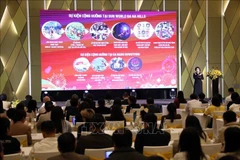
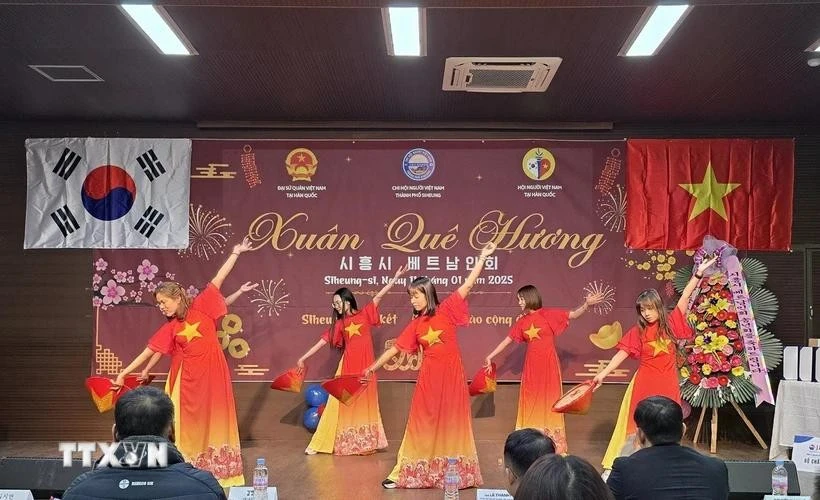
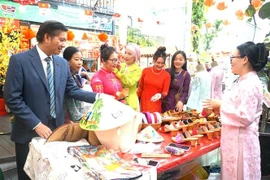
At the homeland spring festival in the Republic of Korea (Photo: VNA)

Seoul (VNA) – The Vietnamese communities in the Republic of Korea (RoK) and New Zealand are ushering in the 2025 Lunar New Year with vibrant celebrations that showcase the homeland’s cultural heritage while strengthening bonds with the host nations.

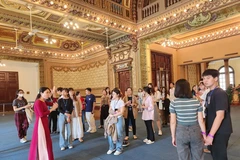
The Vietnamese association in the RoK's Siheung city recently hosted a homeland spring festival, drawing representatives from the Vietnamese Embassy, local government officials, and Vietnamese workers, students, and residents living in the locality.

At the event, Le Thanh Ha, First Secretary at the Vietnamese Embassy in the RoK, acknowledged the association’s dynamism and creativity in organising various programmes in its inaugural year such as a futsal tournament, effective Vietnamese language teaching classes for multicultural families, Mid-Autumn festival celebrations, and healthcare partnerships with local hospitals. He said they have helped promote unity and meet the demand of the overseas Vietnamese (OV).

Kim Jang Son, a representative from the Siheung city administration extended warm wishes to the Vietnamese community for a joyous Lunar New Year celebration.

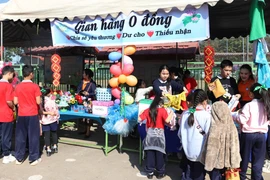
Meanwhile, in Wellington, New Zealand, the Vietnamese community recently celebrated their traditional Tet Festival at the Te Mako Community Centre. The Tet market 2025 event, organised by Viet Hub New Zealand with support from the Vietnamese Embassy and local organisations, attracted nearly 500 participants, including Vietnamese residents and international friends
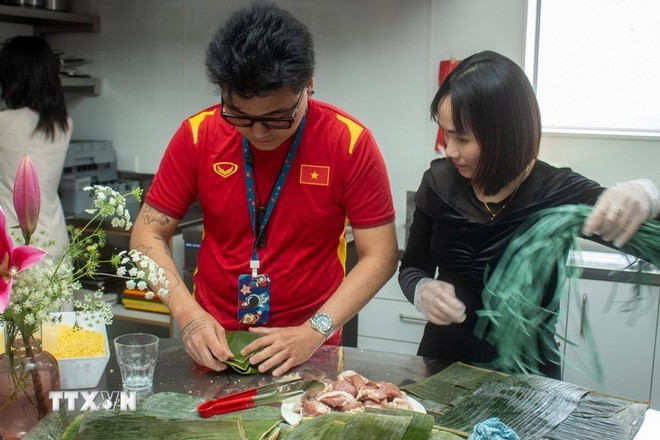
chung-cake-making.jpg
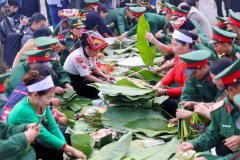
Traditional Tet atmosphere in New Zealand (Photo: VNA)

The festival recreated traditional Tet atmosphere with nhay sap (dance with bamboo poles) performances, banh chung (sticky glutinous rice cake) making, and flower-making workshops. Children enjoyed traditional games like o an quan (mandarin square capturing) and banh dua (bamboo jacks). Meanwhile, Vietnamese cuisine, including banh chung, pho, and grilled meat vermicelli filled the air with nostalgic aromas.

Nguyen Thien Tu Vinh, President of Viet Hub New Zealand, said that the event served as a cultural bridge connecting the OV with their roots while nudging the Vietnamese culture closer to international friends.

The “Tet market 2025” marks the beginning of a series of events commemorating the 50th anniversary of Vietnam-New Zealand diplomatic relations and five years of their strategic partnership./.
VNA

See more

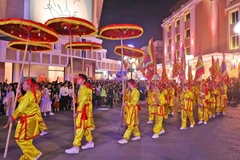
A performance at the Vietnam–Korea Festival 2026 in Da Nang city (Photo: VNA)

Vietnam–Korea Festival 2026 kicks off in Da Nang

Now in its fifth edition, the festival has cemented its place as Da Nang’s signature annual diplomatic event, spotlighting the distinct cultures of both nations, fostering friendship and driving cooperation with Korean localities and partners.

A performance at the opening ceremony of the 2026 Hanoi International Martial Arts Festival on August 7 (Photo: VNA)

Hanoi opens international martial arts festival

The event attracts about 2,000 martial artists of 66 delegations, including seven international delegations from six countries, namely Indonesia, Russia, France, Germany, Switzerland and Morocco.

The statue of Vietnam's King Ly Thai To ( (974 - 1028) in Bonghwa county (Photo: VNA)

RoK to develop K-Vietnam Valley project linked to Ly Dynasty heritage

With the designation in place, Bonghwa will carry out eight specialised projects worth a combined 347.6 billion KRW (245.1 million USD) from 2026 to 2030 – among them the K-Vietnam Valley itself, tourism development around Changpyeong Reservoir, rental smart farms, and a Baekdudaegan healing ‘pet village.’

The organising committee presents awards to outstanding martial artists at the festival. (Photo: VNA)

9th Int’l Festival of Vietnamese Traditional Martial Arts wraps up

The ninth International Festival of Vietnamese Traditional Martial Arts has fostered the martial spirit, strengthened national pride, promoted cultural exchanges and reinforced the aspiration to bring Vietnamese traditional martial arts to a wider international audience.

An appetising bowl of My Quang features a rich combination of ingredients. (Photo: VNA)

Da Nang to host festival honouring Quang Nam-style noodle soup

My Quang is not only a signature dish of the Quang region but also reflects the history, culture and daily life of communities in central Vietnam. With its diverse ingredients, preparation methods and distinctive flavours, the noodle soup has become one of Vietnam's best-known culinary specialities, helping strengthen Da Nang's position on the culinary tourism map.

Hanoi’s traditional silk weaving craft continues to be preserved and developed today. (Photo: VNA)

Van Phuc silk weaving village officially recognised as Hanoi tourist destination

With its millennia-old heritage and growing integration of preservation and innovation, Van Phuc silk weaving village is poised to become a distinctive cultural destination, helping promote Hanoi’s sustainable cultural tourism and bring the quintessence of Vietnamese silk weaving closer to domestic and international visitors.

Minister of Construction Tran Hong Minh speaks at the session (Photo: VNA)

Lawmakers mull over changes to architecture law

On architectural management, the draft Law amending and supplementing several articles of the Law on Architecture clarifies the concept of “national cultural identity in architecture”, tying design to the preservation and promotion of regional heritage. It pushes architecture that mirrors local identity and fits each locality’s natural, historical and social conditions, while setting criteria to identify, assess and protect architecturally valuable buildings as a distinct form of cultural heritage.