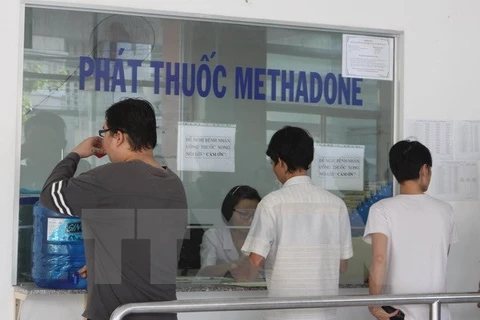
A doctor gives consultation to a patient living with HIV (Photo:VNA)
 Hanoi (VNA) - Strengthening legal aid to people living with HIV/AIDS is expected to help them better exercise their rights and receive essential services, heard a recent conference in Hanoi.
Speaking at the conference held by the Hanoi-based Centre for the Law, Healthcare and HIV/AIDS Policies under the Vietnam Bar Association, Director Trinh Thi Le Tram said few people living with HIV in Vietnam knew or understood the law on HIV/AIDS Prevention and Control, and this prevented them from exercising their rights.
Few had ever received services like legal consultation or legal aid, she said, adding that few lawyers offered these services.
Under the current law on legal aid, people living with HIV are not considered official beneficiaries to receive aid. They are instead listed as people with disabilities and have no one to rely on.
Shortcomings in offering aid were also revealed at the State's legal aid centres based at municipal and provincial Justice Department offices, she said.
Those who wanted access to legal aid had to show HIV-positive results, reveal their names and go to a State agency's office, which made them afraid and hesitant, Tram said.
She called for support from agencies and lawyers to promote legal aid to those living with HIV.
The Government was asked to offer funding to civil societies like Tram's centre to better reach out to HIV carriers and offer effective aid, she said.
Dr Kristan Schoultz, UNAIDS Vietnam Country Director, said people living with HIV should be able to access a wide range of legal aid services, including legal education, legal assistance, representation in civil, criminal and administrative cases, and litigation.
She said although Vietnam had legal regulations to protect the rights and legal interests of people living with HIV, stigma, discrimination and associated rights violations were still common in healthcare facilities, workplaces and the wider community.
Many people living with HIV who suffer discrimination and rights violations do not seek help because they are afraid and feel they have nowhere to turn for protection, she said.
According to a survey in 2014 by the Vietnam National Network of People living with HIV/AIDS, 11 percent of about 1,600 respondents of people living with HIV in Ho Chi Minh City, Hanoi, Can Tho, Hai Phong and Dien Bien provinces, said their rights had been violated.
They experienced gossip and insults, were excluded from social activities and sometimes lost their jobs.
However, 94 percent of respondents who had their rights violated said that they did not seek legal assistance as they didn't believe it would help.-VNA