Prime Minister attends opening ceremony of first Vietnam Glorious Spring Fair 2026
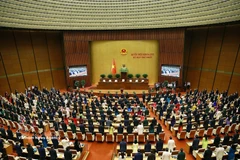
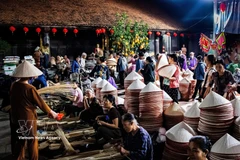
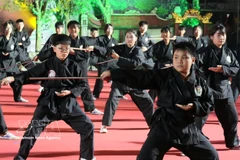
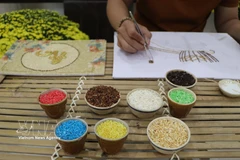
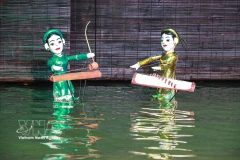
Prime Minister Pham Minh Chinh attended the opening ceremony of the first Spring Fair 2026 opened in Hanoi on February 2 morning.
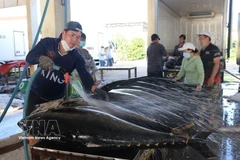
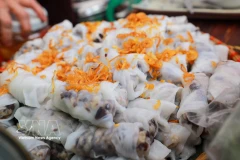
In recent days, hundreds of charcoal kilns in the coastal villages of Dien Chau commune, Nghe An province, have been kept burning as residents work tirelessly to grill sea fish for the Tet market. The traditional craft not only generates income for hundreds of households and provides stable employment for thousands of local workers, but also adds diversity and a distinctive character to the economic structure of fishing villages with long-standing maritime traditions.
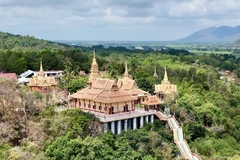
Located at the upper reaches of the Mekong Delta and serving as a gateway to the sea, An Giang province has rich resources for community-based tourism, marked by the cultural convergence of Cham, Khmer and Kinh communities, landscapes and traditional craft villages.
Huoi Man is one of 21 villages in the border commune of Nhon Mai in the central province of Nghe An. After more than 70 years of settlement, the village is home to over 30 households, all belonging to the Mong ethnic group. A visit to Huoi Man offers a glimpse into a distinctive cultural space shaped by the traditions and customs of the Mong community.
An exhibition themed “Nguyen Thi Binh – Intellect, Fortitude and Character of Vietnamese Women in the Ho Chi Minh Era” in underway in Ho Chi Minh City. The exhibition presents documents, photographs and artefacts highlighting former Vice President Nguyen Thi Binh, from her early revolutionary engagement and role at the Paris Peace Conference to her contributions to peace and education after 1975.
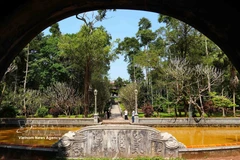
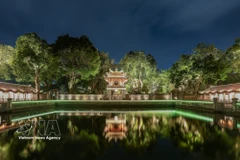
On the afternoon of January 29, in Hanoi, President of the European Council António Costa paid a visit to the Temple of Literature, as part of his official visit to Vietnam.
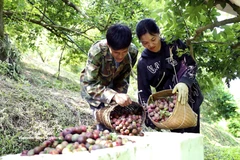
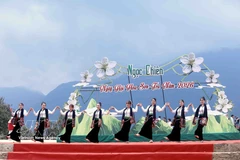
These days, across hillsides, along village edges and winding mountain passes in Son La province, plum blossoms are in full bloom, draping the forests of the Northwest in a pure white hue. The pristine, delicate beauty of the flowers draws visitors eager to experience the season and capture unforgettable moments.
Eighty-five years ago, on January 28, 1941, after 30 years abroad seeking a path to national salvation, Nguyen Ai Quoc (President Ho Chi Minh) returned to the homeland via Milestone 108 in Pac Bo (Cao Bang). The event marked a turning point of great historical significance, opening a new stage in the development of the Vietnamese revolution and laying the foundation for the nation’s great victories.
Cai Rang floating market is located on a branch of the Hau River running through Cai Rang ward, Can Tho city, and specialises in the trading of agricultural produce and local specialities from Can Tho and neighbouring provinces. More than a distinctive cultural space, the floating market is a signature tourism product of the city, attracting large numbers of domestic and international visitors.
After five months of construction, the Thong Nhat (Reunification) Park project in the central province of Quang Tri enters its final phase. As a symbol of national reunification, the site is set to reopen to visitors before the 2026 Lunar New Year. Home to the Hien Luong Bridge and the Ben Hai River along the 17th parallel, the site once served as the provisional demarcation line dividing Vietnam for 21 years (1954–1975) and remains a powerful symbol of the nation’s aspiration for reunification.
The “Old Tet” space at the Nha Trang Old Craft Village is attracting large numbers of locals and tourists. Bringing to life the atmosphere of a traditional Lunar New Year with old-style houses, Tet markets, glowing kitchen fires and folk games, the space offers visitors an immersive look into Vietnam’s cultural heritage.
During the 1996–2005 period, Vietnam advanced industrialisation and modernisation under the Party’s leadership, achieving major milestones in economic restructuring, socialist rule-of-law construction, and broad international integration.
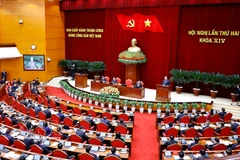
The 14th National Congress of the Communist Party of Vietnam convened its closing session on the afternoon of January 23 at the National Convention Center in Hanoi.
The sixth National Party Congress in December 1986 mapped out the Doi Moi (Renewal) policy and initiated the process of Party-led reforms in Vietnam. This marked a crucial turning point in socialist construction, unleashing national strength and potential to propel the country forward. During the 1986–1995 period, the Party led the reform, abolished the subsidy mechanism, and transitioned to a socialist-oriented market economy, overcoming socio-economic crises and laying a firm foundation for international integration.
On January 22, 2026, the 14th National Congress of the Communist Party of Vietnam devoted the day to personnel work and elected the 14th-term Party Central Committee.
Over the decade from 2006 to 2015, under the Party’s leadership, Vietnam overcame major challenges, moved beyond underdevelopment, and joined the ranks of middle-income developing countries. Political and social stability was maintained, social welfare strengthened, international integration deepened, and Vietnam emerged as an active and responsible member of the international community.
On the morning of January 21, 2026, the 14th National Party Congress continued with a plenary discussion on the Congress documents.
During the 2016–2025 period, under the Party’s leadership and with the engagement of the entire political system, together with the active participation of the public and the business community, Vietnam has achieved significant milestones across multiple sectors.
Delegates attending the 14th National Party Congress visited the photo exhibition "Under the Party Flag - The Country Enters a New Era" organised by the Vietnam News Agency before the opening of the congress in Hanoi on November 20 morning.
Across streets, squares and public spaces nationwide, panos, banners and large LED screens in dominant red tones, featuring the hammer-and-sickle emblem and the yellow star, have been prominently and solemnly displayed.
On January 20 morning, the 14th National Congress of the Communist Party of Vietnam officially opened at the National Convention Center in Hanoi.
The 14th National Congress of the Communist Party of Vietnam convened its preparatory session on the morning of January 19 at the National Convention Centre in Hanoi. The Congress will take place from January 19 to 25, 2026 with the participation of 1,586 delegates representing over 5.6 million Party members nationwide.
Before the opening of the preparatory session of the 14th National Congress of the Communist Party of Vietnam, delegates visited the photo exhibition “Under the Party’s leadership – the nation enters a new era”, organised by the Vietnam News Agency in Hanoi on January 19.
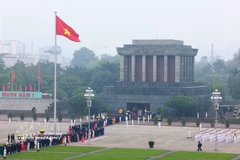
On the morning of January 19, 2026, following a tribute to President Ho Chi Minh at his Mausoleum and an incense-offering ceremony at the Monument to Heroes and Martyrs, Party General Secretary To Lam, along with other Party and State leaders and delegates to the 14th National Congress of the Communist Party of Vietnam, arrived at the National Convention Centre in Hanoi for the preparatory session.
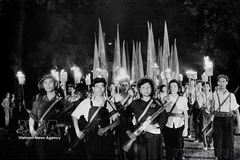
From 1946 to 1960, under the leadership of the Communist Party of Vietnam, headed by President Ho Chi Minh, the Vietnamese army and people won a resounding victory in the resistance war against French colonialists. At the same time, they advanced the building of socialism in the North and laid the groundwork for the struggle against the US.