Illustrative photo (Photo: VNA)
Hanoi (VNA) – Deputy Prime Minister Tran Hong Ha has approved a plan to implement the national Seaport System Development Master Plan in the period 2021-2030 with a vision to 2050.
The plan identifies tasks, solutions, and lists specific projects to be implemented in each period from now to 2030.
It identifies methods, resources, and coordination mechanisms among ministries, departments, branches, and People's Committees of provinces and cities in implementation.
The plan also provides orientations for ministries, agencies, and People's Committees of provinces and cities in formulating their own plans for the implementation of the plan in each period.
It sets three major tasks to implement the master plan relating to performing planning procedures, completing legal framework on maritime issues, and developing infrastructure.
Policies and solutions to implement the master plan include those to attract capital for infrastructure development, human resources development, and science and technology development. The solutions must ensure social security, environmental protection, and national defense – security.
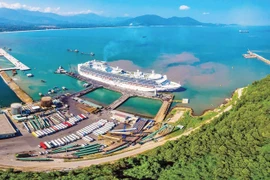
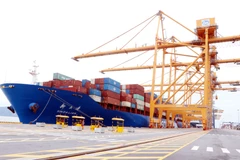
 Vietnam's seaport system is expected to handle 1,140 to 1,423 million tonnes of cargo, including 38 to 47 million TEUs of container cargo, and transport about 10.1 to 10.3 million passengers by 2030.(Photo: baodautu.vn)
Under the approved national seaport development plan in the 2021-2030 period with a vision to 2050, seaports are divided into different groups depending on the scale and function. The seaport system is connected with railway and waterway routes as well as the national highway and local road system.
The first group includes five northern ports in Hai Phong, Quang Ninh, Thai Binh, Nam Dinh, and Ninh Binh.
The second group consists of six ports in the northern part of the central region, namely Thanh Hoa, Nghe An, Ha Tinh, Quang Binh, Quang Tri, and Thua Thien-Hue; while the third one features eight ports in the southern part of the central region - Da Nang, Quang Nam, Quang Ngai, Binh Dinh, Phu Yen, Khanh Hoa, Ninh Thuan and Binh Thuan.
The fourth group comprises five ports in Ho Chi Minh City and the southern provinces of Dong Nai, Ba Ria-Vung Tau, Binh Duong, and Long An.
The last one consists of 12 ports in Can Tho City and the provinces of Dong Thap, Tien Giang, Vinh Long, Ben Tre, An Giang, Hau Giang, Soc Trang, Tra Vinh, Ca Mau, Bac Lieu, and Kien Giang in the Mekong Delta.
The master plan gives priority to upgrading the infrastructure of international gateway ports such as Lach Huyen Port in Hai Phong and Cai Mep Port in Ba Ria – Vung Tau.
Meanwhile, appropriate mechanisms and policies will be studied to improve the international transshipment port in Van Phong, Khanh Hoa province.
According to the planning, Vietnam has two special seaports including Hai Phong and Ba Ria – Vung Tau, 15 seaports of first class, six seaports of second class, and 13 seaports of third class.
The seaport system is expected to handle 1,140 to 1,423 million tonnes of cargo, including 38 to 47 million TEUs of container cargo, and transport about 10.1 to 10.3 million passengers.
The total investment needed for the scheme until 2030 is about 313 trillion VND (13.7 billion USD)./.