PM: Health sector makes strides in public health care

The health sector has made great strides in protecting public health, contributing to the country’s socio-economic development, said Prime Minister Nguyen Tan Dung.
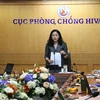
PM: Health sector makes strides in public health care ảnh 1Prime Minister Nguyen Tan Dung speaks at the event (Source: VNA)

Hanoi (VNA) – The health sector has made great strides in protecting public health, contributing to the country’s socio-economic development, said Prime Minister Nguyen Tan Dung at the Health Ministry’s teleconference on January 15.

For 2016-2020 tasks, PM Dung asked the sector to improve preventive and primary health care to ensure everyone has access to quality medical services, as well as taking initiative in preventing diseases from entering Vietnam and intensifying supervisions in order to early detect any arising diseases.

It is necessary to ensure food safety and increase the quality of communal medical clinics, he said, adding that provinces also need to develop the family doctor model to meet locals’ primary health care demands.

The Government leader also urged hospitals to boost coordination and develop satellite hospital networks to reduce overloads.

He emphasised the need to equip medical staff with professional skills and capacity and good ethics, as this is the leading requirement to raise the quality of health check-ups and treatment.

The ministry was also requested to pay more attention to family planning and health insurance, and review the law system to have adjustments and supplements if necessary.

Speaking at the event, Minister Nguyen Thi Kim Tien stated that the ministry will focus on increasing the efficiency of the grassroots medical network and preventive health care.

The sector will synchronously carry out measures to ease hospital overloads, increase the quality of medical services, and closely manage drug prices and quality, while trying to decrease the number of fatalities caused by diseases and lengthen life expectancies.

Supervision will be strengthened at international border gates to prevent diseases from entering Vietnam, she said.

She continued by saying that the sector will continue to promote vaccination so as to keep the vaccination rate above 90 percent. It will speed up the implementation of projects to increase the number of medical clinics and expanding the network of satellite hospitals to all provinces and cities.

Last year, the health sector contained diseases at home and prevented newly emerging diseases like Ebola, avian flu H7N9 and Mers-CoV from entering the country, although they occurred in several nations in the region.

The sector effectively carried out projects within national targets programmes, maintained a vaccination rate above 90 percent, and had 98.2 percent of children from 1 to 14 vaccinated for measles-rubella.

In June, the World Health Organisation (WHO) granted the National Regulatory Authority (NRA) certificate to Vietnam, recognising that vaccines made in Vietnam meet international standards.-VNA
VNA

See more

Minister of Health Dao Hong Lan and US Ambassador to Vietnam Jennifer McNamara Wick sign the memorandum of understanding on health cooperation. (Photo: US Embassy in Vietnam)

Vietnam, US launch five-year health cooperation

The cooperation will also support Vietnam in strengthening its healthcare capacity and gradually enhancing self-reliance in HIV/AIDS and tuberculosis prevention and control programmes, as well as in responding to emerging and re-emerging infectious diseases.

Director of the Ho Chi Minh City Department of Health Tang Chi Thuong (third, right) presents flowers to congratulate six young doctors who have volunteered to work at grassroots-level health stations (Photo: VNA)

Ho Chi Minh City strengthens grassroots healthcare workforce

Ho Chi Minh City's Department of Health on September 10 reviewed a pilot programme combining hospital-based practice with work at grassroots health stations and organised the fourth healthcare job fair, attracting nearly 1,000 candidates and 94 recruiters offering 806 positions.

Children undergo health screening. (Photo: Dong Da General Hospital in Hanoi)

Vietnam to screen students nationwide for five health risks from 2028

Vietnam will launch nationwide screening for five groups of school-related diseases and health conditions among students from preschool through high school from 2028, including overweight and obesity, refractive errors, spinal curvature, oral diseases and mental health disorders.

A doctor provides dental checkup for a student. (Photo: VNA)

Free health checkups for children ahead of new school year

According to the Hanoi Department of Health, the city has 4,776 educational institutions with more than 2.2 million preschool and school students. The health campaign will run from August 18 to September 4, targeting 100% coverage before the new school year begins.

Spraying insecticide to prevent dengue fever in Dan Hoa commune, Hanoi. (Photo: VNA)

Hanoi steps up dengue prevention as cases rise

According to the Hanoi Centre for Disease Control (CDC), 316 dengue cases were recorded across 74 communes and wards in the city from August 7-14, up 81 from the previous week. Eleven new outbreaks were also reported, bringing the total number since the beginning of 2026 to 63, with 24 still active.

Screening and early cancer detection using advanced medical equipment at a healthcare facility (Photo: VNA)

Vietnam targets Southeast Asia’s leading medical tourism position by 2030

Medical tourists to Vietnam currently mainly comprise overseas Vietnamese and visitors from Cambodia, Laos, the Republic of Korea, Japan, Australia and several European countries. Popular services include cosmetic dentistry, assisted reproduction, aesthetic medicine, general health check-ups and some advanced medical specialties.

An ambulance from the pre-hospital emergency care service in Phu Quoc special zone in An Giang province. (Photo: VNA)

Pre-hospital emergency care system to be launched nationwide

From 2027, the national pre-hospital emergency management platform will be put into operation, connecting data with the 113, 114 and 115 emergency call systems to facilitate rapid emergency dispatch and improve public access to emergency services.

Foreign patients travel to Vietnam for robotic cancer surgery at one-tenth of US costs

Foreign patients travel to Vietnam for robotic cancer surgery at one-tenth of US costs

With robot-assisted surgery costing tens of thousands of dollars in the US and Singapore, a growing number of international patients are traveling to Vietnam for robotic cancer surgery, including procedures for prostate, gynecological and gastrointestinal cancers, using the US made da Vinci Xi system at costs starting from just 3,000 USD.