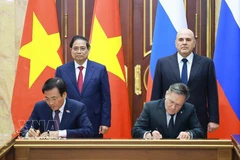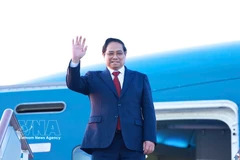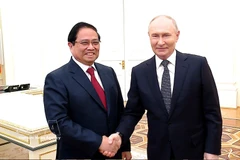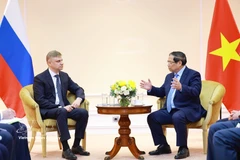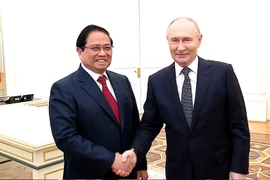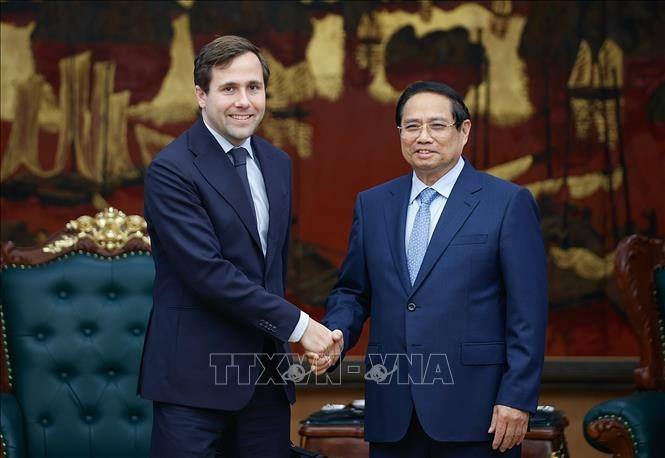
Hanoi (VNA) – Prime Minister Pham Minh Chinh’s official visit to Sweden from June 12 to 14 at the invitation of his Swedish counterpart Ulf Kristersson is expected to inject new momentum into the Vietnam – Sweden relationship, towards further deepening the bilateral ties.
Enduring friendship foundation
Sweden was the first Western country to recognise and establish diplomatic relations with Vietnam on January 11, 1969, during Vietnam’s arduous struggle for independence and national reunification. It was also among the earliest and strongest Western supporters of Vietnam’s resistance war against the US, with solidarity movements beginning as early as August 1966.
During Vietnam’s Doi moi (renewal) and national construction, Sweden continued to offer valuable material and moral support. Key public service projects funded by Sweden, such as the Vietnam National Children’s Hospital (Vietnam-Sweden Children's Hospital), Uong Bi General Hospital, and Bai Bang Paper Mill, have long stood as vivid symbols of the close friendship between the two countries.

Not only rooted in a close historical bond, the political relationship between the two countries today also continues to thrive, with high-level visits and meetings contributing to further strengthening the bilateral cooperation.
The two countries have established a mechanism for annual political consultation at deputy foreign minister level, held alternately in each country, with the first session in Hanoi in June 2022. Vietnam and Sweden also cooperate effectively in multilateral forums, particularly in addressing global challenges.
Huge potential remains for economic and trade cooperation
Along with the good political relations, economic ties between Vietnam and Sweden have also grown steadily. From 1967 to 2013, Sweden was the largest Nordic provider of non-refundable aid for Vietnam, focusing on law-making and institutional reform, administrative reform, human resources development, healthcare, and environmental protection.
Since late 2013, the two countries have entered a new phase of equal and mutually beneficial partnership. The two-way trade has seen notable progress, with total trade turnover reaching over 1.5 billion USD in 2022, 1.28 billion USD in 2023, and 1.48 billion USD in 2024.
Sweden currently ranks 29th out of 149 countries and territories investing in Vietnam, with 111 valid projects worth 743.39 million USD. The European nation’s investment is primarily concentrated in manufacturing and processing industries, information and communications, as well as accommodation and food services.
Currently, over 70 Swedish companies are operating in Vietnam, primarily in Hanoi, Ho Chi Minh City, and the southern province of Binh Duong. Swedish giants such as Ericsson, ABB, IKEA, and Electrolux have long been present in the Vietnamese market. Swedish carmaker Volvo and fashion brand H&M have also opened stores in Vietnam. Notably, Syre - a subsidiary of H&M, plans to build a high-tech polyester fabric recycling plant worth nearly 1 billion USD in central Binh Dinh province.
In contrast, Vietnamese investment in Sweden remains modest, with only three projects totaling nearly 1 million USD.
The two countries hold great potential to further strengthen cooperation in science and technology; innovation; telecommunications; green, digital, and circular economic development; education and training; infrastructure development; renewable energy, and defence industry.
For development cooperation, Sweden is the largest provider of non-reimbursable grant aid to Vietnam among Northwest European countries, with over 3 billion USD since 1967, focusing on healthcare; economic and administrative reform; institutional and legal development; human resources training; and environmental and climate-change initiatives.
It is also one of the most significant and effective development‐aid partners for Vietnam’s cultural sector, supporting projects in heritage conservation and building skills and capacity for Vietnamese broadcasting, television, and print journalism. The two countries have signed two cooperation agreements on culture and media, and today their cultural collaboration is carried out through direct partnerships between arts and cultural institutions, with shared resources from both sides.
Regarding education and training cooperation, Sweden has helped Vietnam train numerous specialists, engineers, and doctorates in forestry, pulp and paper, energy, biotechnology, medicine, and journalism. Several universities and research institutes have established cooperative links for training, student and scholar exchanges, and joint research. In August 2017, the Ministry of Education and Training of Vietnam the Ministry of Education and Research of Sweden signed a Memorandum of Understanding on higher‐education and research cooperation. Today, over 120 Vietnamese students study natural sciences, engineering, and economics at major Swedish universities such as Lund, Uppsala, and KTH.
The Vietnamese community in Sweden numbers about 22,000, most of whom have become Swedish citizens. They lead stable, well-integrated lives and are held in high regard by the Swedish authorities.
Strengthening Vietnam–Sweden cooperation in new areas
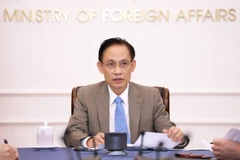
According to Deputy Foreign Minister Le Thi Thu Hang, during Chinh’s official visit to Sweden, the two countries’ leaders will review their partnership’s progress and evolving development demands, then identify concrete measures to inject fresh momentum and achieve breakthroughs for a more substantive and effective relationship. At the same time, Vietnam looks to further deepen ties with the European Union (EU), acting as a bridge between the EU and ASEAN, enhancing coordination in addressing regional and global issues, thus contributing to peace, stability, cooperation, and sustainable development in the region and the world.
Sweden is a developed country with proven strengths in science and technology, innovation, information and communications technology, environmental protection, and green economy, Hang said, noting that these “lever” sectors will serve as pillars for elevating the bilateral relations in line with Vietnam’s development orientation and investment attraction strategy to achieve double-digit growth in the coming years.
According to Vietnamese Ambassador to Sweden Tran Van Tuan, the demand for deeper Vietnam–Sweden cooperation is growing, requiring the bilateral relationship must take fresh strides to meet each country’s evolving development requirements.
He said Sweden is one of the world’s pioneering countries, with top‐tier potential and expertise in combating climate change. It is a major contributor to the UN Green Climate Fund, and actively shares technology, policy frameworks, initiatives, and financing with developing countries, notably through the Swedish International Development Cooperation Agency (SIDA).
Meanwhile, Vietnam is among the countries most vulnerable to climate change, and its current and long-term development objectives focus on proactive climate-change adaptation and disaster prevention and mitigation, alongside the efficient, economical, and sustainable management and use of natural resources. Therefore, the two countries have a lot of potential for cooperation in this field. Vietnam can tap into Sweden’s expertise in law-making and management policy, and science and technology, and financial resources, and address domestic climate-change threats through multilateral and bilateral channels.
The diplomat hoped that PM Chinh’s official visit to Sweden will provide breakthrough development cooperation momentum to bilateral relations on the basis of enduring friendship./.