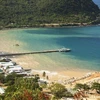
Part of coastline along Hoang Sa, Truong Sa and Nguyen Tat Thanh Streets in Da Nang city (Photo: VNA)
 Hanoi (VNA) – Marine pollution will culminate in the degradation of marine biodiversity, especially coral reefs which cover about 1,122 sq.km. of seabed off the country’s coast.
According to the Vietnam Administration of Seas and Islands, about 20 percent of reefs have coral coverage of under 25 percent at present. Meanwhile, 60 percent of reefs have between 26-50 percent coral coverage and only 3 percent of reefs have coral covering more than 75 percent of their areas.
“Vietnam has never faced such a big challenge to its coral like it is at present. More than 50 tonnes of coral, excluding black coral in Quang Binh, Quang Tri and Quang Ninh provinces and Hai Phong city, disappear every year. If that trend continues, the country will be unable to see any coral in its offshore waters within the next 20 years,” the Institute of Oceanography warned.
Especially, Vietnam is facing serious marine pollution with mass fish deaths in some central provinces last April the latest incident recorded.
The country boasts a coast of over 3,260km, an exclusive economic zone of more than 1 million sq. km and over 3,000 islands.
According to the Ministry of Natural Resources and Environment, the main cause of marine pollution is the widespread unplanned development of industry, tourism and aquaculture, growing population and poverty, low public awareness and policy loopholes.
About 70 – 80 percent of the waste at sea hails from the mainland where many factories and residential areas release untreated waste water and solid waste into coastal rivers or directly into the sea.
In aquaculture, one hectare of shrimp farming produces about 5 tonnes of solid waste and tens of thousands of cubic metres of waste water in one crop. With over 600,000ha of shrimp farms in Vietnam, nearly 3 million tonnes of solid waste will be discarded to the environment every year.
The Institute of Oceanography also blames marine pollution on the unreasonable use of coastal soil, leading to an increasing scarcity of fresh water, land erosion and soil settlement in littoral areas.
Tourism activities have also negatively influenced the marine environment. The Cat Ba National Park with 5,400ha of water surface in the northern region is an example. The environment there has been degraded due to irrational tourism and aquaculture that releases thousands of tonnes of waste into the sea every day.
Meanwhile, there have been more and more oil spills at sea as higher petroleum demand and excessive oil exploitation have caused more frequent incidents relating to oil drilling and tankers. Hundreds of offshore oil wells produce 5,600 tonnes of oil and gas waste every year, about 20 – 30 percent of which are dangerous and untreated.
More than 100 rivers in Vietnam pour some 80 cubic kilometres of water depositing 270 – 300 million tonnes of alluvium into the sea each year, which can carry pollutants such as heavy metallic elements and toxic substances from industrial, residential, aquatic farming and agricultural zones.
In 2010, large amounts of waste were recorded in coastal waters, including 35,160 tonnes of oil, 26 – 52 tonnes of nitrogen and 15 – 30 tonnes of ammonium a day. Coastal seawater has been found to be polluted with organic substances, zinc and pesticides.
The red tide phenomenon has also been seen in the waters off the south central coast such as in Khanh Hoa, Ninh Thuan and Binh Thuan provinces, killing aquatic species farmed there. More than 85 marine species have been listed as endangered at different levels, and some 70 of them are listed in Vietnam’s Red Book of endangered species.
More than 50 percent of big cities, nearly 60 percent of the population and most industrial parks, export processing zones, aquaculture areas and tourism activities are at sea and coastal areas, which are rich in natural resources and economic development potential.
Those areas are recording fast population growth and migration. While the shrimp and fish volume in waters near the mainland are running out, about 600,000 fishermen in the 28 coastal provinces and cities are still seeking every possible way to harvest more. This is exhausting marine resources even more rapidly.-VNA
According to the Vietnam Administration of Seas and Islands, about 20 percent of reefs have coral coverage of under 25 percent at present. Meanwhile, 60 percent of reefs have between 26-50 percent coral coverage and only 3 percent of reefs have coral covering more than 75 percent of their areas.
“Vietnam has never faced such a big challenge to its coral like it is at present. More than 50 tonnes of coral, excluding black coral in Quang Binh, Quang Tri and Quang Ninh provinces and Hai Phong city, disappear every year. If that trend continues, the country will be unable to see any coral in its offshore waters within the next 20 years,” the Institute of Oceanography warned.
Especially, Vietnam is facing serious marine pollution with mass fish deaths in some central provinces last April the latest incident recorded.
The country boasts a coast of over 3,260km, an exclusive economic zone of more than 1 million sq. km and over 3,000 islands.
According to the Ministry of Natural Resources and Environment, the main cause of marine pollution is the widespread unplanned development of industry, tourism and aquaculture, growing population and poverty, low public awareness and policy loopholes.
About 70 – 80 percent of the waste at sea hails from the mainland where many factories and residential areas release untreated waste water and solid waste into coastal rivers or directly into the sea.
In aquaculture, one hectare of shrimp farming produces about 5 tonnes of solid waste and tens of thousands of cubic metres of waste water in one crop. With over 600,000ha of shrimp farms in Vietnam, nearly 3 million tonnes of solid waste will be discarded to the environment every year.
The Institute of Oceanography also blames marine pollution on the unreasonable use of coastal soil, leading to an increasing scarcity of fresh water, land erosion and soil settlement in littoral areas.
Tourism activities have also negatively influenced the marine environment. The Cat Ba National Park with 5,400ha of water surface in the northern region is an example. The environment there has been degraded due to irrational tourism and aquaculture that releases thousands of tonnes of waste into the sea every day.
Meanwhile, there have been more and more oil spills at sea as higher petroleum demand and excessive oil exploitation have caused more frequent incidents relating to oil drilling and tankers. Hundreds of offshore oil wells produce 5,600 tonnes of oil and gas waste every year, about 20 – 30 percent of which are dangerous and untreated.
More than 100 rivers in Vietnam pour some 80 cubic kilometres of water depositing 270 – 300 million tonnes of alluvium into the sea each year, which can carry pollutants such as heavy metallic elements and toxic substances from industrial, residential, aquatic farming and agricultural zones.
In 2010, large amounts of waste were recorded in coastal waters, including 35,160 tonnes of oil, 26 – 52 tonnes of nitrogen and 15 – 30 tonnes of ammonium a day. Coastal seawater has been found to be polluted with organic substances, zinc and pesticides.
The red tide phenomenon has also been seen in the waters off the south central coast such as in Khanh Hoa, Ninh Thuan and Binh Thuan provinces, killing aquatic species farmed there. More than 85 marine species have been listed as endangered at different levels, and some 70 of them are listed in Vietnam’s Red Book of endangered species.
More than 50 percent of big cities, nearly 60 percent of the population and most industrial parks, export processing zones, aquaculture areas and tourism activities are at sea and coastal areas, which are rich in natural resources and economic development potential.
Those areas are recording fast population growth and migration. While the shrimp and fish volume in waters near the mainland are running out, about 600,000 fishermen in the 28 coastal provinces and cities are still seeking every possible way to harvest more. This is exhausting marine resources even more rapidly.-VNA
VNA