Prime Minister urges strengthened decentralisation in law-making

According to the government leader, the laws must be timely, practical, legally sound, and built on real-world needs.

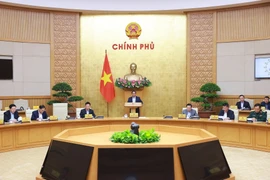
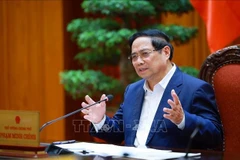
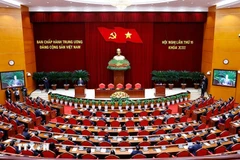
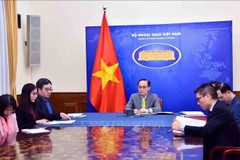
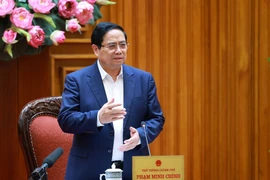
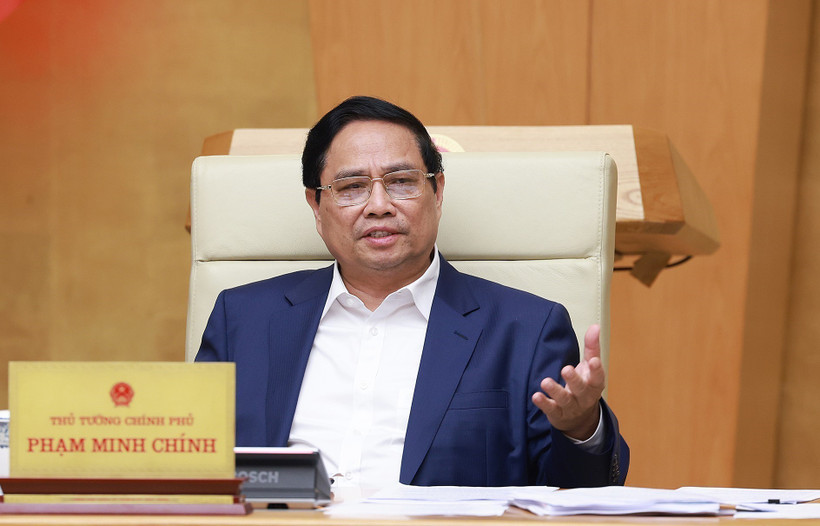
Prime Minister Pham Minh Chinh addresses the Government’s law-making session in Hanoi on July 23. (Photo: VNA)

Hanoi (VNA) - Prime Minister Pham Minh Chinh has requested for stronger decentralisation and delegation of power in law-making, shifting from pre-examination to post-inspection mechanisms, and eliminating unnecessary administrative procedures.

Addressing the Government’s law-making session in Hanoi on July 23, the PM stressed the need to end the practice of higher-level authorities merely endorsing subordinate decisions without substantive review.

The session focused on debating some law proposals, verification reports of some bills, and reviewing a number of draft laws, including the Law on amendments and supplements to a number of articles of the Law on Judicial Records and the Law on Drug Prevention and Control, and the replacement draft for the Law on Civil Aviation of Vietnam, the draft Law on E-Commerce, the replacement draft for the Law on Higher Education, and the replacement draft for the Law on Vocational Education.

For the Law on amendments and supplements to a number of articles of the Law on Judicial Records, cabinet members assessed its relevance to a two-tier local administration structure and national digital transformation.

The PM urged reducing administrative procedures and overlaps, referencing international practices, and incorporating expert insights.

Regarding the Law on amendments and supplements to some article of the Law on Drug Prevention and Control, which reclassifies unauthorised drug users as criminals rather than patients, PM Chinh called for a humanitarian approach that protects the rights of juvenile users to education and rehabilitation.
at-the-session.jpg
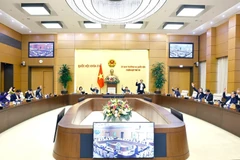
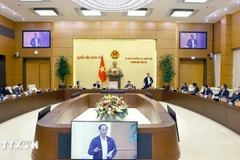
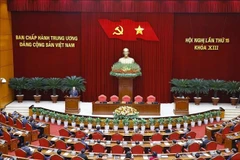
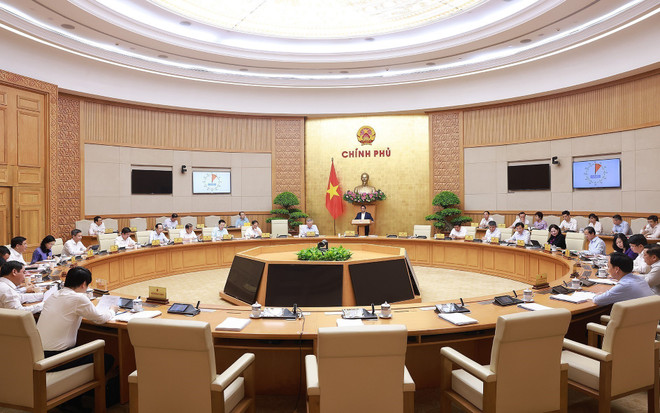
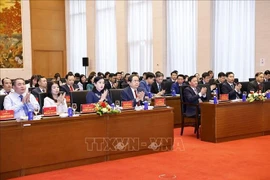
At the law-making session (Photo: VNA)

For the replacement draft of the Law on Civil Aviation of Vietnam, delegates highlighted its importance in supporting a growing aviation sector, including state asset oversight, airfare regulation, and air traffic management. PM Chinh emphasised the need to enable the private sector's participation, particularly through public-private partnerships, and to legislate clearly on private-sector involvement in airport development.

Addressing the draft E-Commerce Law, PM Chinh noted its critical role in advancing the Party’s digital transformation policy, while maintaining tax compliance, quality control, and anti-fraud measures. He stressed the need to regulate livestream sales, affiliate marketing, and social media-based commerce to reflect the digital economy's realities.

The draft Laws on Higher Education and Vocational Education drew extensive discussions on governance, admissions, certification, and labour market alignment. The PM called for modern, decentralised education governance, allowing specialised institutions greater flexibility, while assigning infrastructure and staffing responsibilities to capable local bodies.

He underscored linking education with innovation, adapting to emerging disciplines, and rationalising the university network through satellite campuses. The reforms, he said, must align with the Party's resolutions on education reform and support flexible training-employment links.

In his summary, the PM reiterated Party General Secretary To Lam’s directions to resolve institutional bottlenecks within the year, transforming the legal system into a national competitive advantage. He urged ministries to mobilise resources and for ministers to personally lead law-making efforts.

Ministries were directed to review existing laws, enhance decentralisation with resource allocation, and implement strong monitoring. The transition from “pre-examination” to “post-inspection” must involve eliminating redundant intermediaries, particularly top-down rubber-stamping.

According to the government leader, the laws must be timely, practical, legally sound, and built on real-world needs. While stable policies should be embedded in the laws, volatile or rapidly evolving issues should be delegated to the Government or relevant ministries for flexible implementation.

To guide the drafting of the bills, the PM introduced the “five whys” (why to eliminate, refine, add, cut procedures, and decentralise) and the “six clarities” - clear decentralisation and delegation of power, clear principles and roles, clear reduction in procedures, clear translation of the Party's policies, clear anticipated impacts, clear handling of controversial issues.

He further emphasised that legal texts must be concise, precise, understandable, enforceable, and measurable. Drafting bodies were requested to seek feedback from scientists, experts, and the public, incorporate international best practices, and build broad consensus through dialogue./.
VNA

See more

All members of the NA Standing Committee present at the session vote in favour of resolutions on administrative unit standards and urban classification. (Photo: VNA)

Resolutions on urban classification and administrative unit standards approved

The draft resolution streamlines urban classification around three key areas - role and socio-economic conditions, urbanisation level, and infrastructure development. It also integrates green, smart, climate-resilient, and digital transformation requirements, while promoting decentralisation in urban management.

Prime Minister Pham Minh speaks at the working session. (Photo: VNA)

PM requests development of modern, hi-tech, dual-use defence industry

In 2026, the entire military must focus on building a revolutionary, regular, elite, and modern force; strictly implementing the Party Central Committee’s directives on Party building and rectification; flexibly, substantively, and effectively conducting defence diplomacy; and promoting self-reliance and resilience in the defence industry, logistics, and technical operations.

☕ Afternoon briefing on December 24

☕ Afternoon briefing on December 24

Outstanding domestic and international events of 2025 selected by the VNA, the Christmas atmosphere in Vietnam, and a seminar aimed at exploring cooperation opportunities between Vietnam and Russia in the digital era are among news highlights on December 24.

The closing of the 13th Party Central Committee's 15th plenum on December 23 (Photo: VNA)

📝OP-ED: Party Congress personnel: No room for rumours!

As Vietnam stands on the threshold of a promising new development phase brimming with opportunities and high expectations, staying alert to fake news, rumours, and baseless accusations is not merely a voice of rationality but a civic duty towards the nation’s future.

☀️ Morning digest on December 24

☀️ Morning digest on December 24

The PM's demand for coordinated efforts to repair infrastructure and restore livelihoods following storms and floods in the central region; the establishment of the Central Steering Committee for People’s Air Defence; and the phone talks between the Vietnamese and French foreign ministers are among news highlights on December 23 evening.

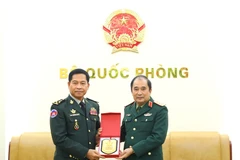
Deputy Chief of the General Staff of the Vietnam People’s Army Sen. Lieut. Gen Phung Sy Tan presents a souvenir to Gen. Phorn Nara, Secretary General of the National Authority for the Prohibition of Chemical, Nuclear, Biological and Radiological Weapons of Cambodia (CBRNE) in Hanoi on December 23 (Photo: qdnd.vn)

Military official hosts Cambodian chemical weapons authority chief

The success of the second Vietnam - Cambodia border defence friendship exchange in November has contributed to the practical and effective cooperation among the two countries’ armies, local authorities, and border communities, for a borderline of peace, friendship, stability, cooperation, and development.

Vietnamese Minister of Foreign Affairs Le Hoai Trung at the phone talks with French Minister for Europe and Foreign Affairs Jean-Noël Barrot on December 23 (Photo: VNA)

Vietnamese, French foreign ministers hold phone talks

France wishes to increase cooperation with Vietnam in such strategic sectors as energy, transport, and aerospace, while continuing to work closely with Vietnam to promote multilateralism and tackle global challenges, said French Minister for Europe and Foreign Affairs Jean-Noël Barrot.

Party General Secretary To Lam delivers remarks at the closing session of the 15th plenum of the 13th Party Central Committee in Hanoi on December 23 (Photo: VNA)

Announcement on 15th plenum of 13th Party Central Committee

The 15th plenum of the 13th Party Central Committee was held in Hanoi from December 22 to 23. The Party Central Committee agreed to adopt the report of the 13th Party Central Committee to be submitted to the 14th National Party Congress on personnel for the 14th Party Central Committee.

An overview of the closing session of the 15th plenum of the 13th Party Central Committee on the morning of December 23. (Photo: VNA)

Party Central Committee’s 15th plenum wraps up

The implementation of the 1991 Party Platform and its revised and supplemented version in 2011 has reaffirmed the correctness, creativity, and appropriateness of the Party’s "Doi moi" (renewal) path, as well as the inevitability of Vietnam’s socialist-oriented development, which is in line with national realities and global trends, said the Party leader.

The Vesak Day 2025 Celebration in Hue city (Photo: VNA)

📝OP-ED: “Freedom of Religion” not subject to politicisation

It is not difficult to recognise the report’s outdated tone, built on unsubstantiated arguments, entrenched prejudice, and imposed interpretations regarding the freedom of religion in Vietnam. This is also not the first time the organisation’s conclusions have exposed clear shortcomings in objectivity and methodology, raising questions about political motivations behind what is presented as a human rights assessment.