Vietnam witnesses spectacular breakthrough amidst challenges: Professor

According to Professor Vu Minh Khuong of the Lee Kuan Yew School of Public Policy in Singapore, the 8% growth rate represents Vietnam's extraordinary effort and has created a strong impression among international investors and economic partners.

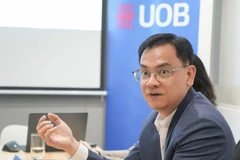
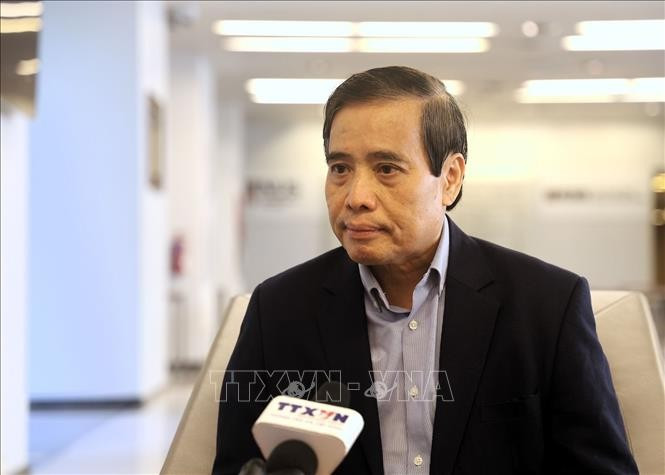
Professor Vu Minh Khuong of the Lee Kuan Yew School of Public Policy in Singapore. (Photo; VNA)

Hanoi (VNA) - Vietnam’s economy in 2025 stands out for its impressive resilience and ability to overcome challenges, according to Professor Vu Minh Khuong of the Lee Kuan Yew School of Public Policy in Singapore.

In an interview granted to the Vietnam News Agency’s correspondent in Singapore, Khuong noted that Vietnam is among the countries that have achieved higher-than-expected growth despite facing high tax barriers, demonstrating flexible adaptation to new developments.

According to him, the 8% growth rate represents extraordinary effort and has created a strong impression among international investors and economic partners.

Assessing the target of double-digit growth in 2026, he said this is a very ambitious goal, but Vietnam could achieve 10% growth if it pursues strong reforms.

He noted that large public spending and rapid credit growth could affect the economy’s long-term health. Reaching a steady 10% growth rate calls for an entirely new development path. This means the whole political system, the public, and the business sector need to seriously consider a fresh development model. The reforms introduced in 2025 have laid a strong foundation, especially through restructuring and merging provinces and ministries, which have strengthened unity across society and the economy. If these measures are fully grasped and put into practice, Vietnam could progress rapidly, he stressed.

Sharing lessons from the Johor-Singapore Special Economic Zone (JS-SEZ), Khuong said JS-SEZ has positioned itself as a centre for AI, the digital economy, and data hubs, thereby attracting 30–50 billion USD from international corporations and achieving strong growth, while also becoming a symbol of the future. He advised Vietnam to follow a similar path by allowing the creation of new-generation free trade and special economic zones in major localities such as Ho Chi Minh City, Da Nang, Hai Phong, and possibly Hanoi in the future.

If Vietnam positions itself as a global AI and data hub, and more importantly, a new-generation financial centre, it could attract tens of billions of USD, create hundreds of thousands of jobs, and significantly elevate its international standing, he believed.

The professor also stressed that achieving this requires a breakthrough vision, clear national positioning, and special mechanisms. In such special economic zones, legal frameworks should align with international standards to create real competitive advantages. High-ranking universities could also establish campuses to develop high-quality human resources for Vietnam.

In addition, the presence of leading global corporations in Vietnam should avoid the traditional investment attraction model. Instead, Vietnam needs to work with them to shape future development. He proposed establishing special working groups to cooperate with these corporations to address both global and domestic challenges, especially in areas related to digital transformation.

Vietnam must also quickly address current bottlenecks hindering labour productivity so that each sector can contribute an additional 1–2 percentage points to overall growth, making the 10% target achievable, he said. Hitting this target would be a huge achievement and could kick off a new era of groundbreaking progress for Vietnam.

From an investor’s perspective, Vietnam’s reforms consistently deliver positive results, reflecting stability in upward momentum. However, he recommended stronger decentralisation to ensure faster and more efficient governance./.


VNA
See more

Illustrative image (Photo: VNA)

Vietnam’s property prices to remain stable next year

In 2026, the outlook is expected to improve further, and analysts do not foresee a return of widespread price surges. Dr Can Van Luc, Chief Economist at BIDV, said the market is moving from a phase of “technical recovery” to “structural stabilisation”.

A view of the Hoa Lac Hi-tech Park in Hanoi (Photo: VNA)

Hanoi seeks to boost investment, business in hi-tech parks, IZs

In 2025, Hanoi’s high-tech parks and IZs posted strong performance, with estimated revenue of 12.14 billion USD, contributing about 19.12% to the city’s GRDP, while budget contributions reached 450 million USD and export turnover amounted to 7.42 billion USD.

Sun PhuQuoc Airways launches its first flights on November 1, 2025. (Photo: Sun Group)

The aviation ecosystem game: Can Sun Group Win?

These are among the most notable assessments made by the Centre for Aviation (CAPA) – the world’s leading aviation data and analytics platform – when evaluating the development prospects of Phu Quoc in the coming years.

A nuclear reactor at the DaLat Nuclear Research Institute (Photo: VNA)

New decree sets roadmap for nuclear infrastructure and workforce development

The decree also covers simulation systems and databases for radiation safety, nuclear safety and nuclear security; specialised computational software for safety assessment; monitoring and command-and-control systems for responding to radiation and nuclear incidents; as well as design documentation, technical manuals, prototype products and other related facilities and equipment.

Hanoi's market surveillance team 2 inspects a shop in Hong Ha ward on July 14. (Photo: VNA)

Growing e-commerce market sees tougher fight against counterfeits

The local e-commerce market has surpassed 30 billion USD this year, recording growth of 25% and accounting for two-thirds of the value of the digital economy. However, this rapid growth has also brought about serious consequences, particularly the widespread proliferation of counterfeit and imitation goods and trade fraud.

The interest rate policy has been adjusted in line with market movements to ensure system liquidity and reduce capital costs. (Photo: VNA)

Banking sector anchors macroeconomic stability, setting stage for new growth cycle

Throughout 2025, the State Bank of Vietnam (SBV) has reaffirmed its role as the central regulatory authority in managing monetary policy, stabilising the financial market, and maintaining macroeconomic balance. Closely monitoring international and domestic economic trends, the SBV steered the monetary policy proactively while closely coordinating with the fiscal policy to achieve the dual objective of controlling inflation and supporting growth.

Professor Reena Marwah from the University of Delhi, and Secretary-General of the Association of Asia Scholars. (Photo: VNA)

Vietnam – A rising star in Asia: Indian professor

Vietnam’s projected GDP growth of around 8% in 2025 shows that its economy is on an impressive growth trajectory, driven by multiple reinforcing engines, said Professor Reena Marwah from the University of Delhi, and Secretary-General of the Association of Asia Scholars (AAS).

Harvesting jackfruit (Photo: VNA)

China to allow import of Vietnamese fresh jackfruits from June 1, 2026

To ensure smooth customs clearance, all orchards and packing facilities participating in exports must be registered and approved by competent authorities of both countries. The list of approved entities granted export codes will be published and regularly updated on the GACC website.