Property prices spike despite COVID-19 pandemic

Vietnam's real estate prices have increased rapidly in the past two years despite the difficulties caused by the COVID-19 pandemic, which reduced the incomes of the majority of the population, experts have said.
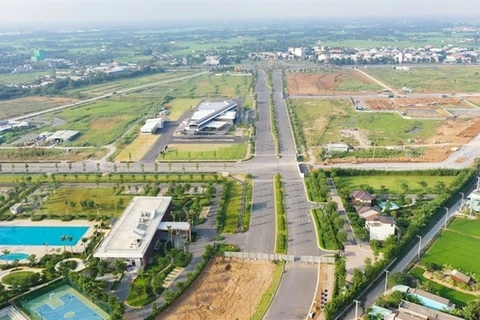
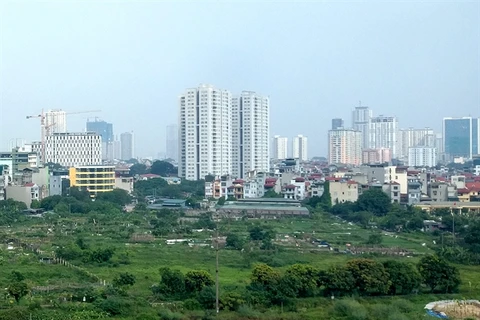
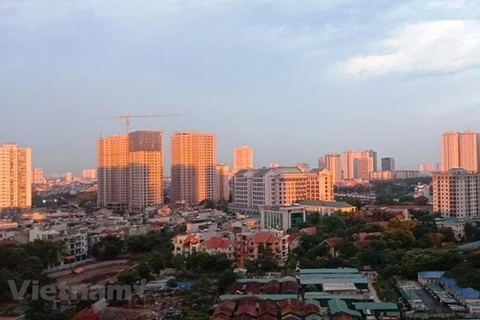
Property prices spike despite COVID-19 pandemic ảnh 1Illustrative image (Photo: VNA)

Hanoi (VNS/VNA) - Vietnam's real estate prices have increased rapidly in the past two years despite the difficulties caused by the COVID-19 pandemic, which reduced the incomes of the majority of the population, experts have said.

The Ministry of Construction released a report in the second quarter of the year, saying that there was no new property inventory in the primary market.

In the April-June period, the total number of transactions in the real estate market was 29,949, an increase of 18 percent from the first quarter of the year. There were 29,557 houses eligible to be sold while the supply of tourism-related real estate decreased.

The ministry’s statistics showed that the absorption capacity of the market in the second quarter was better. The estate inventory was almost exclusively available to secondary investors.

In Hanoi, there were 1,094 successful transactions, equivalent to 20 percent of the previous quarter. In HCM City, about 3,002 transactions were implemented, equivalent to 87 percent of the previous quarter. In terms of the region, the north had 6,386 successful transactions while those in the central and southern regions were 7,300 and 16,265 respectively. The successful transactions were mainly in the middle and high-end segments.

The ministry reaffirmed that the housing market is still stable. The transaction prices in most localities tended to have increased slightly over the same period last year. The housing supply was still concentrated mainly in the mid-end and high-end segments while that of social and low-priced housing remains limited.

The prices of apartments in Hanoi and HCM City increased by 5 – 7 percent compared to the previous period. In the urban areas, there were almost no apartments with prices below 25 million VND per square metre. The supply of this type of apartment is increasingly limited while demand is still high, this is leading to price increases.

Currently, mid-end apartments are still the dominant product in the market and accounted for the majority of the new supply in the second quarter of the year. The transaction price of mid-end apartments also increased in some areas such as Hai Ba Trung, Thanh Xuan, Hoang Mai (Hanoi); District 5, Thu Duc (HCM City); and Di An (Binh Duong).

Notably, in Hanoi and HCM City, a number of high-end apartment projects located in special and central locations have very high selling prices. The Grand Hang Bai project, located in the "golden land" of the capital city, has prices from 570-700 million VND per square metre. In HCM City, projects such as One Central Saigon, District 1 are expected to have a record high selling price at 650 - 800 million VND per square metre.

The rental price of apartments still tends to be decreasing quarterly compared to the end of 2020. The average decrease of the whole market was about 3-5 percent.

Another report on the property market in Hanoi in the first half of the year from Savills showed that the highest increase in estate prices was in the low-rise segment, followed by apartments. Specifically, the average price of villa and terrace houses increased in the second quarter of the year with 15 percent and 32 percent hikes respectively, in Hoang Mai district. Hoai Duc district took second place with a 29 percent increase for villas and a 38 percent increase for terrace houses. The average selling price in the apartment segment in the capital also reached 1,625 USD per square metre, representing an 11 percent year-on-year increase.

Nguyen Van Dinh, General Secretary of the Vietnam Real Estate Brokers Association, said that the money pouring into the real estate market is very big, but the scarcity of housing was the main reason for the price hike. The phenomenon of high demand and low supply and sharp price increases has made the dream of settling down for the majority of people much more difficult to achieve.

In the past two years, the real estate market has faced a serious supply shortage. The main reason was due to the limited land for housing developments in large urban areas, the high cost of land and the prolonged project licensing period. In particular, the lengthy inspections and legal checks of licensed projects made new supply tight. This is also a factor that causes housing prices in many provinces to increase./.
VNA

See more

Officials of the Vietnamese Ministry of Finance and the Japan International Cooperation Agency (JICA) at the meeting in Hanoi (Photo: Ministry of Finance)

Finance Ministry, JICA to hasten major joint projects

JICA President Tanaka Akihiko said he is pleased to return to Vietnam and see landmark projects of bilateral ties now operational and delivering clear benefits to the public, including Nhat Tan Bridge and Ho Chi Minh City’s metro line No. 1.

Customers conduct transactions at an Agribank office in Hung Yen province. (Photo: VNA)

Outstanding green credit reaches 828 trillion VND

To date, loans subject to environmental and social risk assessments have exceeded 5.1 quadrillion VND (some 193.6 billion USD), representing an almost 25-fold increase compared with the end of 2017 and accounting for 27.7% of total outstanding credit in the economy.

Metfone Express's fleet at the launch ceremony. (Photo: VNA)

Vietnamese firm expands into logistics sector in Cambodia

Cambodian Minister of Post and Telecommunications Chea Vandeth praised Metfone’s contributions to socio-economic development, job creation, technology transfer and bilateral connectivity. He described the launch of Metfone Express as evidence of the long-term commitment and innovative spirit of Viettel.

Vietnamese products at the fair (Photo: VNA)

Vietnamese food products gain prominence at RoK's leading food fair

Vietnamese exhibitors are showcasing a wide range of products, including processed foods, tropical fruit products, functional foods, spices and beverages. Major exporters such as Vinamilk, WestFood, TSFood, Nafoods Group, Bich Chi Food and DH Foods are among the participants.

At the Vietnam–Canada Business Forum 2026 (Photo: VNA)

Green transition creates fresh opportunities for Vietnam–Canada partnership

Rahul Malhotra, owner of RM Venturex, said the forum provided businesses with valuable insights into opportunities for deeper Vietnam–Canada cooperation. He noted that support from diplomatic channels and the engagement of both public and private sectors are helping create favourable conditions for stronger economic ties among Canada, Vietnam and ASEAN.

At the working session between Can Tho leaders and representatives of Singaporean businesses. (Photo: VNA)

Can Tho invites Singaporean firms to invest in industry, energy, logistics

Singapore is currently the Mekong Delta city’s largest source of foreign direct investment (FDI), with 12 active projects totalling nearly 320 million USD in registered capital. A flagship project is the Vietnam-Singapore Industrial Park (VSIP) Can Tho, launched in 2022 with an investment of over 3.7 trillion VND (140 million USD) and covering nearly 294 hectares.

Workers process tra fish for exports. (Photo: VNA)

Sustainable transformation needed for Vietnam’s strategic pangasius sector

With continued policy support, technological innovation and close coordination among authorities, businesses and farmers, Vietnam’s pangasius industry is expected to make a strong and sustainable breakthrough during the 2026–2030 period, reinforcing its position as the world’s leading exporter of the fish.

Deputy Prime Minister Nguyen Van Thang speaks at the event. (Photo: baochinhphu.vn)

Deputy PM calls for integrated ASEAN fintech ecosystem

Deputy PM Nguyen Van Thang proposed a shared vision for an ASEAN fintech ecosystem that is open, secure, transparent, inclusive, and sustainable: “Open” to foster connectivity, “Secure” to enable growth, “Transparent” to build trust, “Inclusive” to ensure that no one is left behind, and “Sustainable” to strengthen resilience and support long-term progress.

Vice Chairperson of the National Committee of the Chinese People's Political Consultative Conference (CPPCC) Xian Hui (left) meets with Secretary of Phu Tho provincial Party Commitee Pham Dai Duong on comprehensive cooperation (Photo: VNA)

Phu Tho expands cooperation with Chinese localities

A high-level delegation of the National Committee of the Chinese People's Political Consultative Conference (CPPCC), led by its Vice Chairperson Xian Hui, visited the production facility of BYD Vietnam Co., Ltd. at Phu Ha Industrial Park and held a working session with leaders of Phu Tho province on June 9.

Financial buildings in downtown Ho Chi Minh City along the Saigon River. (Photo: VNA)

Robust dispute resolution framework key to Vietnam’s IFC ambitions

The development strategy for VIFC-HCMC envisions a comprehensive financial ecosystem encompassing green finance, carbon credits, financial technology (fintech), blockchain technology, digital assets, digital banking and other innovative business models. These highly internationalised sectors involve complex cross-border transactions and sophisticated legal structures.