Hanoi (VNA) - For hundreds of years, Quan Ganh round glutinous rice cake (banh day) has been regarded as a simple yet refined dish in Vietnamese cuisine. This cake has earned a special place in the hearts of food lovers from far and wide thanks to its aromatic and chewy texture.
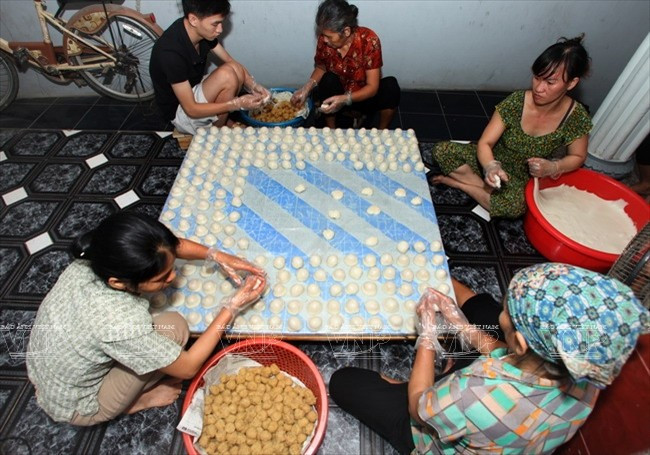
Residents of Thuong Dinh village, located in Nhi Khe commune, Thuong Tin district, Hanoi, are known for their diligence, intelligence, and skillful hands. From long ago, they had discovered ways to turn local agricultural products into delicious foods, most famously the round glutinous rice cake sold along Quan Ganh Street—hence the name Quan Ganh round glutinous rice cake.
Over the centuries, this type of rice cake has become an iconic rustic delight of Vietnamese gastronomy, even making its way into culinary dictionaries of Vietnam.
The history of Quan Ganh rice cake making
Legend has it that a long time ago, a beggar passed through Thuong Dinh village and was warmly welcomed by the locals. Moved by their kindness, he shared a special recipe using glutinous rice, which became today’s round glutinous rice cake. After trying the cake, the villagers were captivated by its taste. They decided to preserve the recipe and turn cake-making into a livelihood.
In the early days, Quan Ganh round glutinous rice cake was sold mainly to travelers along National Highway No. 1. Over time, the cake gained popularity, attracting attention from Hanoians and visitors from across the country.
After many societal changes, the art of making round glutinous rice cake has been now preserved only in a small section of Quan Ganh Street in Nhi Khe commune, Thuong Tin district, Hanoi.
What makes Quan Ganh rice cakes special?
To craft these fragrant cakes, villagers in Thuong Dinh have followed traditional methods passed down through generations.
Though the process is not overly complex, it requires care, precision, and strict attention to detail. The main ingredients include Nếp cái hoa vàng (round glutinous rice - a premium variety of glutinous rice), or nếp quýt (another glutinous rice), golden mung beans, and essence extracted from the male lethocerus indicus - all carefully selected from the region's own agricultural produce.
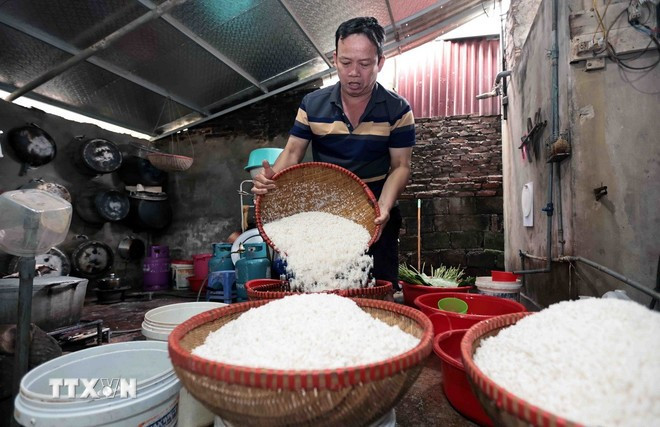
The rice used is known for its exceptional stickiness and fragrant aroma. It is finely pounded until pure white, and then sieved to remove any remaining husk.
The rice is then washed multiple times (2-4 rounds) to remove impurities, soaked in cold water for 2–3 hours, rinsed again, and drained completely before being steamed into sticky rice.
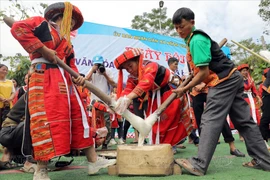
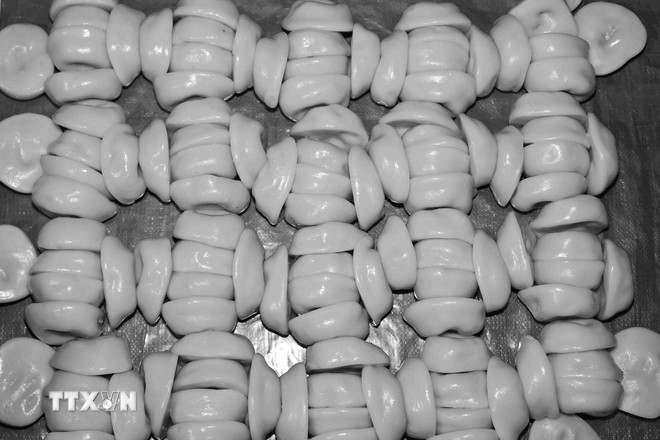
Once the sticky rice releases its signature aroma, it is transferred to a mortar and pounded when it is still hot. This step continues until the sticky rice turns into a smooth, elastic, and translucent dough. Clean hands are used to divide it into equal portions, which are then flattened to form thin outer layers. A filling is placed in the center, and the dough is skillfully wrapped around it.
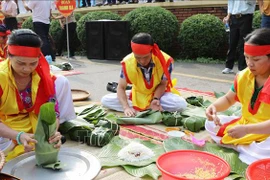
Finally, the cakes are bundled in groups of 5–6 and wrapped in fresh phrynium leaves. Each bundle is labeled and tied with red-dyed bamboo strings - completing the village's signature delicacy.
What sets Hanoi’s round glutinous rice cake apart from similar cakes in other regions is the variety of fillings. At Quan Ganh, the cakes come in three types - with identical outer shells but different fillings: sweet, savory, and plain (chay) -catering to diverse tastes.
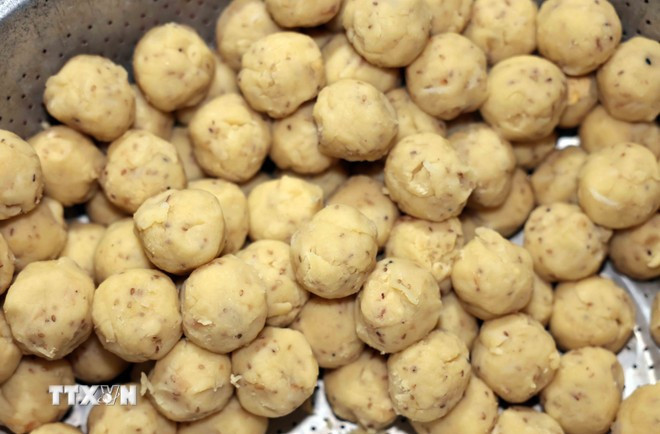
Over the years, Quan Ganh round glutinous rice cake has become a beloved and respected treat among both locals and visitors. Though it is neither luxurious nor complex in preparation, it embodies an elegant simplicity that resonates with the rural soul.
Much like other traditional Vietnamese treats such as dry rice wafer or plain rice flan, round glutinous rice cake is not only a humble symbol of Vietnam’s agricultural heritage, but also a cultural treasure with deep historical roots, enriching the vibrant tapestry of Vietnamese cuisine./.