Regional partnership facilitates trade and economic recovery

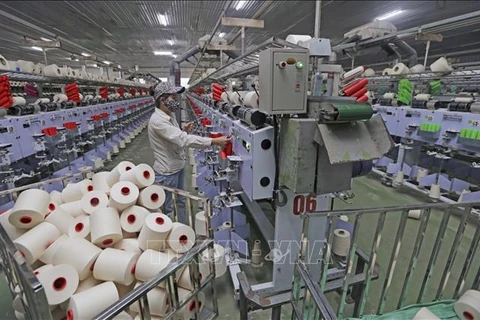
The Regional Comprehensive Economic Partnership (RCEP) will help increase exports as well as quality imports for consumption and production. This should speed Vietnam’s participation in the value chain and help the economy recover from COVID-19 while reducing risk.
Regional partnership facilitates trade and economic recovery ảnh 1Customs clearance of import and export goods at seaports. (Photo: Vietnamplus)

Hanoi (VNA) - Vietnam's import-export turnover in recent years has consistently been a bright spot for the economy. Notably, when the COVID-19 pandemic was at its peak, unpredictable in most countries and economies with which Vietnam has trade relations, exports in 2021 still grew by “2 figures,” which was indeed an unexpected result.

According to experts, participation in free trade agreements (FTA) is important leverage to help enterprises access different market segments and reduce risk while improving export value. Vietnam’s recent agreement include the Comprehensive and Progressive Agreement for Trans-Pacific Partnership (CPTPP), European Union- Vietnam Free Trade Agreement (EVFTA) and the freshly signed Regional Comprehensive Economic Partnership (RCEP).

Breakthrough from FTAs

In 2021, Vietnam's total import-export turnover reached US 668.55 billion USD. Exports reached more than 336.3 billion USD, an increase of 19% compared to 2020. Imports reached 332.2 billion USD, an increase of 26.5%, helping to export more than 4 billion USD.

The free trade agreements (FTAs) that Vietnam has signed have given rise to the above results and have made a significant contribution to taking advantage of the new markets.

According to Export-Import Department under the Ministry of Industry and Trade, the implementation of FTAs in the last two years has achieved positive results, especially new generation FTAs such as the Vietnam-EU Agreement (EVFTA), the Comprehensive and Progressive Trans-Pacific Partnership (CPTPP) and the Vietnam-British Agreement (UKVFTA).

For the EU market, in 2020, despite the difficulties caused by the COVID-19 pandemic, in the first five months of implementing EVFTA (from August to December 2020), Vietnam's trade had a positive growth, reaching 3.8%. The last seven months has seen growth reach 17.8%.

With UKVFTA, as early as January 1, 2021, Vietnamese exports to the UK have enjoyed preferential treatment in accordance with the commitment of this agreement. The effectiveness of the deal is also clearly visible.

In 2021, Vietnam's exports to the UK experienced high growth, 15.4%. As for the CPTPP, the first two markets with FTA relations were Mexico and Canada, which also posted growth of more than two figures.

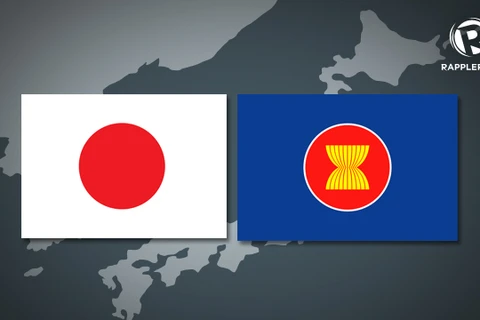
Meanwhile, the Regional Comprehensive Economic Partnership Agreement (RCEP) between 10 ASEAN countries (including Vietnam) and 5 non-Australian economic partners including Australia, the Republic of Korea, New Zealand, Japan and China which came into effective from the beginning of 2022 is rated as a new "leverage" in Vietnam's commodity exports to some important markets such as China and ASEAN region.

According to Associate Professor, Dr. Pham Tat Thang, senior expert of the Institute of Strategic Studies, Trade Policy under the Ministry of Industry and Trade, Vietnam has exploited the Chinese market mainly through unofficial quota.

However, with RCEP - this is a new opportunity to increase exports, but enterprises have to change their business operation and consider it as a “high-level” market to exploit all opportunities. As for the ASEAN market, for many years, Vietnam still mainly imports from this market.

Therefore, with the signing of the RCEP agreement, together with high-level Free Trade Agreements such as CPTPP, EVFTA will help Vietnamese enterprises to diversify the market and reduce the trade deficit with some partners.

It is estimated that the total RCEP countries account for about 30% of global GDP and 30% of the world population. With great potential, experts said that the RCEP agreement will help increase quality inputs for consumption and production as well as exports. The agreement will also help Vietnam better participate in the value chain, improving economic recovery from COVID-19 and reducing risk to the market./.
VNA

See more

The Vietnam – Bangladesh business forum in Dhaka on May 19 (Photo: VNA)

Vietnam, Bangladesh eye to foster economic ties

Addressing the forum, Vietnamese Ambassador to Bangladesh Nguyen Manh Cuong highlighted the fruitful development of the bilateral ties over the past 53 years, noting that trade turnover has consistently exceeded 1.1 billion USD despite global disruptions. The two sides are now striving to raise the figure to 2 billion USD in the coming years.

The opening ceremony of the 10th International Livestock, Dairy, Meat Processing and Aquaculture Exposition on May 20 (Photo: VNA)

ILDEX Vietnam 2026 showcases livestock, agri-food innovation

The three-day event is jointly organised by VNU Asia Pacific and Thailand’s ITEC, serving as a platform for business networking, technology exchange and knowledge sharing in the livestock, aquaculture and food industries in Vietnam and Southeast Asia.

Permanent Deputy Prime Minister Pham Gia Tuc and officials inspect the Gia Binh International Airport project on May 20, 2026. (Photo: VNA)

Gia Binh international airport project accelerated ahead of APEC 2027

Tuc described Gia Binh International Airport as a national key project requiring strict adherence to construction timelines, particularly as it is expected to be put into operation in time for the 2027 APEC Economic Leaders' Meeting. Several associated projects are also being implemented under special mechanisms to serve major national tasks.

Vietnamese Ambassador to the Republic of Korea Vu Ho speaks at the forum.(Photo: VNA)

Forum promotes Vietnam–RoK supply chain connectivity

Cao Thi Phi Van, Deputy Director of ITPC, said that after more than three decades of cooperation, Vietnam–RoK ties are shifting from traditional manufacturing cooperation towards mastering future-oriented technologies such as semiconductors, artificial intelligence (AI), digital finance, renewable energy and global supply chains.

Fitch Ratings gives positive assessment of Vietnam’s economic fundamentals (Illustrative image. Source: VNA)

Fitch Ratings gives positive assessment of Vietnam’s economic fundamentals

Deputy Minister Tran Quoc Phuong stressed that Fitch’s credit assessments have enhanced Vietnam’s image and credibility in international financial markets, and provided additional motivation for the country to continue improving institutions, strengthening policy management efficiency and increasing economic transparency.

Consumer purchases E10 biofuel at a PVOIL petrol station on Thai Thinh street in Hanoi. (Photo: VNA)

Hanoi strengthens oversight of transition to E10 biofuel

To ensure compliance with the transition roadmap, the Hanoi Market Surveillance Sub-Department has requested petrol traders to proactively review and upgrade storage tanks, fuel pumps and other technical conditions necessary for E10 distribution, thereby preventing disruptions to fuel supply serving consumption and production demands across the capital.

A Phu Tho civil servant guides a local how to switch from presumptive tax mechanism to tax sef-declaration. (Photo: VNA)

📝OP-ED: Vietnam’s tax reform: Fair play, not revenue squeeze

At a time when social media disinformation grows more sophisticated, transparency and public disclosure are the most potent counter to distortions. Facts, data and real-world results deliver the strongest rebuttal to attempts that twist reality and erode trust in tax administration reform.

Experts are expected to analyse opportunities for boosting exports and investment cooperation between Vietnam and South American countries at the coming seminar. (Illustrative photo: VNA)

Seminar on trade promotion in South American market to take place in Hanoi

A seminar on opportunities and challenges in developing the South American market will be held in Hanoi on May 28. It aims to provide updates on the economic outlook, market trends and import demand in South America, particularly in Argentina and Chile, amid continued fluctuations in global supply chains.