Resolution on pilot policies for urban railway network development in Hanoi, HCM City

The resolution outlines a series of specific mechanisms and policies, including the mobilisation and allocation of investment capital; procedures for investing in urban rail projects and those based on the Transit-Oriented Development (TOD) model; the development of the rail industry, technology transfer, and workforce training; policies on construction materials and waste disposal; and specific regulations for HCM City.

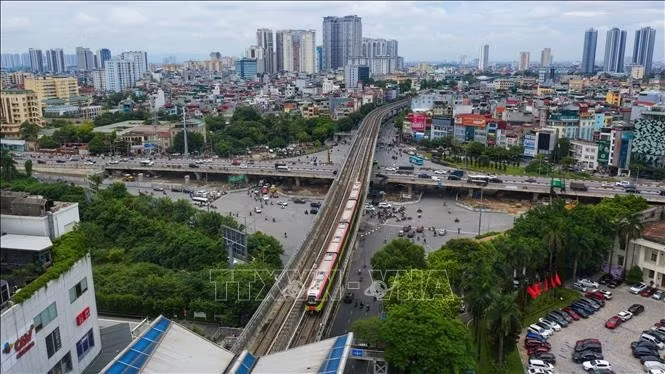
Nhon - Hanoi Station urban railway in Hanoi (Photo: VNA)

Hanoi (VNA) – National Assembly (NA) Chairman Tran Thanh Man has signed to attest Resolution No. 188/2025/QH15, which introduces a set of pilot mechanisms and policies designed to drive the development of urban rail networks in Hanoi and Ho Chi Minh City.

The resolution outlines a series of specific mechanisms and policies, including the mobilisation and allocation of investment capital; procedures for investing in urban rail projects and those based on the Transit-Oriented Development (TOD) model; the development of the rail industry, technology transfer, and workforce training; policies on construction materials and waste disposal; and specific regulations for HCM City.

Regarding the mobilisation and allocation of investment funds, the resolution specifies that during the planning and implementation phases of projects listed in the annex attached to the resolution, the Prime Minister has the authority to make certain decisions.

Specifically, based on the ability to balance and allocate medium-term and annual public investment plans, the Government will provide targeted additional funding to local budgets, with a maximum of 215.35 billion VND (8.43 million USD) for Hanoi and 209.5 billion VND for HCM City in the medium-term investment periods from 2026 to 2030 and from 2031 to 2035. These funds will serve as the foundation for making investment decisions and implementing projects.

The allocation of funds will come from any increases in revenue and savings in the central government’s annual budget (if applicable), as well as other legal funding sources. If increased revenue or savings are used, the prioritisation process outlined in national budget law will not need to be followed.
urban-railway-1.jpg
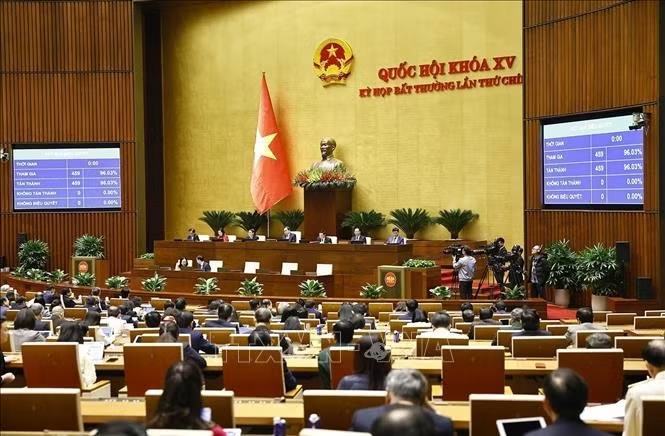
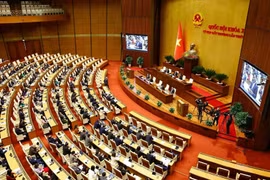
The National Assembly adopts the Resolution No. 188/2025/QH15 on February 19, 2025. (Photo: VNA)

In addition, the Prime Minister is empowered to approve the mobilisation of official development assistance (ODA) and concessional foreign loans for these projects. No formal project proposal for the use of ODA or foreign loans is required, in accordance with relevant legal provisions. Regulations of foreign donors will apply in cases where Vietnamese law does not have a specific rule, or where there is a discrepancy between Vietnamese law and donor regulations.

The municipal People’s Councils are responsible for balancing and allocating both medium-term and annual local investment plans, with local budgets forming the basis for investment decisions and project implementation. This includes funding from the local budget during the medium-term and annual periods, including foreign loans re-lent by the Government, local government bonds, any increases in annual revenue or savings (if applicable), and other legal sources.

Projects listed in the annex to the resolution will receive funding throughout the medium-term public investment periods, with allocations in line with each project’s progress. There will be no limit on the rollover of funds for ongoing projects into the next medium-term investment period.

To implement urban rail projects and TOD-based rail systems, the municipal People’s Committees will have the authority to use annual local government budget reserves, and advance local budget allocations for the following year, with no more than 50% of the approved basic construction investment budget being allocated to infrastructure projects under the medium-term public investment plan, according to the resolution./.
VNA

See more

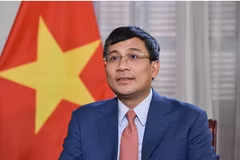
Standing Deputy Minister of Foreign Affairs Nguyen Minh Vu (Photo: The Ministry of Foreign Affairs)

Vietnam, China seek stronger substantive parliamentary cooperation

Stronger cooperation between the Vietnamese and Chinese legislatures will demonstrate their shared commitment to making parliamentary ties more practical and effective, while contributing to the sound development of bilateral relations and bringing tangible benefits to people and businesses in both countries, said Standing Deputy Minister of Foreign Affairs Nguyen Minh Vu.

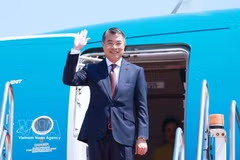
Prime Minister Le Minh Hung leaves Wattay International Airport in Vientiane on October 9 noon. (Photo: VNA)

Vietnamese PM concludes official visit to Laos

The visit is expected to further deepen the great friendship, special solidarity, comprehensive cooperation and strategic cohesion between Vietnam and Laos, making bilateral ties more substantive and effective.

Deputy Prime Minister Le Tien Chau speaks at the meeting. (Photo: VNA)

Deputy PM urges removal of legal bottlenecks hindering development

Deputy Prime Minister Le Tien Chau has asked ministries, agencies and localities to identify and thoroughly analyse systemic legal bottlenecks hindering development, with priority given to removing regulations that obstruct investment, production and business activities.

Assoc. Prof. Dr. Hoang Phuc Lam (right), Deputy Secretary of the Party Committee and Vice President of the Ho Chi Minh National Academy of Politics, presents the book “The Aspiration for a Strong and Prosperous Vietnam in the New Era” to Pedro Vazquez Gonzalez, Chairman of the Mexican Chamber of Deputies’ Foreign Affairs Committee. (Photo: VNA)

Vietnam promotes Party diplomacy at international conference in Mexico

Assoc. Prof. Dr. Hoang Phuc Lam, Deputy Secretary of the Party Committee and Vice President of the Ho Chi Minh National Academy of Politics briefed participants at an international conference themed "Political parties and a new society" in Mexico City from October 6-8 on Vietnam’s socio-economic development and its path towards socialism, and its efforts in promoting dialogue, solidarity and cooperation among progressive political forces worldwide.

Vietnamese Prime Minister Le Minh Hung and his Lao counterpart Saleumxay Kommasith visit the Laos–Vietnam Friendship Park in Vientiane and lay flowers in tribute to the countries’ revered leaders on October 9, 2026. (Photo: VNA)

PMs pay tribute to late Vietnamese, Lao leaders in Vientiane

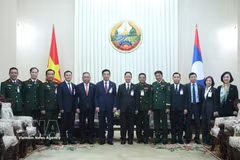
The two PMs, together with officials from both countries, paid tribute at the monuments to President Ho Chi Minh, President Kaysone Phomvihane and President Souphanouvong, expressing deep respect and gratitude for their contributions to the revolutionary causes of both nations and to the establishment and development of the special Vietnam–Laos relationship.

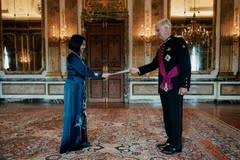
Deputy Minister of Foreign Affairs Le Thi Thu Hang (R) receives Korean Ambassador to Vietnam Lee Mi Yon on October 8, 2026. (Photo: baoquocte.vn)

Vietnam, RoK enhance coordination, experience-sharing in APEC Year organisation

Deputy Minister of Foreign Affairs Le Thi Thu Hang called on both sides to maintain close coordination in preparing for and successfully organising high-level visits and meetings in the coming time while increasing experience-sharing and mutual support at multilateral forums, particularly as Vietnam prepares to host APEC Year 2027.

At the working session with representatives of Austral University (Photo: VNA)

Vietnam, Argentina push for educational, academic cooperation

Vietnamese Ambassador to Argentina Ngo Minh Nguyet held a working session in Buenos Aires on October 8 with representatives of Austral University to exchange views on opportunities to strengthen bilateral cooperation in education, training, and academic research.

Prime Minister Le Minh Hung (left) meets with President of the Lao National Assembly (NA) Sonexay Siphandone in Vientiane on October 8. (Photo: VNA)

Vietnamese Prime Minister meets with Lao National Assembly President

PM Le Minh Hung affirmed that the Party, State and people of Vietnam always strongly support Laos's renewal, national development and international integration, and stand ready to continue coordinating with and supporting Laos in effectively capitalising on opportunities for fast and sustainable development.

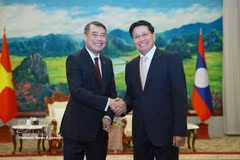
Vietnamese Prime Minister Le Minh Hung (left) meets with General Secretary of the Lao People’s Revolutionary Party (LPRP) Central Committee and President of Laos Thongloun Sisoulith in Vientiane on October 8, 2026. (Photo: VNA)

Vietnamese Prime Minister meets with top Lao leader in Vientiane

The two leaders affirmed that both countries consistently attach the highest priority to preserving and promoting the great friendship, special solidarity, comprehensive cooperation and strategic cohesion between Vietnam and Laos, describing the relationship as a special bond between the two Parties, States and people and a foundation for jointly creating and sharing development opportunities.

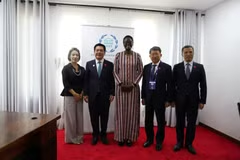
Vice President of the Vietnamese National Assembly Nguyen Hong Dien (second, left), IPU President Tulia Ackson (centre) and delegates pose for a group photo. (Photo: Ministry of Foreign Affairs)

NA Vice President holds bilateral meetings on sidelines of IPU-153

Dien thanked her and the Parliament of Tanzania for hosting IPU-153 and acknowledging her contributions during her tenure as IPU President. He asked Ackson, as former President of the Tanzanian Parliament, to help promote economic, trade and investment ties between Vietnam and Tanzania, matching the two countries’ strong political relations.

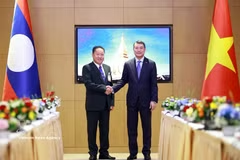
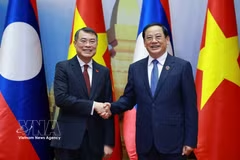
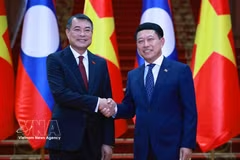
Prime Minister Le Minh Hung (left) holds talks with his Lao Prime Minister Saleumxay Kommasith in Vientiane on October 8. (Photo: VNA)

Vietnamese PM Le Minh Hung holds talks with Lao counterpart Saleumxay Kommasith

The two leaders affirmed that defence and security cooperation remains a pillar of the bilateral ties, agreeing to strengthen coordination in maintaining security, political stability and social order, combating transnational crime, drug-related crime, human trafficking, smuggling and high-tech crime, and managing and protecting the shared border.