State budget collection estimated up over 19% in 2024

Vietnam's total state budget revenue for 2024 is projected to surpass 2.02 quadrillion VND (approximately 79.24 billion USD), marking an increase of 19.1% compared to the estimate, according to the Ministry of Finance.

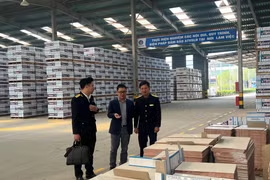
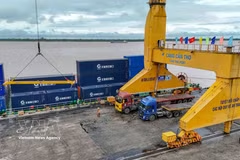
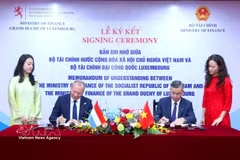
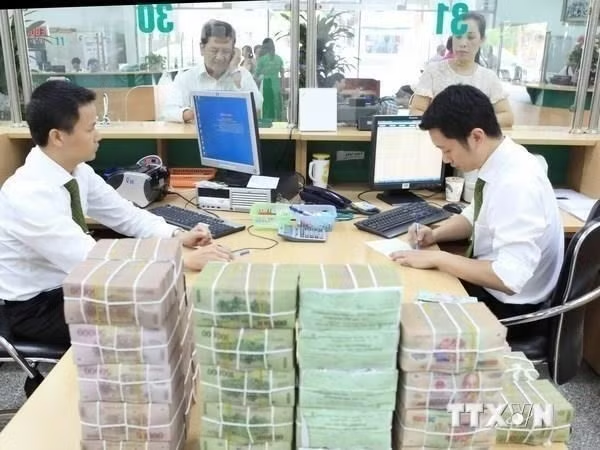
Illustrative photo (Photo: VNA)

Hanoi (VNA) – Vietnam's total state budget revenue for 2024 is projected to surpass 2.02 quadrillion VND (approximately 79.24 billion USD), marking an increase of 19.1% compared to the estimate, according to the Ministry of Finance.

As of December 27, state budget collection had already exceeded 1.99 quadrillion VND, reaching 117.4% of the target for the year. Of this, domestic revenue accounted for 115.2% of the estimate, that from crude oil hit 126.2%, and import-export revenue reached an impressive 134.2%.

Meanwhile, total state budget expenditure for 2024 is expected to be approximately 1.83 quadrillion VND, or 86.4% of the estimate. Spending on development investment is forecqast to hit 78.1% of the goal approved by the National Assembly and 77.5% of the plan set by the Prime Minister. Regular expenditures, including those for national defence, security, and social welfare, are estimated at around 94.5% of the projected figure.

The finance ministry emphasised that the balance between the central and local budgets has been maintained. Despite these expenditures, the state budget deficit is projected to be about 3.4% of GDP, 10 trillion VND lower than originally estimated.

The Ministry of Finance has managed government bond issuance efficiently to meet funding requirements, ensuring that the state's budget plan is executed and debts are repaid on schedule. In 2024, 330.4 trillion VND worth of goverment bonds were issued, achieving 82.59% of the initial target. These bonds have an average maturity of 11-12 years and an average annual coupon rate of 2.52%.

By year-end, Vietnam’s public debt stood at around 36-37% of GDP, with government debt accounting for approximately 33-34% of GDP. The government's debt repayment obligation made up 20-21% of state budget revenue, well below the ceiling level set by the National Assembly.

Vietnam's national credit rating remains strong, supported by effective economic management, robust export growth, continued foreign investment, and controlled public debt. All three major rating agencies—S&P, Fitch, and Moody's—have maintained a positive outlook on Vietnam's credit rating. S&P and Fitch rated Vietnam at BB+, while Moody's rated it Ba2, both with a stable outlook./.


VNA

See more

At the sixth Golden Brand Awards 2026 ceremony (Photo: VNA)

Ho Chi Minh City honours top 50 brands for 2026

The awards aim to recognise brands that can lead their industries, drive innovation and create a ripple effect across the business community, lifting the city’s standing in a new growth stage.

Luxury apartment projects in downtown Ho Chi Minh City (Photo: VNA)

Ho Chi Minh City's housing market sees price stabilisation, sharper buyer segmentation

According to Avison Young Vietnam, improved planning and infrastructure development have helped ease market uncertainty and prevented a complete freeze. More than 25,000 apartments are expected to enter the market in multiple launches between 2027 and 2030, with many projects scheduled to benefit from infrastructure improvements around 2030.

Vietnamese Deputy Minister of Industry and Trade Phan Thi Thang speaks at the forum (Photo: VNA)

Vietnam, Georgia look to more business opportunities

For Vietnamese firms, Georgia can serve as a gateway to broader regional markets, given its strategic location connecting the South Caucasus, Central Asia and China with European markets via the Black Sea.

Chairman of the Vietnamese Business Association in Laos (AVILA) Duong Dinh Bang (Photo: VNA)

PM’s visit injects fresh momentum into Vietnam-Laos special relations

At the 2026 Laos-Vietnam Investment Promotion Conference in Vientiane, the two PMs held direct dialogue with businesses and investors from both countries, affirming their determination to address bottlenecks in institutional frameworks, administrative procedures, transport infrastructure and payment connectivity. The goal of these efforts is to boost bilateral trade to 10 billion USD by 2030.

Deputy Secretary of the An Giang provincial Party Committee and Secretary of the Party Committee of the Phu Quoc special zone Dinh Van Noi speaks at the dialogue (Photo: baoangiang.com)

Phu Quoc moves to resolve infrastructure bottlenecks ahead of APEC 2027

Deputy Secretary of the An Giang provincial Party Committee and Secretary of the Party Committee of the Phu Quoc special zone Dinh Van Noi said an official information portal will be launched to receive public feedback, while hotlines for local leaders will allow businesses and residents to raise concerns directly.

Deputy Minister of Industry and Trade Phan Thi Thang at the forum. (Photo: VNA)

Vietnamese firms explore investment opportunities in Georgia

Priority areas with great cooperation potential include manufacturing, logistics infrastructure, renewable energy, tourism, hospitality, information and communications technology (ICT), and business process outsourcing (BPO), said a Georgian official.

Prime Minister Le Minh Hung and delegates launch the digital platform of the Vietnam Association of Small and Medium Enterprises (August 2026). Photo: VNA

Vietnamese businesses, entrepreneurs make growing contributions to national development

Vietnam Entrepreneurs’ Day is an opportunity to recognise businesses’ contributions and reinforce the entrepreneurial spirit, the pursuit of legitimate prosperity and national responsibility. With stronger policies and greater innovation, Vietnamese enterprises are expected to play an increasingly important role in economic growth and the country’s ambition to become a strong, prosperous nation.

A view at a CO.OPMART supermarket in Bac Ninh city (Photo: bacninh.gov.vn)

Bac Ninh’s CPI up 4.07% in nine months

The consumer price index (CPI) in Bac Ninh city rose 4.07% year-on-year in the first nine months of 2026, with housing and construction materials, education and transport recording the sharpest increases, according to the municipal Statistics Office.

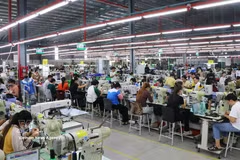
Vietnam's textile - garment and footwear industries are aiming to shift from processing and assembly to stages with higher added value, increasing technology content and competitiveness. (Photo: VNA)

Vietnam’s supporting industries seek stronger domestic links

As global supply chains undergo major changes and environmental standards and digital technology requirements become more demanding, developing supporting industries has become essential to improving the competitiveness of the economy. This requires coordinated efforts by the Government, multinational corporations and domestic businesses.