Lai Chau (VNA) – “Carried-under-arm” pig, bitter leaf soup, deep grilled buffalo meat, and purple sticky rice are among the typical dishes that are highly recommended for visitors to the northern mountainous province of Lai Chau.
Lai Chau province in the northwestern region is not only famous for the majestic beauty of Hoang Lien Pass - one of the four greatest passes in Vietnam, but also attracts tourists with its unique dishes.
1. “Carried-under-arm” pig
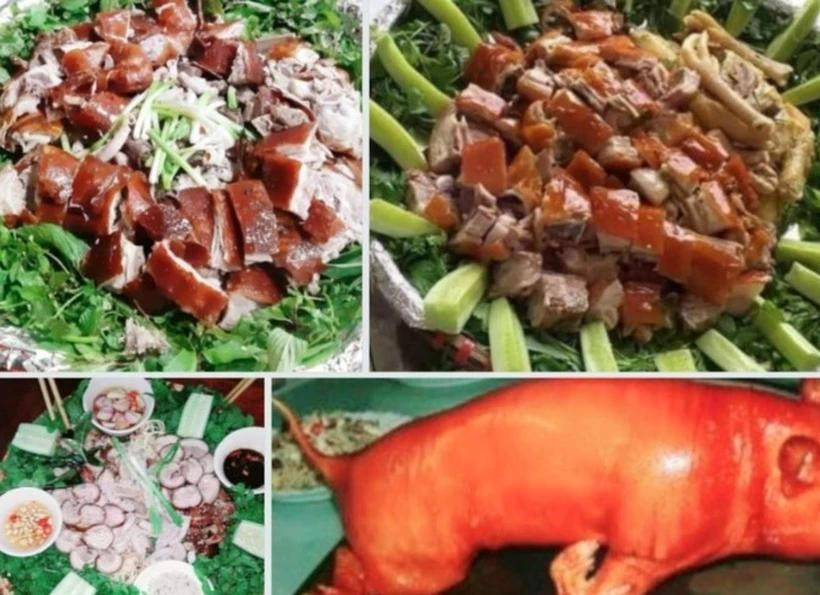
“Carried-under-arm” pig is popular in the mountainous regions, particularly in Lai Chau. Originating from the traditional farming habits of ethnic minority groups such as Mong, Thai, and Dao, the pig is freely-fed, grows slowly, and is lightweight, often carried under the arm to the market.
To prepare delicious dishes, the pork must be grilled over two different flames. After grilling, the pig hair is scraped clean, and the pig butchered into fine cuts for the barbeque. The pork can be used to make various delicious dishes, such as steamed pork belly, grilled pork shoulder, boiled intestines, and bones for cooking soups. The pork has a delicious flavour and low fat.
2. “Don” salad
“Don” salad is a distinctive dish of the Thai people in Lai Chau in particular and the northwestern region in general. “Don”, also called "pac cut", is a kind of fern, with a thick stem and broad green leaves that grow near streams in moist areas. After being slightly wilted, the plant is mixed with basic ingredients such as herbs, ginger, garlic, and roasted peanuts. Once seasoned, it has a unique nutty flavour. Besides being used to make salad. “Don” can also be stir-fried with garlic or sour bamboo shoots.
3. “La dang” (bitter leaves) soup
When in Lai Chau, try “la dang” soup to experience the uniqueness of the region's culinary art. To make this soup, locals must venture into the forest and streams to collect the leaves. Typically, only honoured guests and hosts venture into the forest to gather leaves for this soup as a sign of hospitality. Nowadays, locals have cultivated the plant in their gardens, making it available at local markets.
The ingredients for the soup include finely chopped pig lungs, a piece of blood pudding, a few herbs, and a handful of bitter leaves (either fresh or dried). All ingredients are boiled carefully with water.
Upon first tasting this soup, you may find the bitter, tingling sensation on your tongue unpleasant, but once accustomed, you will feel the sweet, rich, and fragrant flavour. The bitter leaf soup also helps alleviate hangovers and aids digestion.
4. Lam nho
Lam nho is considered the most unique specialty of Lai Chau. In Thai language, "lam" means grilling, while "nho" means soft. First, people select fresh buffalo meat, using a clean cloth to absorb blood to avoid bacteria. They do not wash the meat with water to preserve its delicious flavour.
Once cleaned, the meat is grilled over hot coals until well-done. It is then sliced thin and marinated in spices such as salt, ginger, garlic, chili, mac khen (prickly ash seed – a type of pepper commonly used in dishes in the north western region), and wild eggplant.
After thoroughly mixing and allowing the meat, vegetables, and spices to absorb the flavours, it is placed in a bamboo tube for even cooking. Finally, the mixture is pounded into a paste and placed in the bamboo tube for one last grilling until everything is soft.
When enjoying “lam nho”, people will experience a rich, sweet flavour, tender texture, and a sticky consistency.
5. Purple sticky rice
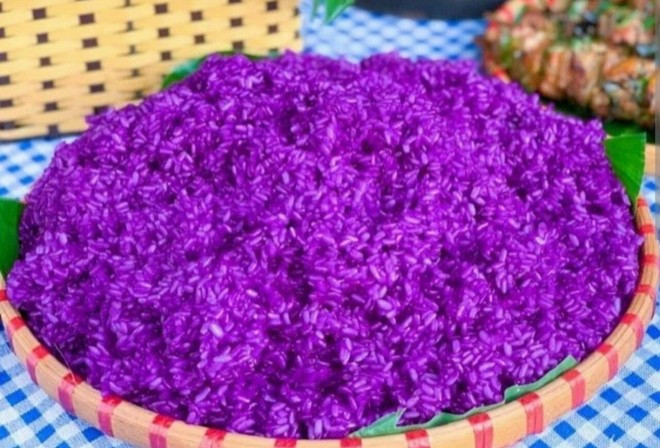
The distinctive purple colour of this sticky rice is dyed with a plant called “khau cam”. The sticky rice, known for its aromatic and glutinous quality, is transformed into an appealing dish through the skilled hands of local women.
To achieve the eye-catching and delicious sticky rice, the rice must be steamed not in a regular bamboo steamer but in a wooden steamer made from fig wood.
6. Sausage made from pig blood, sticky rice
This sausage, also known as "tung cang nhang," is made by mixing fresh pig blood with sticky rice and crushed cardamom, then stuffing it into pig intestines. It is then boiled and served immediately or saved for the Lunar New Year (Tet) holiday. The dish features a rich flavour from the blood, the aroma of cardamom, and the chewy texture of the intestines.
7. Ban (Bauhinias) flower and bamboo shoot salad
Ban (Bauhinias) flower is a symbol of the northwestern mountains, typically found in purple and white varieties. It is also a wonderful ingredient for making a rustic salad of the Thai people in Lai Chau.
This dish combines bitter, sour, spicy, salty, sweet, and nutty flavours.
Bamboo shoots are chopped, soaked in brine for 30 minutes, and boiled twice before draining.
Fresh ban flowers are selected and cut as thick petals for use. Fresh stream fish is grilled over charcoal, and the meat is then shredded. A dressing mixture with lime juice, garlic, chili, and finely chopped herbs is then prepared. The bamboo shoots, ban flowers, fish, and dressing are mixed together.
8. Grilled Goby fish
Goby fish caught from rivers and streams are gutted and washed with saltwater to remove the fishy smell. The fish is then marinated with lemongrass, chili, ginger, pepper, mac khen, mint leaves, and finely chopped “hom” leaves. The fish is left to marinate for about 15 to 30 minutes to absorb the spices.
Afterward, the fish is skillfully wrapped in dong leaves.
The wrapped fish is buried in hot ash. It should be turned every 30 minutes; after several turns, the fish will be cooked, and then it is removed from the ash.
Once the fish is taken out, it should be unwrapped and enjoyed immediately.
The grilled fish is flavourful, tender, and fragrant, with the distinct aromas of mac khen, mingling with the scents of dong leaves, fragrant lemongrass, and spicy ginger. All these elements blend together to create a unique flavour experience for the diner.
9. Dried buffalo meat
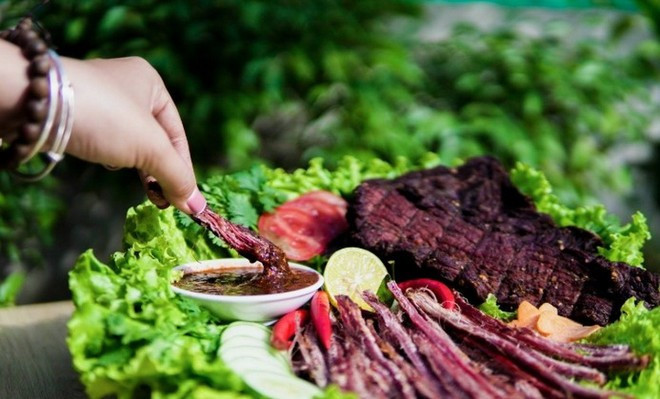
If you have the chance to visit Lai Chau, you cannot miss trying the dried buffalo meat, which carries the flavour of the traditional smoke from the kitchens of local houses. This specialty is usually made from the hindquarters of free-range buffaloes in the mountainous areas. The buffalo meat is dried just enough, not too tough, retaining the sweet taste of fresh meat. Each piece is seasoned with special spices, the aroma of doi seeds, dried chili, and mac khen. When having the meat, people tear it into small pieces and add a few slices of lime to enhance the flavour.
10. Stone moss
Stone moss is an extremely unique dish of the Lai Chau people. It has become a traditional dish that is an important part of the engagement feast of couples. Stone moss only grows in clean, unpolluted water sources and is typically harvested in the middle of winter and early spring.
Stone moss can be used to prepare various dishes such as soup, salad, or stone moss sautéed with garlic. A more elaborate dish is the famous grilled stone moss which has a special aroma and is extremely healthy./.