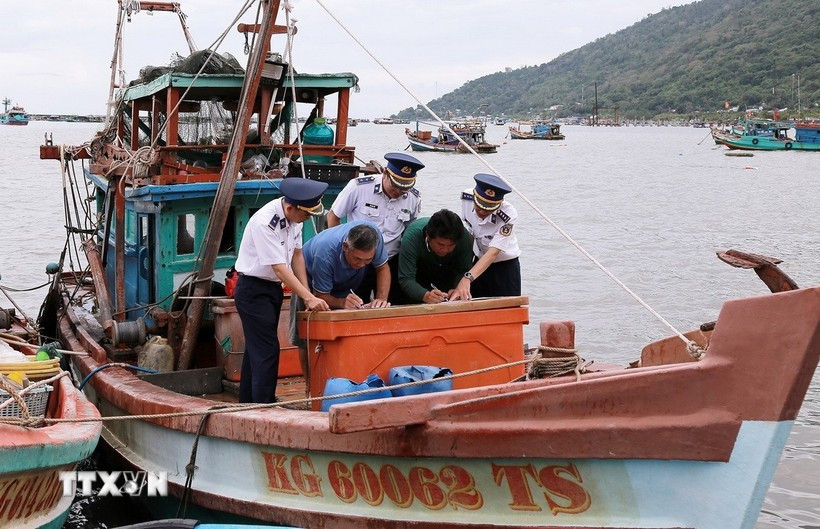
Thanh Hoa (VNA) - The central coastal province of Thanh Hoa is implementing strong measures to limit violations related to illegal, unreported, and unregulated (IUU) fishing, contributing to the country’s efforts to have the European Commission (EC)’s “yellow card” warning against Vietnamese seafood.
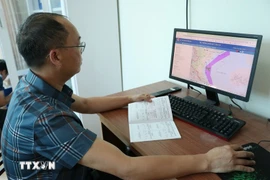
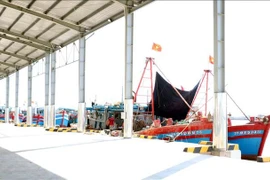
In Thanh Hoa, three designated fishing ports have applied electronic catch documentation and traceability (eCDT) systems to combat IUU fishing, namely Hoa Loc (Van Loc commune), Lach Hoi (Sam Son ward), and Lach Bang (Tinh Gia ward). At these ports, vessel inspections and controls are carried out rigorously and efficiently through digital technology. Fishermen comply with regulations by unloading at designated ports and actively use electronic logbooks on each voyage.
Le Van Han, who is in charge of Lach Hoi Fishing Port, said that the port is currently applying digital technology to support fishermen. This includes coordinating with electronic logbook equipment providers and rolling out the system to fishermen. All registration procedures for checking the entry and exit of people and vessels at the port are conducted via software, making the process convenient and efficient.
To fully address the EC’s recommendations, the port will strengthen guidance for fishermen on using electronic catch logbooks. This aims to improve management, monitoring, and supervision of catch volumes while ensuring aquatic product traceability in compliance with regulations.
The political system has gradually changed fishermen’s awareness. Previously, they unloaded their catch at riverbanks or informal landing sites, but now most vessels dock at ports to unload their products.
Thanh Hoa currently has 6,275 fishing vessels, of which 1,026 vessels are 15 metres or longer and regularly operate in offshore waters. Eight years after the EC issued the “yellow card” warning, the province has identified combating IUU fishing as an important political task, gradually moving toward a transparent, modern, and sustainable fishing industry.
However, despite these drastic efforts, the province has recorded 640 fishing vessels losing VMS (Vessel Monitoring System) connection for over six hours. Up to 67 vessels lost VMS connection for more than 10 days, and 12 vessels operated beyond the permitted maritime boundaries since the beginning of 2025.
Local authorities have handled 171 violations in the fisheries sector, with total fines amounting to 2.1 billion VND (79,700 USD), and addressed 44 cases of vessels violating VMS regulations, totalling 1.02 billion VND in fines.
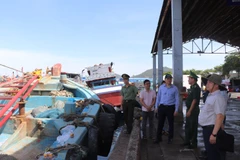
Le Van Sang, Deputy Director of the provincial Sub-Department of Seas, Islands and Fisheries, stated that from October 6 to November 15, Thanh Hoa will implement a peak patrol and inspection campaign, while also raising awareness among fishermen and strictly handling violations related to IUU fishing./.
Coast Guard Region 3 launches peak campaign against IUU fishing
All forces will apply coordinated measures, including observation and reconnaissance, to ensure no suspicious vessel goes unchecked, particularly fishing boats that lose vessel monitoring system (VMS) signals.