Two scenarios for Vietnam's economic outlook in 2024: VEPR

Economic expansion in Q4 will unfurl in one of the two scenarios, growing at a less optimistic rate of 6.4% or the more positive clip of 7% growth.

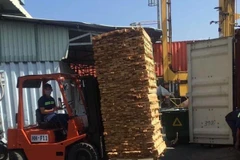
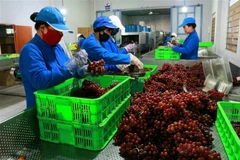
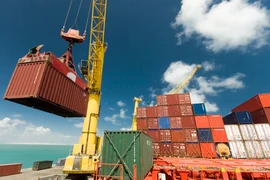
Total foreign trade turnover amounts to 578.5 billion USD in the first nine months of this year, up 16.3% year-on-year (Photo: VietnamPlus)

Hanoi (VNA) - Amidst a volatile global economy, geopolitical instability, and persistent inflation, Vietnam stands out as a unique story, a dynamic recovery that comes with inherent risk. Economic expansion in Q4 will unfurl in one of the two scenarios, growing at a less optimistic rate of 6.4% or the more positive clip of 7% growth.

This assessment was presented in the Q3 Economic Report released by the Vietnam Institute for Economic and Policy Research (VEPR) on October 15. Notably, the report highlighted the strengths and weaknesses of the economy, focusing on growth and its ability to attract foreign direct investment (FDI).

VEPR Deputy Director Nguyen Quoc Viet held that it reflected a strong resilience in the economy in the first nine months of 2024, surpassing initial expectations. However, he cautioned that Vietnam should not become complacent in the face of complex global economic fluctuations and internal economic challenges.

According to the report, against this backdrop, the ASEAN Plus Three region has exhibited steady growth, driven by a strong recovery in tourism and exports to major markets. Vietnam, in particular, has charted its own dynamic recovery path. Its GDP in the first three quarters this year reached 6.82%, 1.5 times higher than the 4.4% recorded during the same period last year, with top contributions from the industrial and service sectors.

In terms of aggregate demand, the upturn in trade and foreign direct investment (FDI) has become the main driving force for the economy. Notably, the value of goods trade far exceeded expectations, with a total turnover of 578.5 billion USD, a sharp increase of 16.3% over the same period, and a surplus of 20.8 billion USD. This is an outstanding achievement during the 2020-2024 period, Viet said.

Another positive development was that State budget revenue exceeded the plan, while public spending decreased compared to the same period in 2023. This opens up opportunities to continue implementing support policies, such as tax exemptions and reductions, especially in the context of many industries being affected by Typhoon Yagi.

Two scenarios, various concerns

While Vietnam is on track for a strong recovery, many risks still exist, the VEPR report said, elaborating that its economy remains heavily dependent on export, making growth vulnerable to fluctuations in the global economy.
kichban.jpg
VEPR has proposed two growth scenarios for Vietnam in the fourth quarter and the entire year of 2024 with the optimistic scenario forecasts 7% growth for the whole year (Photo: VietnamPlus)

The budget revenue structure still depends on revenue from land and foreign trade which are untenable sources. Furthermore, domestic public debt is rising, and the credit-to-GDP ratio remains high, posing risks to the financial system. Viet suggested stronger reforms to diversify revenue sources, enhance the transparency and sustainability of the budget, and take effective risk management measures to ensure the stability of the financial system.

While the business environment has seen considerable improvement, there are still many obstacles, including complex administrative procedures, which create challenges for businesses. That is why the report suggested continuing strong reforms to create a more favourable business environment and attract private investment.

The report also dedicates a section to analysing FDI flows, a key contributor to Vietnam’s economic growth. Despite a downward trend in global FDI flows, Vietnam has retained its appeal to foreign investors. Growth in FDI, particularly in the manufacturing and processing sectors, is a positive sign, demonstrating investor confidence in the country’s economy. However, the report underlined the need for more effective FDI policies, focusing on quality over quantity, specifically prioritising high-tech projects that can boost the economy's competitiveness.

Based on the analyses of domestic and global economic conditions, VEPR presented two scenarios for Vietnam’s economic growth in Q4 and the entire year of 2024. It expects the economy to expand by 7% this year, while the less optimistic scenario projects a 6.84% growth rate.

“In either scenario, Vietnam must strive to overcome challenges, maintain growth momentum, and ensure sustainable economic development,” Viet said.

The report also noted that while there are areas that need attention, the recovery process continues, bringing hope for a brighter future. To obtain the set target, it underscored the need for persistent efforts from the entire political system, as well as the collaboration of the business community and all citizens./.

VNA

See more

A view of Work the Nordic Way 2026 conference (Photo: VNA)

Conference offers insights into Nordic workplace culture

Speakers addressed a range of key issues, including managing organisations amid rapid economic shifts, effectively integrating artificial intelligence into the workplace, building high-performing teams and developing talent strategies in globally competitive industries.

Vietnam looks to stronger ties with Africa for sustainable development

Vietnam looks to stronger ties with Africa for sustainable development

Experts proposed a raft of coordinated solutions to create breakthroughs in bilateral and multilateral ties with African countries. Chief among them is the fact that Vietnam should step forward as a bridge, spearhead the expansion of knowledge-sharing forums, and roll out specialised skills training courses for African partners.

European dairy products from Ireland. (Photo: cafe.vn)

Ireland steps up dairy trade promotion in Vietnam

Data from IMARC Group showed that the Vietnamese dairy market was valued at 5.71 billion USD in 2024 and is projected to reach 13.37 billion USD by 2033, with a compound annual growth rate (CAGR) of 9.5% during the 2025–2033 period.

Organisers and speakers at the “Vietnam–India Cross-border E-commerce” forum pose for a group photo. (Photo: VNA)

Cross-border e-commerce drives Vietnam–India economic ties

Hang noted that cross-border e-commerce is creating fresh opportunities for bilateral cooperation. Indian products such as natural cosmetics, essential oil, herbal products, fashion items and household goods are seen as highly promising in the Vietnamese market. At the same time, Vietnamese businesses, especially small and medium-sized enterprises, are increasingly able to use digital platforms to access India’s market of more than 1.4 billion consumers.

Delegates cut the ribbon to open the exhibition series on May 21, 2026 (Photo: VNA)

Industrial, transport infrastructure exhibitions open in Ho Chi Minh City

The events consist of the 22nd International Exhibition on Automobile, Motorcycle, Electric Vehicle and Supporting Industries (Autotech & Accessories 2026) and the International Exhibition on Construction Machinery, Rail Transit, Specialised Vehicles, Technology and Transportation Infrastructure (Cons & Trans 2026).

Workers of the Duy Khanh precision mechanical factory in Tang Nhon Phu ward, Ho Chi Minh City, manufacture support mechanical components. (Photo: sggp.org.vn)

Banks shift to cash-flow lending to unlock capital for SMEs

Prof. Nguyen Trong Hoai from the University of Economics Ho Chi Minh City (UEH) suggested that Vietnam should study open finance models built on digital data adopted in several countries to improve credit access for SMEs lacking collateral.

The Vietnam – Bangladesh business forum in Dhaka on May 19 (Photo: VNA)

Vietnam, Bangladesh eye to foster economic ties

Addressing the forum, Vietnamese Ambassador to Bangladesh Nguyen Manh Cuong highlighted the fruitful development of the bilateral ties over the past 53 years, noting that trade turnover has consistently exceeded 1.1 billion USD despite global disruptions. The two sides are now striving to raise the figure to 2 billion USD in the coming years.

The opening ceremony of the 10th International Livestock, Dairy, Meat Processing and Aquaculture Exposition on May 20 (Photo: VNA)

ILDEX Vietnam 2026 showcases livestock, agri-food innovation

The three-day event is jointly organised by VNU Asia Pacific and Thailand’s ITEC, serving as a platform for business networking, technology exchange and knowledge sharing in the livestock, aquaculture and food industries in Vietnam and Southeast Asia.

Permanent Deputy Prime Minister Pham Gia Tuc and officials inspect the Gia Binh International Airport project on May 20, 2026. (Photo: VNA)

Gia Binh international airport project accelerated ahead of APEC 2027

Tuc described Gia Binh International Airport as a national key project requiring strict adherence to construction timelines, particularly as it is expected to be put into operation in time for the 2027 APEC Economic Leaders' Meeting. Several associated projects are also being implemented under special mechanisms to serve major national tasks.

Vietnamese Ambassador to the Republic of Korea Vu Ho speaks at the forum.(Photo: VNA)

Forum promotes Vietnam–RoK supply chain connectivity

Cao Thi Phi Van, Deputy Director of ITPC, said that after more than three decades of cooperation, Vietnam–RoK ties are shifting from traditional manufacturing cooperation towards mastering future-oriented technologies such as semiconductors, artificial intelligence (AI), digital finance, renewable energy and global supply chains.

Fitch Ratings gives positive assessment of Vietnam’s economic fundamentals (Illustrative image. Source: VNA)

Fitch Ratings gives positive assessment of Vietnam’s economic fundamentals

Deputy Minister Tran Quoc Phuong stressed that Fitch’s credit assessments have enhanced Vietnam’s image and credibility in international financial markets, and provided additional motivation for the country to continue improving institutions, strengthening policy management efficiency and increasing economic transparency.