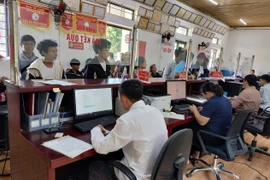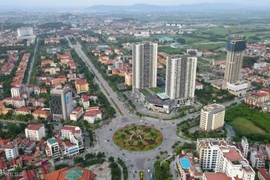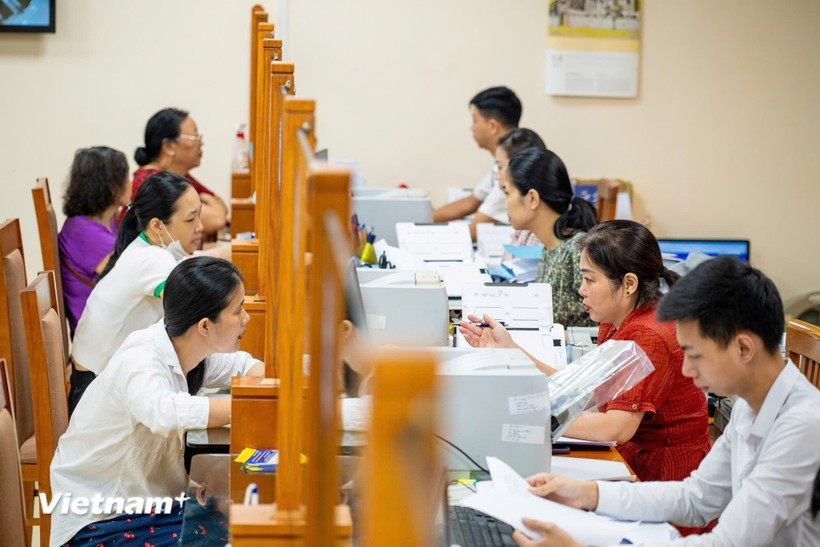
Hanoi (VNA) – After just over two months of implementation, the two-tier local government model has sparked a wave of innovation across Vietnam, from major cities to remote areas. Smart AI assistants and “home certification services” are proving that when entrusted with authority, local governments can far exceed expectations in serving citizens.
Da Nang City has emerged as one of the pioneers in introducing creative solutions under the new model. To support mountainous and border communes, the municipal Department of Home Affairs has seconded 15 highly qualified officers from specialised departments, including government organisation, administrative reform, and human resources, to work directly in 19 communes. These officers hold master’s degrees in economics, law, public policy, and human resources management, alongside IT and computer science specialists.
The city’s Department of Agriculture and Environment has also assigned 75 staff from the Land Registration Office to commune and ward offices to assist with land-related administrative procedures. These officers not only provide professional guidance but also directly address procedural bottlenecks, ensuring smooth administrative operations.
Particularly notable is Da Nang’s pilot use of artificial intelligence (AI) to assist with administrative services, paving the way for broader adoption. The Tam Ky ward recently launched an AI assistant capable of providing quick, consistent, and transparent responses to citizen and business inquiries.
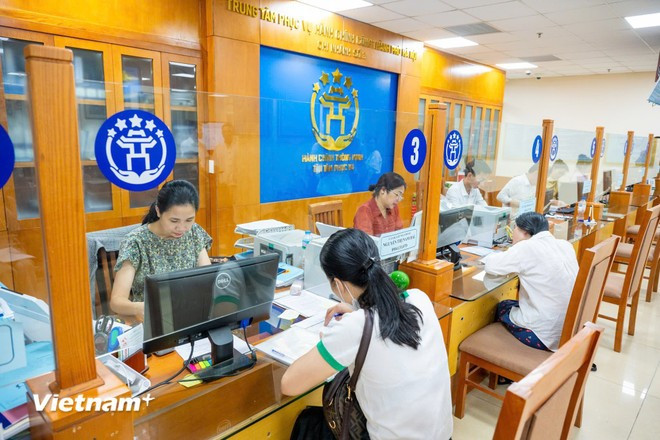
In Dong Nai, 99% of applications were completed on or ahead of schedule within just 60 days. Similar success stories are emerging from Hai Phong, Ho Chi Minh City, and Bac Ninh, underscoring the capacity of empowered local governments to deliver meaningful change.
According to Minister of Home Affairs Pham Thi Thanh Tra, initial statistics show a clear shift of power from central to local levels. Of the 741 decentralised procedures, 346 were reassigned between provincial, district, and commune levels, while 298 were abolished altogether.
More than 6.6 million online dossiers were received with an on-time processing rate of 91%, along with over 3 million online payment transactions worth a total of 1.7 trillion VND (64.4 million USD) in just over two months (from July 1 to September 15), impressive figures that reflect the growing strength of digital infrastructure and public trust.
However, challenges remain. Some decentralisation efforts are still formalistic, with slow issuance of guiding documents, reducing local initiative.
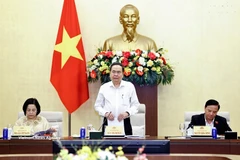
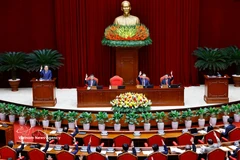
Both Conclusion No. 192-KL/TW of the Party Central Secretariat and Official Dispatch No. 168/CD-TTg issued by Prime Minister Pham Minh Chinh demonstrate a strong political determination to deepen decentralisation and delegation of power. The PM has instructed ministers and provincial leaders to directly review, assess, and take responsibility for the effectiveness of decentralisation within their jurisdictions.
He also urged ministries and agencies to continue reviewing the legal framework, boldly proposing simplifications, and further delegating responsibilities to localities. Ministries with a large proportion of centrally handled procedures have been specifically directed to accelerate decentralisation efforts.
Importantly, the PM emphasised that decentralisation must go hand in hand with adequate resources, effective monitoring tools, and accountability mechanisms to prevent power abuse.
Strengthening genuine decentralisation, capacity-building, and robust supervision will be key to building a constructive, transparent, action-oriented, and service-minded administration, meeting the expectations of citizens and businesses in Vietnam’s new phase of development./.