Digital economy as driver, digital society as foundation of growth: PM

The forum, themed “Developing an inclusive and comprehensive digital economy and digital society to achieve double-digit GDP growth in the 2026–2030 period,” brought together leaders of ministries and localities, technology enterprises, research institutions, experts and representatives of international organisations in Vietnam.

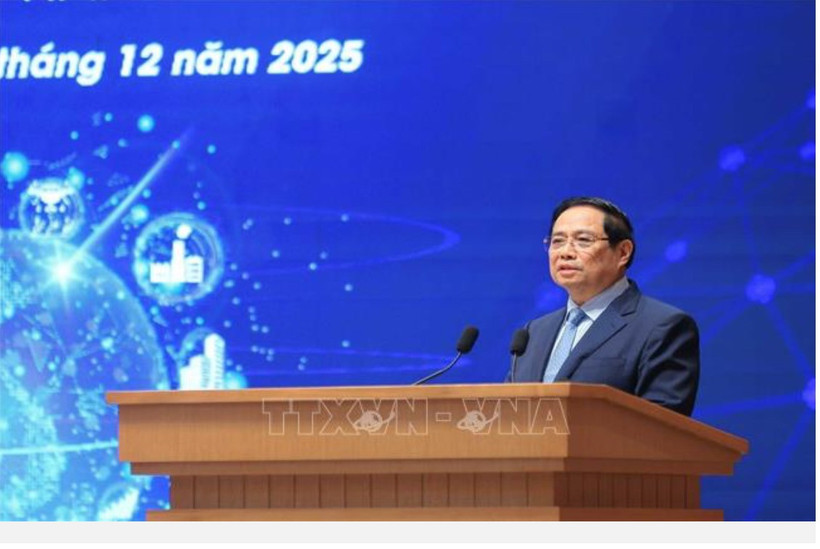
Prime Minister Pham Minh Chinh addresses the third National Forum on Digital Economy and Digital Society in Hanoi on December 20. (Photo: VNA)

Hanoi (VNA) - Prime Minister Pham Minh Chinh has highlighted the country’s motto of considering the digital economy as the driver, the digital society as the foundation, and people as the centre of development while addressing the third National Forum on Digital Economy and Digital Society in Hanoi on December 20.

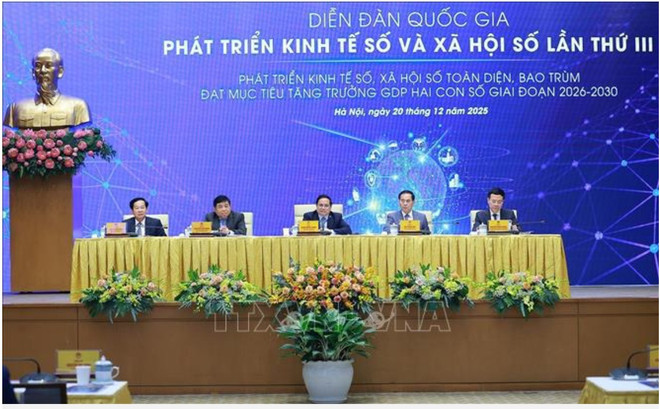
The forum, themed “Developing an inclusive and comprehensive digital economy and digital society to achieve double-digit GDP growth in the 2026–2030 period,” brought together leaders of ministries and localities, technology enterprises, research institutions, experts and representatives of international organisations in Vietnam.

Prime Minister Phạm Minh Chính said that the third National Forum on the Development of the Digital Economy and Digital Society is being held both to mark the 14th National Party Congress and the 11th National Patriotic Emulation Congress, and to review achievements while setting out new orientations for digital economy and digital society development in the coming period.

He stressed that developing the digital economy is key to renewing the growth model, restructuring the economy, and improving productivity and competitiveness, while building an inclusive digital society helps ensure equal access to services, narrow development gaps and promote cultural values in the digital space.
pm-forum-1.jpg
The third National Forum on Digital Economy and Digital Society takes place in Hanoi on December 20. (Photo: VNA)

The PM noted that the Party and State have introduced comprehensive guidelines and policies to advance digital transformation.
The 13th National Party Congress identified the gradual development of the digital economy and digital society as a strategic task.

Meanwhile, Politburo Resolution No. 57 also identifies breakthroughs in the development of science and technology, innovation, and national digital transformation as the foremost priority and a key driver for rapidly advancing modern productive forces, improving production relations, renewing national governance, promoting socio-economic development, preventing the risk of falling behind, and enabling the country to make strong and prosperous strides in the new era.

He urged participants to objectively assess progress, supported by concrete data, clearly identify Vietnam’s position in the global technology value chain, and share best practices and innovative models from pioneering localities and major technology groups, PM Chinh said.

He also called for a clear identification of bottlenecks, particularly in institutions, mechanisms and policies related to cross-border digital services, intellectual property and cybersecurity.

Breakthrough solutions are needed to accelerate data connectivity and sharing, foster innovation and start-up ecosystems, and ensure the digital economy penetrates all sectors, building a civilised and inclusive digital society where no one is left behind, stated the Government leader.

PM Chinh expressed his hope that scientists and managers will contribute practical ideas to shape a digital economy and digital society programme tailored to Vietnam’s conditions, enabling the country to keep pace with and move ahead of global digital transformation trends.

Held annually, the National Forum on Digital Economy and Digital Society serves as a policy dialogue platform to promote innovation and cooperation in Vietnam’s national digital transformation.

This year’s forum reviews the 2021–2025 period, identified key opportunities and challenges, and explored new policy space for the next phase, including in-depth discussions on the application of artificial intelligence.

Within the forum’s framework, the “Learning from Practical Work” programme was launched, based on cooperation among the State, educational institutions and businesses, aiming to develop high-quality human resources for the digital economy and support national digital transformation./.

VNA

See more

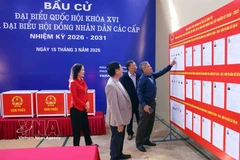
Tay ethnic voters in Na O hamlet of An Lac commune, Bac Ninh province, cast their ballots on March 15. (Photo: VNA)

Voter turnout reaches 99.64% as of 22:00 on March 15

Lao Cai was the locality that completed voting the earliest (at 17:45) and, together with the central city of Hue, was one of two out of 34 localities to reach 100% voter participation. Notably, Lao Cai province has 173 voters aged 100 and above (31 men and 142 women).

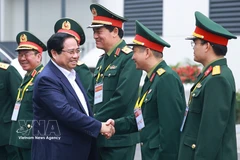
Vietnamese Politburo member and Minister of Foreign Affairs Le Hoai Trung (right) welcomes Chinese Politburo member and Minister of Foreign Affairs Wang Yi in Hanoi on March 15. (Photo: VNA)

Vietnamese, Chinese FMs agree to make new breakthroughs in substantive cooperation

Vietnam and China should meticulously prepare for coming visits and meetings at all levels while working with ministries, sectors, and localities to make new breakthroughs in substantive cooperation, thereby bringing the relationship between the two Parties and the two countries to a new level, their foreign ministers said.

Dr. Nguyen Hong Son, Chairman of the Union of Vietnamese Associations in Japan (Photo: VNA)

Notable progress seen during legislature's 15th tenure

The overseas Vietnamese community always closely follows information related to the election and, where possible, will directly exercise their civic rights, said Dr. Nguyen Hong Son, Chairman of the Union of Vietnamese Associations in Japan.

Giulio Chinappi, Asia Regional Director of Italian publishing house Anteo Edizioni (Photo: VNA)

NA election ushers Vietnam into new era of rise: Italian expert

NA and People’s Council deputies must have strong political and moral qualities, professional competence, proven execution ability and a genuine commitment to public service. They must therefore serve as exemplary figures of integrity, responsibility and dedication to national interests and citizens’ well-being.

Soldiers examine ballot boxes before voting at a polling station in Truong Sa special zone, Khanh Hoa province. (Photo: VNA)

Voter turnout exceeds 80% nationwide by mid-afternoon

Many localities have recorded high voter turnout, particularly several northern mountainous provinces such as Lao Cai, Dien Bien, Lai Chau, and Tuyen Quang. Other localities, including Ha Tinh, Da Nang, Lang Son, Nghe An, and Thai Nguyen, have also reported a rate of more than 90%.

Pham Khanh Nam, Editor-in-Chief of Huong Viet Magazine in Germany (Photo published by VNA)

Voters place trust in new generation of representatives

The choosing of capable and dedicated representatives is expected to further strengthen public trust and lay a solid institutional foundation for Vietnam to advance towards rapid, sustainable development and deeper global integration in the coming period.

Ambassador of Timor Leste to Vietnam João Pereira (Photo: VNA)

Vietnam’s election marks peace, trust, democracy: Timor-Leste Ambassador

The representatives chosen through the 14th National Party Congress and the March 15 election will continue promoting the country's stature in the international arena and build on the foundation laid by earlier generations of Vietnamese leaders guided by President Ho Chi Minh’s thought, said Ambassador of Timor Leste João Pereira.

Beni Sukadis, Senior Coordinator at Indonesia’s Institute for Defence and Strategic Studies (Lesperssi), grants an interview to the Vietnam News Agency. (Photo: VNA)

Parliamentary diplomacy bolsters ASEAN cohesion: Indonesian expert

The Vietnamese legislature has been instrumental in shaping the legal foundations for economic growth, via the adoption and revision of laws governing investment, public–private partnerships, land management and digital governance as key steps in building a more stable regulatory environment, strengthening investor confidence and supporting Vietnam’s transition toward a market-oriented economy.