Hanoi (VNA) - Vietnam’s early engagement in the Indo-Pacific Economic Framework for Prosperity (IPEF) highlights its proactive stance as one of the first countries to join the discussions initiated by the US in May 2022. However, the new mechanism and its relevance to Vietnam are yet to be widely known by the Vietnamese public.
To explain IPEF to his students, many of whom Vietnamese, Professor Stephen Nagy of International Christian University (Tokyo) describes the mechanism as a “buffet”:
“It is like your friend enjoys seafood, you prefer chicken and the other friends like beef, so you can choose the part of the buffet that you would like to participate in.”
That is, in IPEF, participating countries can choose parts or provisions of the agreement that align with their respective preferences. The framework allows different countries with different levels of development, different kinds of governments, and different kinds of priorities, to be able to participate in one part of the agreement to create a critical mass of countries that are all behaving and acting in the same way. According to Nagy, such an a la carte approach helps his students grasp the concept immediately.

Nagy says there is a growing awareness amongst students about how the new trade bloc is related to the evolving realities of the global economy, with the 21st century’s central economic nexus to be centred on the Indo-Pacific region where Southeast Asia lies at the heart. But the IPEF concept is still alien to most people in the Asia-Pacific, not just Vietnam, partly because economic frameworks often associate with market access and trade agreements but IPEF focuses on green technology and supply chains.
Tran Thi Thuy Linh, a researcher of IPEF and currently a lecturer at the Diplomatic Academy of Vietnam says the framework has not garnered much attention from the public in Vietnam and other parts of the world because it is still in the negotiation phase and no final outcomes have been achieved.
From the University of New South Wales, Canberra, Emeritus Professor Carl Thayer says IPEF is designed to set rules and norms with high standards to guide trade practices and foster economic cooperation in the Indo-Pacific region.

And as in IPEF, the participants can pick what they want based on their own interests, objectives, and policies, the “flexible” characteristic of the mechanism makes it different from the Comprehensive and Progressive Agreement for Trans-Pacific Partnership (CPTPP), which focuses on intellectual property rights, the role of state-owned enterprises, and strong labour and environmental regulations, and the Regional Comprehensive Economic Partnership (RCEP), a broad regional trade agreement involving all 10 ASEAN member states, Australia, China, Japan, the Republic of Korea, and New Zealand, Nagy says.
One notable feature of the IPEF is it not only involves trade but also covers modern issues such as new energy transition, supply chain resilience, taxation, and corruption. “The framework extends the geographical scope to the Indo-Pacific with the notable participation of India, the world’s most populous nation and the US, the world’s largest economy,” Linh adds.
Nevertheless, experts point out that the IPEF’s absence of tariff reductions and market access provisions makes the negotiation process more challenging as participating countries do not see enough motivation to speed it up.
Vietnam, a proactive founding member
For Vietnam, the trade pact that promises to deliver broad based economic connectivity and levels the playing field for countries, big and small, is obviously an opportunity it does not want to miss. Therefore, Vietnam has been enthusiastic to make contributions to promoting negotiations.
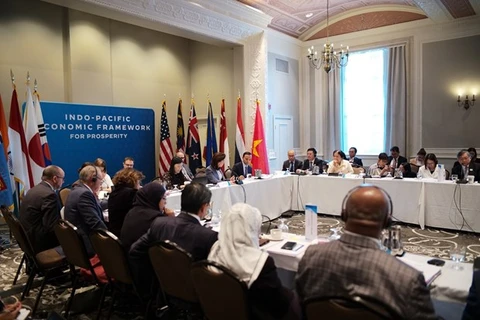
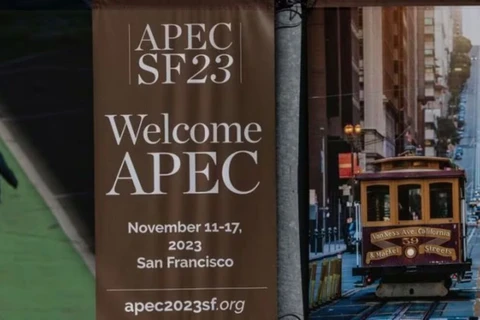
At the meeting of leaders from the IPEF partner nations held as part of the APEC Economic Leaders’ Week in San Francisco on November 16, 2023, Vietnam pushed forward three key orientations that would contribute to the formation of the framework.

First, the IPEF needs to be an open, inclusive, non-discriminatory cooperation mechanism, one that would support the rules-based multilateral trading system, welcome the participation of countries within and outside the region, and complement and supplement other regional economic connectivity initiatives.
Second, cooperation within the IPEF should meet the development needs of each party, balance the interests of all parties, respect and take into account the differences and particular characteristics of each country, and focus on technical support and capacity building.
Third, the IPEF should encourage new investment in building infrastructure, transition to clean energy, and high-tech industrial production in the region.
Experts view the three orientations as aligning with Vietnam’s foreign policy of pursuing and making all-out efforts towards an independent, self-reliant economy in association with extensive and substantive international integration. In other words, Vietnam is looking at all economic opportunities available in the region. As an enthusiatic member of CPTPP and RCEP, the Southeast Asian country is now committed to be part of the IPEF, too.
“The engagement in multiple agreements can help Vietnam deliver prosperity and goods to ordinary Vietnamese people,” Nagy says, adding that the concept of “bamboo diplomacy” has been well applied by Vietnam in trade relations.
From Linh’s perspective, Vietnam's recommendations demonstrate the country's proactive stance towards global integration and its strategic focus on inclusive cooperation, capacity building, and targeted investments in key sectors.
IPEF could provide Vietnam with opportunities to diversify economic partnerships and strengthen its role in the global economy, she says. “IPEF’s focus on technical support and capacity building is particularly relevant to the country’s ongoing efforts to enhance economic and technological capabilities.”
In IPEF, Vietnam will be able to attract new investments in key sectors such as infrastructure, clean energy and high-tech industries and its transition to clean energy will surely contribute to its own economic transformation and competitiveness, she adds./.
| Vietnam has successfully negotiated, signed, and implemented 19 bilateral and multilateral free trade agreements (FTAs) with major economies worldwide. Currently, 16 of these FTAs, involving over 60 partners, are in effect, covering all continents and accounting for nearly 90% of global GDP, according to the Ministry of Industry and Trade. The IPEF framework is under negotiation with 14 partners, namely Australia, Brunei, Fiji, India, Indonesia, Japan, the Republic of Korea, Malaysia, New Zealand, the Philippines, Singapore, Thailand, the United States and Vietnam, who represent 40% of global GDP and 28% of global goods and services trade. The framework focuses on four key pillars: trade, supply chain, a clean economy, and a fair economy. |
Related news:
Vietnam plays constructive role in IPEF discussions: US Ambassador
Vietnam looking toward effective IPEF for prosperity
2023 a spectacular year for US- Vietnam relationship: US Ambassador