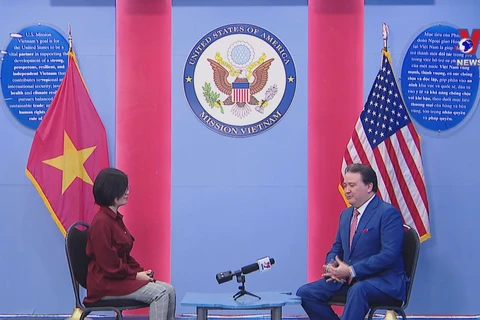
Hanoi (VNA) - Vietnam has been a very good partner of the Indo-Pacific Economic Framework for Prosperity (IPEF) launched by the United States in May 2022, and the country has been playing a constructive role in the IPEF discussions, US Ambassador to Vietnam Marc Knapper spoke to the Vietnam News Agency.
Reporter: How do you evaluate the Vietnam-US relations, especially their trade ties, after both sides adopted their comprehensive partnership in 2013 and then entered into the comprehensive strategic partnership in 2023?
Ambassador Marc Knapper:
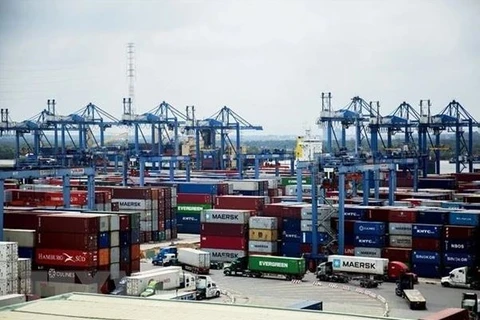
The growth in economic ties between the United States and Vietnam, particularly in terms of trade, has been remarkable. Since the normalization of relations in 1995, trade between the two countries has experienced significant expansion.
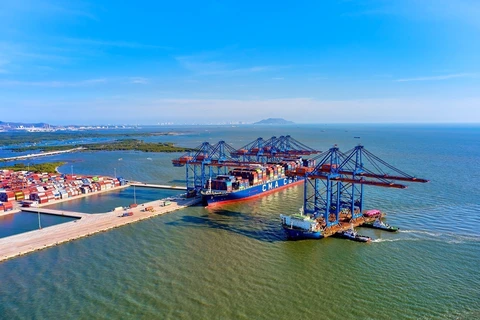
The establishment of the bilateral comprehensive partnership in 2013 further accelerated this growth, and over the past ten years, trade between the US and Vietnam has reached an impressive 130 billion USD. Notably, the United States is Vietnam’s largest export market, while Vietnam ranks as the eighth largest trading partner of the United States.
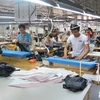
The range of goods exchanged between the two countries is diverse, encompassing items such as airplanes, high-tech products, agricultural goods, computers, smartphones, and household items.
The bilateral trade is very vibrant and complementary. Both countries want to see this relation continue to grow, allowing American consumers to enjoy products made in Vietnam, while Vietnamese consumers have access to goods produced in the United States.
Another significant aspect of the US-Vietnam relationship is the investment made by both countries in each other’s economies.
Vietnamese companies are increasingly showing interest in investing in the United States, while numerous American companies, including Intel and Boeing, have already established a presence in Vietnam.
For instance, Boeing has partnered with Vietnamese manufacturers to produce airplane parts. This investment flow not only creates employment opportunities for American workers but also demonstrates the confidence that Vietnamese companies have in the future of the US market, particularly in the high-tech sector.
One noteworthy example of Vietnamese investment in the United States is the 4-billion-USD investment by VinFast in North Carolina, which will have a substantial impact.
This investment not only generates jobs for American workers but also signifies VinFast’s confidence in the US’ electric vehicle industry and the ability of American workers to excel in advanced manufacturing.
Moreover, it sends a strong political message, highlighting the deepening ties between the US and Vietnam, which are built on local investments, factory establishments, and worker training.
This also demonstrates the mutual trust and confidence that both countries have in the quality and capabilities of their respective workforces.
Reporter: How is IPEF different from traditional trade deals the US has inked with foreign countries? Does that mean IPEF will benefit participating countries more than previous trade pacts?
Ambassador Marc Knapper: First, we were extremely pleased that Vietnam chose to join the United States and other countries to kick off the IPEF in May 2022. We value very much Vietnam’s constructive role in the IPEF discussions.
Vietnam has been a very good partner, as we’ve moved from the initial stages until today, in which we’ve been substantially wrapped up three of the four pillars that make up IPEF, and will continue working on the first pillar, which focuses on trade.
We are confident that we can successfully accomplish this goal, especially given the substantial progress we made during the APEC meeting in San Francisco in November.
The idea of the IPEF is to address the challenges we face in the 21st century. These challenges, such as climate change, supply chain resilience, and the transition to clean energy, often fall outside the scope of traditional or existing trade agreements.
The goal of the Biden-Harris administration in launching the IPEF was to find a way to work with partners to tackle these 21st-century problems using innovative solutions.
We’re confident that the efforts of the IPEF partners, whether in promoting clean energy transition, enhancing supply chain resilience, or safeguarding labor rights, will be critical in fostering prosperity in the region and among the participating countries.
Reporter: The Biden administration already concluded the first round of in-person negotiations for the IPEF in December 2022 but it seems no further progress has been made so far. Could you explain why? Please share with us any updates you may have.
Ambassador Marc Knapper: I believe it’s important to note that under the IPEF, significant progress has been made on three of the four pillars. However, there is still work to be done on the first pillar, which focuses on trade.
Negotiations involving different economies can be complex since each country seeks to promote its own interests and prosperity for its people.
Nevertheless, we’re confident that working with partners like Vietnam, we can get across the finish line in the months ahead.
Our aim is to establish a high-quality framework that will bring benefits to all participating countries, including Vietnam./.
Related story:
Unpacking IPEF: Why the new trade bloc matters to Vietnam