USAID helps Vietnam redouble efforts to end TB

Vietnam National Tuberculosis Programme (NTP) and USAID on December 15 expanded the Ministry of Health/NTP’s “Double X” Strategy for tuberculosis (TB) case identification in a bid to wipe out this respiratory disease in Vietnam by 2030.
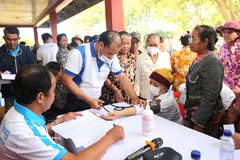
USAID helps Vietnam redouble efforts to end TB ảnh 1At the event (Photo courtesy of the US Embassy in Vietnam)
Hanoi (VNS/VNA) - Vietnam National Tuberculosis Programme (NTP) and USAID on December15 expanded the Ministry of Health/NTP’s “Double X” Strategy for tuberculosis(TB) case identification in a bid to wipe out this respiratory disease in Vietnamby 2030.

DoubleX is a new strategy to diagnose TB using chest X-rays and GeneXpert, adiagnostic method that detects TB bacteria.

Atan event entitled “Health Partnerships to End TB in Vietnam - Applying the“Double X” Strategy held on December 15 in Hanoi, participants shared keyachievements and lessons in implementing the Strategy, including keyachievements of the NTP toward TB goals; outcomes from USAID Sustainable HIVand TB Responses from Technical Assistance (SHIFT) activity on the Double-XStrategy in seven provinces in Vietnam, experiences from provincial TBprogrammes; and multi-faceted TB strategies using Double X from internationalorganisations.

Vietnamranks 11th among the 30 countries that account for nearly 90 percent ofthe world’s TB burden. It is also one of the most common communicable diseasesin the country.

Eachyear, it is estimated that 170,000 people become sick from TB in Vietnam, butonly around 100,000 are accounted for in the National TB system, leaving around50,000 community TB cases undiagnosed, and the remaining 20,000 diagnosed butnot reported.

DeputyMinister of Health Do Xuan Tuyen said the country has made encouragingachievements in the fight against TB, especially the fact that it couldsuccessfully treat 92 percent of first-time TB patients, 75-80 percent ofthe patients with multidrug resistant TB with short-term treatment while theglobal figure is about 56 percent.

Thenumber of TB patients is on a gradual downtrend, with a decline of only 4 percenta year, according to Tuyen, who said the national programme should maximise theuse of existing tools in diagnosing and treating TB with universal healthinsurance; while at the same time, expanding the application of newidentification tools, new drugs and vaccines, with the help of partners both inand outside the country.

ProfessorNguyen Viet Nhung, chair of the national programme on fighting TB, said justlike COVID-19, TB infection incidents need to be detected as soon as possibleso risks of transmission in the community are reduced and the hospitalisationfor the patients themselves would be shorter.

Endingthe TB epidemic in Vietnam will require intensive effort. The USAID SHIFTproject’s partnership with the NTP has piloted the comprehensive Double XStrategy in health facilities and communities in 18 districts in sevenprovinces (Thai Binh, Nghe An, An Giang, Can Tho, Dong Nai, Tay Ninh, and TienGiang).

DoubleX will be further scaled up to 25 provinces in December 2020. Sites forimplementation will include provincial hospitals (lung hospitals, generalhospitals) as well as district health centres and general hospitals./. 

VNA
See more

Male plastic surgery: Why masculine aesthetics require a different approach

Male plastic surgery: Why masculine aesthetics require a different approach

Plastic surgery has long been associated with procedures for women, but men also seek treatment for abdominal fat, enlarged breasts and age-related changes around the eyes and face. The American Society of Plastic Surgeons (ASPS) includes liposuction, gynecomastia surgery and eyelid surgery among procedures performed on male patients.

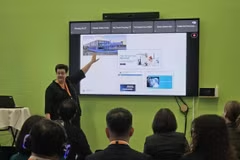
A speaker delivers presentations at the conference (Photo published by VNA)

Vietnam, Denmark expand cooperation in high-tech healthcare

Ambassador Nguyen Le Thanh called on Vietnamese and Danish partners to identify priority areas and promote research and training programmes, knowledge transfer and technology application in line with Politburo's Resolution No. 57-NQ/TW on breakthroughs in science – technology development, innovation and national digital transformation.

Ho Chi Minh City has favourable conditions for developing the ecosystem, including a large population, diverse healthcare needs and an extensive public and private medical network. (Illustrative photo: VNA)

Ho Chi Minh City develops multi-tier elderly care network amid population ageing

Dr. Huynh Minh Chin, Deputy Director of the department, said rising elderly care needs are putting pressure on traditional family-based care, as older people increasingly face multiple chronic illnesses, mobility problems, malnutrition, dementia and depression, requiring continuous support and closer coordination among hospitals, grassroots healthcare facilities, families and social support institutions.

Local residents in Mondulkiri province, Cambodia, receive free medical check-ups and health consultation. (Photo: VNA)

Free medical examinations provided to remote communities in Cambodia

Vietnamese Ambassador Nguyen Minh Vu said the programme has been jointly organised by the embassy and the hospital annually in various Cambodian localities to provide healthcare support to disadvantaged households and contribute to the Cambodian Government’s efforts to improve public health. The initiative also reflects close cooperation in healthcare and the strong bonds between the people of Vietnam and Cambodia.

With the assistance of robotic-assisted laparoscopic surgery, doctors successfully perform a complex operation (Photo: VNA)

Vietnam advances towards high-quality, specialised healthcare

Recent developments in Hanoi and other localities highlight efforts to develop specialised treatment, standardise professional practices and apply artificial intelligence (AI) and advanced medical techniques, towards a more modern healthcare system.

Collecting a sample from a pediatric patient for influenza testing (Photo: VNA)

Ho Chi Minh City acute respiratory infections surge over 64%

According to the Ho Chi Minh City Centre for Disease Control (HCDC), influenza viruses are are among the fastest-rising pathogens, with 151 positive samples in a single week. Influenza A is the dominant strain, with A/H1N1pdm09 in 116 samples, or nearly 77%.