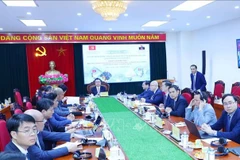
The Vietnam Fatherland Front (VFF) Central Committee held its eighthconference in Hanoi on September 24, outlining the organisation’spersonnel plans for the eighth tenure (2014-2019).
The VFF Central Committee is set to comprise 385 members, 30 more thanduring the previous tenure, with 11.6 percent from the central level,16.4 percent from the country’s numerous localities, and the rest fromdifferent classes, sectors, ethnic minority groups and religions, bothinside and outside the country.
According to the plans, 50.9 percent of the total members are non-Party members, and 21 percent are female.
That same day, VFF agreed on a 62-member Presidential Board, made upof 22 VFF representatives at the central level, 13 VFF representativesat the local level and 27 overseas Vietnamese.
A plan for VFF’s Standing Committee was also devised, including a president and a vice president/ and general secretary.
Candidates were already nominated for the positions, including thecurrent VFF leader Nguyen Thien Nhan, who was nominated for President.
Members of the VFF Central Committee and PresidentialBoard gave feedback on the VFF Appeal, which calls for the broaderengagement of community members in VFF’s efforts to supervise andcritique society.
VFF president Nguyen Thien Nhansaid the appeal’s editorial team would compile the feedback beforecirculating a draft to all VFF members.-VNA
The VFF Central Committee is set to comprise 385 members, 30 more thanduring the previous tenure, with 11.6 percent from the central level,16.4 percent from the country’s numerous localities, and the rest fromdifferent classes, sectors, ethnic minority groups and religions, bothinside and outside the country.
According to the plans, 50.9 percent of the total members are non-Party members, and 21 percent are female.
That same day, VFF agreed on a 62-member Presidential Board, made upof 22 VFF representatives at the central level, 13 VFF representativesat the local level and 27 overseas Vietnamese.
A plan for VFF’s Standing Committee was also devised, including a president and a vice president/ and general secretary.
Candidates were already nominated for the positions, including thecurrent VFF leader Nguyen Thien Nhan, who was nominated for President.
Members of the VFF Central Committee and PresidentialBoard gave feedback on the VFF Appeal, which calls for the broaderengagement of community members in VFF’s efforts to supervise andcritique society.
VFF president Nguyen Thien Nhansaid the appeal’s editorial team would compile the feedback beforecirculating a draft to all VFF members.-VNA