Vietjet resumes Vietnam-RoK route

To meet the travel needs of people and businesses, Vietjet officially resumes return flights connecting Vietnam and the Republic of Korea (RoK).
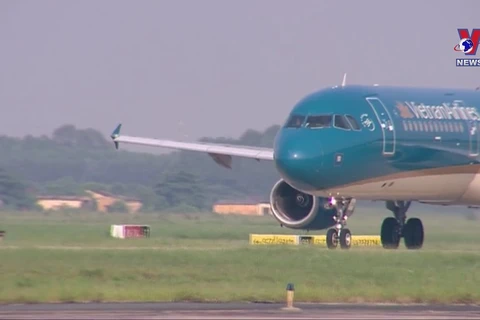
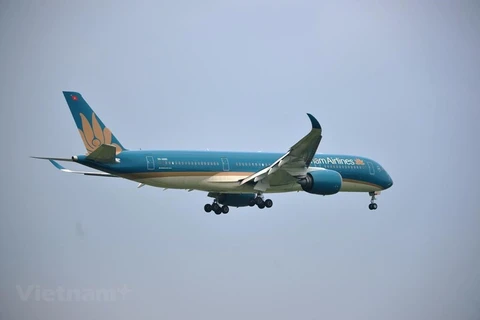
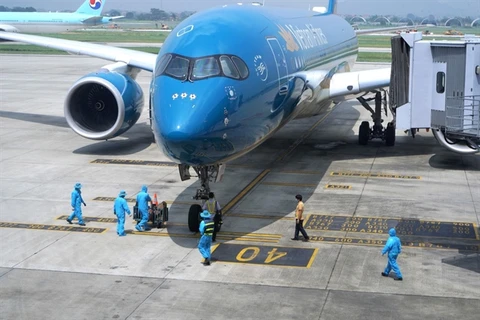
Vietjet resumes Vietnam-RoK route ảnh 1Aircraft of Vietjet Air (Photo courtesy of the airline)

Hanoi (VNA) - Tomeet the travel needs of people and businesses, Vietjet officially resumesreturn flights connecting Vietnam and the Republic of Korea (RoK).

Accordingly, from September 30, Vietjet operates oneflight from Ho Chi Minh City to Seoul every Wednesday. Flights from Seoul to HoChi Minh City will also be operated every Wednesday, starting from October 7.Moreover, Vietjet also conducts an additional flight Hanoi - Seoul - Ho ChiMinh City on September 29.

Vietjet has just launched upgraded SkyBoss and a brand-new Deluxefare types on all flight network, bringing safe and fun flights with many newbenefits for passengers such as complimentary Flight Care programme for SkyBossand Deluxe passengers, baggage allowance, priority check-in, hot meals andcomfortable seat selections.

Detailed information about flight schedule isavailable at the website www.vietjetair.com and other Vietjet’s official information channels. All Vietjet flights are inaccordance with all global supreme standards and recommendations fromauthorities, the World Health Organization (WHO) and the International AirTransport Association (IATA) in order to ensure the health and safety forpassengers, flight crews and the community.

Passengers from Vietnam and the RoK are required tohave a COVID-19 negative certificate issued within three days prior to departuretime as well as comply with mandatory medical quarantine requirements of the hostcountries. As regulated by the RoK government, flyers from Vietnam to theRoK have to fill in all regulated forms before boarding their flight as well asabiding by compulsory quarantine requirements by the local authorities. Passengers flying to Vietnam canchoose self-paid concentrated isolation at a number of up to 5-star hotels, or accommodationsin cities and provinces.

The new-age carrier Vietjet has not only revolutionized the aviationindustry in Vietnam but also been a pioneering airline across the region andaround the world. With a focus on cost management ability, effective operationsand performance, Vietjet offers flying opportunities with cost-saving andflexible fares as well as diversified services to meet customers’ demands.

Vietjet is a fully-fledged member of International Air TransportAssociation (IATA) with the IATA Operational Safety Audit (IOSA) certificate.As Vietnam’s largest private carrier, the airline was awarded the highestranking for safety with 7 stars in 2018 and 2019 by the world’s only safety andproduct rating website airlineratings.com and listed as one of the world's 50 best airlines for healthy financing andoperations by Airfinance Journal in 2018 and 2019. The airline has alsobeen named as Best Low-Cost Carrier by renowned organizations such as Skytrax,CAPA, Airline Ratings, and many others./.
VNA

See more

Toy production at a Hong Kong-invested factory (Photo: VNA)

Vietnam targets deeper market penetration in Hong Kong in 2026

Vietnam-Hong Kong trade hit 62.3 billion USD in the first 11 months of 2025, soaring 73.1% annually. Vietnamese exports to Hong Kong amounted to 36.8 billion USD, a 90.6% hike, ranking fourth among Hong Kong’s import sources, while imports from Hong Kong stood at 25.5 billion USD, up 52.9% and ranking third.

Vietnam’s start-up market enters restructuring phase

Vietnam’s start-up market enters restructuring phase

In 2026, venture capital inflows into Vietnam’s start-up ecosystem are expected to recover gradually, though in a more selective manner. VinVentures forecasts that capital will focus on start-ups that have survived the rigorous screening of 2024–2025, possess clear business models, strong commercialisation capacity, and the ability to generate real cash flows.

Workers process tra (pangasius) for export (Photo: VNA)

Vietnam–Singapore trade continues to thrive

For the year as a whole, Vietnam retained its position as Singapore’s 10th largest trading partner. Bilateral trade reached a record high of nearly 40 billion SGD, up 26.2% from the previous peak of 31.67 billion SGD recorded in 2024.

Eric Van Vaerenbergh, an energy expert and lecturer at the Brussels Engineering School (ECAM) (Photo: VNA)

Belgian expert optimistic about Vietnam’s economic outlook

Vietnam should move from a growth model based mainly on expanding capital and labour to one driven by productivity improvements. He said that this requires enhancing the quality of the workforce, particularly engineers, technicians, and managers in industrial sectors.

Workers at the VSIP Hai Phong industrial and urban complex, which specialises in producing electronic components for office equipment. (Photo: VNA)

Roadmap aims to improve business climate and boost competitiveness

By the end of 2026, Vietnam aims to rank among the world’s top 50 performers in the United Nations Sustainable Development Goals, advance at least three places in the International Property Rights Index, and climb at least one position in the Global Innovation Index.

Vietnam is strengthening its position in the technology value chain, becoming a major manufacturing hub for complete consumer electronics products. (Photo: VNA)

ESG standards offer opportunities to reposition Vietnam’s electronics firms

The 2025-2027 period will be a critical turning point, as exporters to the European market will be required to strictly comply with ESG standards, including net-zero emissions roadmaps, labour standards, corporate governance and transparency requirements. As a key export sector, the electronics industry is being directly and strongly affected by this shift.

A production line for camera modules and electronic components at the factory of MCNEX VINA Co. Ltd, a Republic of Korean-invested company in Phuc Son Industrial Park, Ninh Binh province. (Photo: VNA)

Science, technology, innovation as engines of economic growth

To ensure that science and technology truly act as a powerful growth engine, experts emphasised the need for the Government to put in place supportive mechanisms and policies that encourage enterprises to invest in research and development, while strengthening cooperation among the State, research institutions and the business sector.

The headquarters of the Ministry of Industry and Trade in Hanoi (Photo: VNA)

PM updates lead roles to drive UKVFTA forward

The Ministry of Industry and Trade (MoIT) is named the lead agency, with overall responsibility for the agreement’s general goals and definitions, trade remedies, non-tariff barriers to trade and investment in renewable energy, competition policies, State-owned enterprises, enterprises with special or exclusive rights and those with designated monopolies, as well as institutional, general and final terms.