Vietnam aims high with global education integration scheme until 2030

Deputy Prime Minister Le Thanh Long has signed a decision approving a scheme on global integration in education and training until 2030, aimed at fostering socio-economic development, people-to-people diplomacy and international cooperation across various sectors.

At an exam for English language certificate. (Photo: VNA)

Hanoi (VNA) – Deputy Prime Minister Le Thanh Long has signed a decision approving a scheme on global integration in education and training until 2030, aimed at fostering socio-economic development, people-to-people diplomacy and international cooperation across various sectors.

The scheme targets having at least 10 administrative units join the UNESCO Global Network of Learning Cities by 2030, and integrating foreign curricula into preschools and general education establishments in five more cities and provinces.

A key pillar of this scheme is the aspiration for all of high school students to meet national standards for foreign language proficiency, with a particular emphasis on establishing English as a second language in schools. It also prioritises the professional development of teachers and education managers at all levels, ensuring they possess the necessary foreign language skills to guide their students effectively.

In higher education, the goal is for over 20% of joint training curricula with foreign establishments to involve disciplines offered by universities ranked among the world’s top 500. Vietnam also aims to increase the proportion of international students pursuing Vietnamese degrees to 1.5% and ensure that 8% of all Vietnamese lecturers engage in academic exchange, teaching, or research abroad annually.

Furthermore, over 20% of curricula in Vietnamese universities are expected to meet accreditation standards from reputable international organisations. The scheme also envisions attracting two additional campuses of prestigious foreign universities to Vietnam.

To such end, it outlines four key tasks and solutions, including perfecting education-training policies and mechanisms, promoting cooperation and fostering an international environment in education-training, improving the quality of education and training, and strengthening the capacity of educators and raising their awareness of global integration.

Bilateral and multilateral partnerships will be actively expanded, with a focus on neighbouring countries, nations with advanced education systems, strategic and comprehensive partners, and traditional friends.

The plan advocates for the development of new school models based on international best practices to create a globally-oriented learning environment. Strengthening partnerships between Vietnamese and foreign general education establishments through twinning models is also a focus, toward mutual recognition of degrees and training processes.

It also seeks to increase student and lecturer exchanges while attracting international scholars and students to teach, study and conduct research in Vietnam.

To further elevate Vietnam's academic standing, universities are encouraged to upgrade domestic scientific journals up to international standards and increase the rate of lecturers publishing in reputable global academic journals.

The country will increase the scale of overseas training funded by the state budget, focusing on faculty members in priority scientific fields critical to the national development; as well as encourage studies and scientific research abroad through non-state funding sources./.
VNA

See more

Vietnam’s human resources quality has increasingly improved, with policies on comprehensive human development becoming more complete, focused and practical (Photo: VNA)

Human resources breakthrough - sustainable foundation for development

Vietnam’s Human Development Index (HDI) rose by 14 places to 0.766, placing the country in the group of nations with high human development. The national happiness index climbed 33 places to rank 46th out of 143 countries, reflecting significant improvements in quality of life, social environment and spiritual well-being.

Military soldiers promptly build houses for flood-hit families in Dak Lak (Photo: VNA)

Quang Trung Campaign close to finish: Strength of Party–people unity

Together with contributions from mass organisations, businesses and people nationwide, the campaign has embodied the strength of Party–people unity. As Tet approaches, rows of newly repaired and rebuilt homes stand as tangible proof of solidarity, restoring confidence and helping flood-hit communities look forward to rebuilding their lives.

Transporting Tet gifts onto the ship (Photo: VNA)

Tet gifts to be presented to soldiers on DK1 platform, naval vessels

The Naval Region 2 Command, headquartered in Long Son commune, Ho Chi Minh City, held a meeting on January 15 to assign tasks to a working delegation of journalists ahead of their departure to visit and extend Lunar New Year (Tet) greetings to officers and soldiers stationed on the DK1 platform, vessels on duty at sea, and Con Dao Special Zone.

Soldiers and trainees from the Military School of Military Region 5 are pouring concrete pillars and constructing the second floor according to the design to provide shelter for residents during floods. (Photo: VNA)

Quang Trung Campaign helps strengthen army–people bond in Dak Lak

The Central Highlands province of Dak Lak has basically completed the Quang Trung Campaign launched by Prime Minister Pham Minh Chinh to swiftly rebuild and repair homes for people affected by natural disasters, helping hundreds of families stabilise their lives.

Professor Shimizu Masaaki from Japan’s University of Osaka (Photo: VNA)

Vietnam emerging as region’s “co-creative partner”: Japanese professor

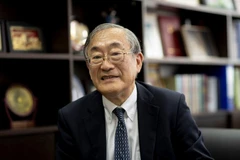
Professor Shimizu Masaaki from Japan’s University of Osaka said that while the 13th National Party Congress was “foundational” in nature, laying out a long-term vision toward 2045, the draft documents to be submitted to the 14th Congress demonstrate a stronger sense of urgency and a spirit of “breakthrough.”

The hammer-and-sickle emblem, the Party flag, and the national flag are prominently displayed at the Dien Bien Phu–Doc Lap–Chu Van An intersection to welcome the 14th National Congress of the Communist Party of Vietnam. (Photo: VNA)

OV community vital to Vietnam’s development goals: expert

Ahead of Vietnam’s 14th National Party Congress, Tran Thang, President of the Institute for Vietnamese Culture and Education (IVCE) in New York expressed his hope that the newly elected leadership will possess the qualities needed to guide the country in the new era and outline socio-economic development orientations aligned with the domestic and international situations.

At the launch of the resettlement and site clearance project for the Ninh Thuan 1 Nuclear Power Plant (Photo: VNA)

Resettlement, site clearance for Ninh Thuan 1 nuclear plant gets underway

According to the Khanh Hoa provincial People’s Committee, the resettlement and site clearance project carries a total investment of about 6.7 trillion VND (about 255 million USD). Of the total, approximately 5.28 trillion VND is earmarked for compensation and site clearance, around 1.15 trillion VND for construction and equipment, and nearly 287 billion VND for project management, consultancy, other expenses and contingencies.

(Source: Sun Group)

Sun PhuQuoc Airways to launch first international direct flight on March 29

From March 29, passengers will be able to fly non-stop between Phu Quoc (Vietnam) and Taipei (Taiwan, China) on Sun PhuQuoc Airways. This will be the first international route in the airline’s network, representing a significant step in SPA’s international expansion strategy while strengthening Phu Quoc’s position as a gateway to Asia.