Hanoi (VNA) – Vietnam is no longer just an emerging blockchain market, it is stepping into a leadership role, with global investors, developers, and experts recognising its growing potential to become a leading hub for digital assets in the region.
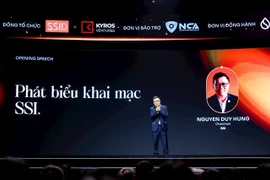
This ambition was highlighted at GM Vietnam 2025, a major blockchain and digital asset event held in Hanoi from August 1–2.
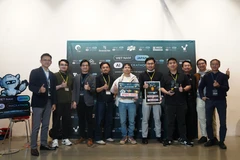
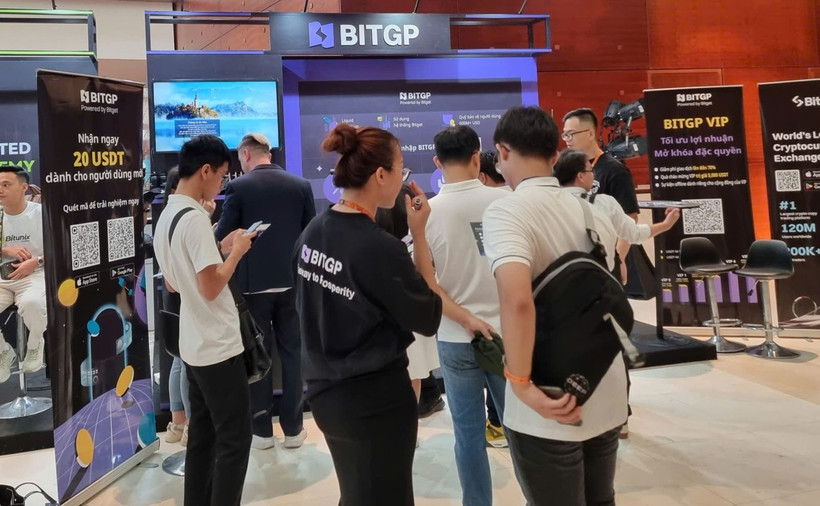
Co-hosted by SSI Digital and Kyros Ventures, and endorsed by the National Cybersecurity Association (NCA), the event attracted over 20,000 participants and 200 top-tier speakers from Vietnam and abroad, including representatives from the Republic of Korea, Singapore, Hong Kong (China), and the US.
Improving legal foundation for digital assets
GM Vietnam 2025 served not only as a showcase for investment technologies, but also as a strategic forum shaping the future of digital assets and blockchain. The event offered diverse perspectives and sparked new ideas aimed at positioning Vietnam on the global blockchain map. Experts explored key issues such as regulatory frameworks, sandbox mechanisms, system security, and investment landscape insights.
According to Deputy Governor of the State Bank of Vietnam and NCA Vice President Pham Tien Dung, over the past year, Vietnam has made steady and notable progress in developing institutions and a legal framework for digital assets and blockchain technology. The country has moved beyond strategic vision to concrete legal steps to support the development of digital assets.
The National Assembly has passed a resolution on the establishment of an international financial centre, covering innovation and specialised digital asset exchanges. The Ministry of Finance has submitted a proposal to pilot a blockchain-based trading platform.
Crucially, the newly adopted Law on Digital Technology Industry, effective from January 1, 2026, defines digital assets in law for the first time, establishing ownership rights, business conditions, and information safety regulations. This breakthrough provides a transparent legal foundation for blockchain-based business and research in Vietnam.
The national strategy on the application and development of blockchain technology until 2025 with a vision to 2030, aims to make blockchain a core digital infrastructure. Resolution No. 57, issued by the Politburo on December 22, 2024, on breakthroughs in science, technology, innovation, and national digital transformation, has paved the way for technological application and innovation, creating the necessary legal conditions for development. The PM’s Decision No. 1131, issued in June 2025, identifies blockchain as one of 11 strategic technologies critical to the digital economy.
Competitive advantages and emerging talent
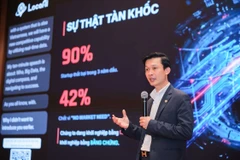
Thuat Nguyen, founder and CEO of Kyros Ventures, said the event was a key platform for Vietnamese blockchain projects to showcase their capabilities internationally. Since 2022, several Vietnamese-led platforms have earned global recognition for both technological quality and scale.
He highlighted three advantages positioning Vietnam as a competitive player: low operational costs, a young workforce, and fast adaptability. Leading universities such as Hanoi University of Science and Technology, FPT University, and RMIT Vietnam are already offering blockchain courses. Vietnamese start-ups can launch global-scale products at a fraction of the cost compared to Singapore or Hong Kong (China).
With global blockchain-related cyberattacks causing 12.8 billion USD in damage between 2020 and February 2025, security has become a critical concern.
Notably, Vietnamese-linked platforms such as Sky Mavis (Ronin) and KyberSwap have suffered major breaches, highlighting the urgency of secure development.
NCA Standing Vice President Lieutenant General Nguyen Minh Chinh stressed that building a secure blockchain ecosystem must be a shared responsibility across society.
To develop a secure and sustainable blockchain ecosystem, Chinh proposed three key strategies: designing a security ecosystem right from the start, enhancing early threat detection and rapid response through inter-sectoral coordination, and ensuring legal compliance aligned with international standards, particularly in anti-money laundering, data protection, and capital control, while supporting technology standardisation and legal reform.
Vu Ngoc Son, head of research, consulting, and technology development and international cooperation at NCA, highlighted Vietnam’s strong logic and mathematical skills, especially among engineers, as a key advantage in cybersecurity, with local developers known for their persistence in identifying vulnerabilities in open-source blockchain systems.
He outlined four pillars to establish Vietnam as a blockchain security centre, including a strong legal framework, robust technical standards, a well-trained human resource base, and international cooperation, particularly in intelligence-sharing and cross-border cybercrime prevention./.