Vietnam Australia’s largest cotton importer: Authority

Vietnam is the largest cotton importer of Australia with 38.8% of the market share, according to the Australian Trade and Investment Commission (Austrade) which predicted that Vietnam will hold this position in following years.
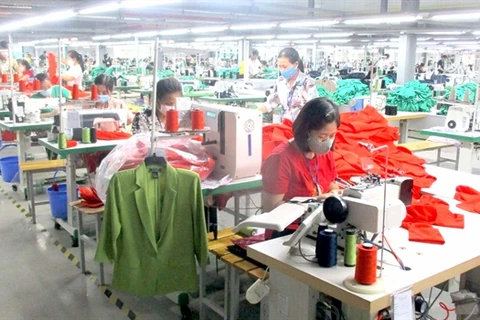
Vietnam Australia’s largest cotton importer: Authority ảnh 1Vietnam is the largest cotton importer of Australia. Illustrative image (Source: VNA)
Hanoi (VNA) – Vietnam is the largest cotton importerof Australia with 38.8% of the market share, according to the Australian Tradeand Investment Commission (Austrade) which predicted that Vietnam will hold this position in following years.

Thanks to a number of multilateral free trade agreements, tradebetween Vietnam and Australia has increased in recently, reaching 15.7 billionUSD in 2022, making Australia the seventh trade partner of Vietnam. Of thetotal, Vietnam’s exports hit 5.6 billion USD, up 26.2% year on year.

A report from the Vietnam Textile and Garment Group (Vinatex) said that last year, Vietnam shipped 44.5 billion USD worth of garment and textileproducts abroad, a rise of about 11% year on year, becoming the thirdlargest exporter of the product in the world after China and Bangladesh.

Along with garments, the country also exported over 2.5 billionUSD worth of fabric, nearly 5 billion USD worth of yarn, and 1.5 billion USDworth of garment accessories in the year.

In 2022, Vietnam spent 3.3 billion USD on importing 1.7million tonnes of cotton from 11 countries, with Australia standing at thethird position.

According to Austrade, Vietnam’s cotton imports fromAustralia rose from 78 million AUD (50.76 million USD) in 2020 to 1.69 billionAUD in 2022, mostly thanks to competitive prices and geographicaldistance.

Data from the Ministry of Industry and Trade showed that Vietnamand Australia are members of at least three common free trade agreements(FTAs), including the Comprehensive and Progressive Agreement for Trans-PacificPartnership (CPTPP). The pact has helped promote Vietnam’s exports toAustralia, especially farm produce.

Currently, the three FTAs supporting Australia’s cotton exports toVietnam are the ASEAN-Australia, New Zealand FTA (AANZFTA), the CPTPP and the RegionalComprehensive Economic Partnership (RCEP). They enable Australia’s raw cottons toenjoy preferential tax rates in Vietnam.

Rob Cairns, Export Marketing Consultant of the Australian Cotton Shippers Association (ACSA), saidthat the Australian industry wishes to build deeper relations with the localtextile and apparel industry as demand is anticipated to grow in the comingyears./.
VNA

See more

Vietnamese durian industry pivots from volume to value

Vietnamese durian industry pivots from volume to value

Durian has morphed from a high-value crop into a strategic Vietnamese export. But as output climbs and importing markets tighten rules on quality, food safety and traceability, the industry must pivot from volume growth to sustainable value chains, better quality and diversified markets.

A display area for Mid-Autumn Festival cakes at a supermarket (Photo: VNA)

Mid-Autumn Festival cake market heats up at affordable end

Industry insiders say competition is no longer just about the cake itself. Product quality, packaging, brand reputation, delivery services and personalisation are increasingly shaping consumer choices in a market crowded with both domestic and foreign players.

Minister of Foreign Affairs Le Hoai Trung (Photo published by VNA)

Vietnam, India set 25 billion USD trade goal

Vietnam and India agreed to make better use of complementary strengths, ease market access difficulties and facilitate business activities toward achieving the 25 billion USD bilateral trade target.

Delegates at the meeting between Vietnamese businesses operating in Cambodia and the Council for the Development of Cambodia (CDC) on September 14. (Photo: VNA)

Vietnamese businesses seek to expand investment in Cambodia

Vietnam currently has 223 investment projects in Cambodia with total registered capital of nearly 3.4 billion USD. Vietnamese companies operate in agriculture, particularly large-scale farming, finance and banking, telecommunications, aviation, processing, trade and services.

Children visit President Ho Chi Minh's hometown and learn about his childhood. (Photo: VNA)

Vietnam's tourism sector faces labour shortage

A 2026 survey by Hoteljob.vn found that nearly 90% of tourism businesses planned to recruit. In Ho Chi Minh City alone, 89.7% of businesses were hiring, while 71.8% said recruitment was difficult or very difficult. The biggest shortages were among frontline workers, particularly in housekeeping, engineering, food service, front-office operations, and kitchens.

Octopus processing for export at Huy Nam Company in An Giang province. (Photo: VNA)

New opportunities for Vietnam’s seafood exports

The Vietnam-EFTA Free Trade Agreement brings together two groups of highly complementary economies. EFTA members Switzerland, Norway, Iceland and Liechtenstein have strengths in technology, innovation, finance, clean energy and sustainable development, while Vietnam is one of Asia’s most dynamic economies and is emerging as a major regional manufacturing, trade and investment hub.

The saponin content of Lai Chau ginseng can reach as high as 23.85% in its natural state, a remarkably high level compared to many other ginseng species. (Photo: baolaichau.vn)

Lai Chau ginseng development gains momentum

Blessed with rare and distinctive ecological values, the northern mountainous province of Lai Chau is stepping up efforts to conserve and develop its native ginseng, with the medicinal plant expected to play a growing role in the forest-based economy and local livelihoods.

The Vietnamese delegation poses for a group photo at the third meeting of the Vietnam-Canada Joint Economic Committee (Photo: VNA)

Vietnam, Canada broaden economic cooperation beyond trade

Vietnam is currently Canada’s largest trading partner in ASEAN. Building on the Comprehensive and Progressive Agreement for Trans-Pacific Partnership (CPTPP), the two countries are expanding bilateral economic ties into higher value-added areas such as clean energy, critical minerals, advanced technology, manufacturing and value-chain linkages.

The Index of Industrial Production (IIP) rises 14.4% in August and 11.9% in the first eight months compared to a year earlier. (Photo: VNA)

More momentum needed for economic growth in year-end race

To build momentum for the year-end race, one of the top priorities is to accelerate public investment disbursement, ensuring 100% of the allocated plan is disbursed without allowing funds to be concentrated in the final months of the year.