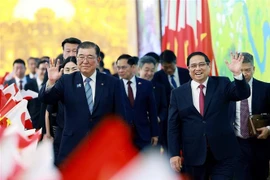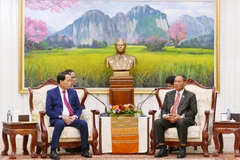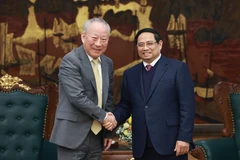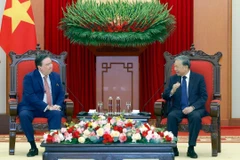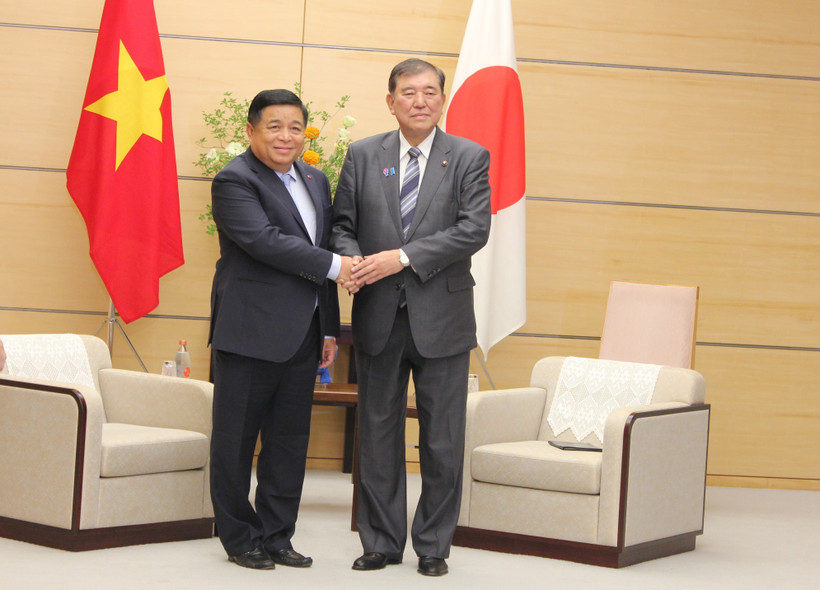
Tokyo (VNA) – Vietnam considers Japan a trusted partner in the new era of development, Deputy Prime Minister Nguyen Chi Dung told Japanese Prime Minister Shigeru Ishiba in their meeting in Tokyo on May 30.
Deputy PM Dung, who is in Tokyo for the 30th Nikkei Forum "Future of Asia", expressed satisfaction with the robust and substantive development of the Vietnam - Japan Comprehensive Strategic Partnership, built on strong political trust.
He expressed a desire to closely coordinate the effective realisation of high-level agreements and continue facilitating high-level exchanges to further reinforce political trust and close bond between the two countries.
Briefing on Vietnam’s determination, efforts, and new policies, Dung proposed deeper economic, investment, trade, cultural, and educational and locality-to-locality ties. He called for Japanese investment in major projects in Vietnam, particularly in urban and high-speed railways, energy, and digital infrastructure, and high-quality agriculture.
Regarding the newly identified pillar of sci-tech cooperation, he advocated for stronger ties across green transition, digital transformation, and training of high-quality workforce, especially in the semiconductor sector. He also suggested the Japanese support to improve the efficiency of the Nghi Son refinery and petrochemical project in the central province of Thanh Hoa.
Reflecting on his April visit to Vietnam, PM Ishiba shared his admiration for the country’s development vision and the vibrant energy of its people, drawing parallel to Japan’s own economic ascent three decades ago. He expressed confidence in Vietnam’s ability to achieve its development goals and reaffirmed Japan’s commitment to advancing bilateral agreements in trade, economy, investment, science, technology, and human resource development.
Ishiba endorsed the focus on sci-tech, innovation, and skilled workforce training, praising the dedication of Vietnamese workers in Japan for their significant contributions to the country’s economy. He voiced enthusiasm for welcoming more Vietnamese workers, particularly those with specialised skills.
On global and regional issues of mutual concern, host and guest vowed to work closely together at multilateral forums, jointly address global challenges, and step up multilateral free trade.
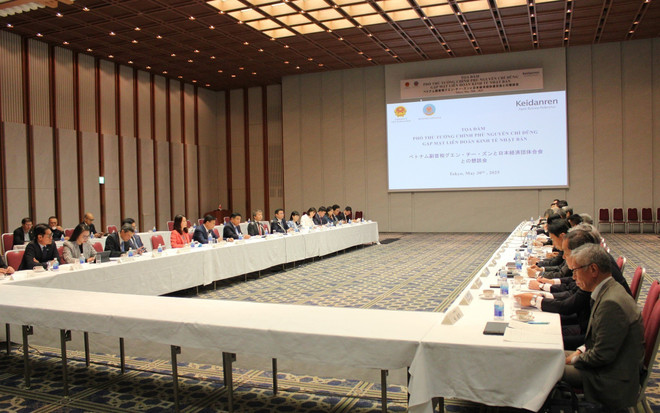
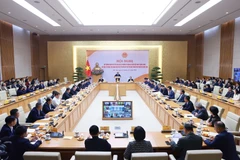
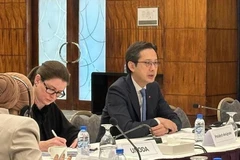
At a roundtable meeting with the Japan Business Federation (Keidanren), Dung urged Japanese associations and businesses to partner with the Vietnamese Government to tackle major economic challenges with a new vision, create strong “steel punches” for the economy and generate practical benefits for both countries.
He welcomed the constructive feedback from Keidanren representatives and pledged to direct Vietnamese ministries, agencies, and localities to urgently review and resolve any issues and facilitate new and effective projects.
“Let’s restructure supply chains to leverage our complementary strengths, reducing exposure to external risks,” he said, noting that 2025 is a pivotal year for Vietnam to achieve its 2021-2025 development goals through acceleration and breakthroughs.
Vietnam is refining its institutional framework, improve the business environment, and remove bottlenecks to unlock resources. The Government has identified administrative reform, streamlined procedures, and decentralisation as top priorities to position Vietnam as Southeast Asia’s best investment destination, he added.
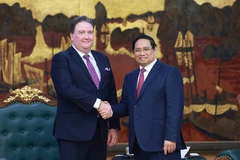
In his meeting with President and Chief Executive Officer of Sumitomo Corporation Shingo Ueno later on the same day, Dung was updated on the corporation's projects in Vietnam and their implementation progress. Ueno underscored that Sumitomo will continue expanding its projects in conformity with the Vietnamese Government's net-zero emission commitments.
Dung welcomed and praised Sumitomo's substantial contributions to Vietnam's socio-economic development through large-scale and substantive projects. He particularly highlighted the corporation's success in affirming its brand in Vietnam, particularly in the industrial zone sector, where the company’s high-tech, high-value projects are in line with the Government’s priorities.
He underscored the significance of land and energy efficiency, especially for industrial parks around Hanoi. Regarding the smart urban development project in the North of the capital city, Dung endorsed Sumitomo's investment approach towards creating a smart city integrated with enhanced healthcare and education infrastructure.
The Ministry of Industry and Trade is currently reviewing Sumitomo's proposal for Van Phong 2 LNG power plant project and will provide feedback soon, according to the Deputy PM.
Besides, he requested Sumitomo to continue working closely with relevant Vietnamese agencies to expedite the launching of the LOTUSat-1 satellite – an initiative agreed upon during Japanese Prime Minister Ishiba Shigeru’s official visit to Vietnam last month.
Highlighting the robust bilateral cooperation as well as Vietnam’s sound investment climate, he encouraged the corporation to expand into more projects across various sectors and localities, positioning itself as a strategic partner rather than a strategic investor of Vietnam.
Ueno, for his part, affirmed Sumitomo’s commitment to successfully implementing its projects in Vietnam, contributing to the country's economic development and bilateral cooperation.
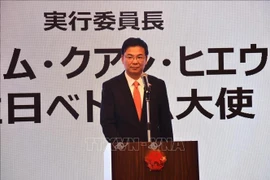
The same day, Dung and the working delegation attended the Vietnam Digital Transformation Day 2025 in Tokyo. In his speech, Dung stated that Vietnam sees science – technology, innovation, and digital transformation as the key to overcome the middle-income trap and avoid the risk of falling behind, while realising the nation's aspirations for prosperity.
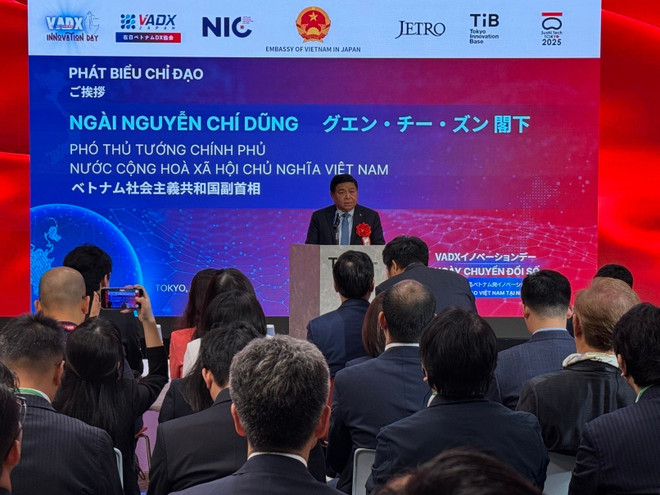
Vietnam currently has over 70 companies and 5,000 IT engineers actively operating in Japan, contributing to the host country's technology ecosystem and innovation development. Both countries established cooperative ties in science - technology, innovation, and high-quality human resources training as new pillars of their Comprehensive Strategic Partnership during PM Ishiba's visit to Vietnam in April.
Dung highlighted Vietnam's dynamic economy with over 100 million people, a high-quality IT engineering workforce, over 1 million workers in the information and communications sector, and tens of thousands of technology graduates annually.
Meanwhile, Japan is a global technological powerhouse, excelling in AI, robotics, semiconductors, and green technologies. Japanese companies bring not only cutting-edge innovation but also strategic management expertise in applying technologies to address global challenges.
Against the backdrop, the Deputy PM held that the combination of Vietnam's young, creative human resources with Japan's technologies and experience will create synergistic strength, bringing tremendous benefits to both countries.
He suggested both sides enhance collaboration in research and development, transfer of strategic and core technologies, adding that Vietnam seeks to learn from Japan's experience in AI, big data, cybersecurity, semiconductor technology, cloud computing, and 5G/6G technologies while promoting digital human resources training.
The Deputy PM took this occasion to call on both Japanese and Vietnamese leaders, enterprises and scientists to create new momentum in science - technology cooperation.
On May 31, Dung is scheduled to meet with the Governor of Gunma prefecture, visit the Tsukuba Space Centre, and have a working session with Vietnamese scientists in Japan./.